
By Matthews Otalike, The Searchlight Investigative Desk / November 26, 2026
Three investigations. One verdict. Nigeria’s institutions have not failed by accident; they have been captured by design.

Over the past week, The Searchlight has published three investigations that, taken separately, describe serious problems. Taken together, they describe something far graver: a coordinated architecture of impunity in which every institution that should protect the Nigerian citizen, the courts, the religious enforcement machinery of the north, and the security apparatus of the electoral system, has been repurposed to serve those who already hold wealth and power.
This is not a series of unrelated failures. It is a system working as it has been built to work.
The Three Pillars of the Same Structure
The first investigation documented Nigeria’s two-track justice system: a mechanic sentenced to three years’ hard labour for stealing yam worth N35,000, unable to pay a fine, while a public official who embezzled N225 million paid N42 million and walked free. The National Human Rights Commission’s own chief called it “systemic bias at the worst.” The Sultan of Sokoto called such justice “a commodity that can be purchased.”
The second investigation showed the same logic operating under a sacred cloak. In northern Nigeria’s Sharia enforcement, a 19-year-old was sentenced to five months’ imprisonment and ten strokes of the cane for “insulting Hisbah”, with no option of a fine, while the Hisbah Board itself admitted that it handles the rich “very carefully” and leaves their transgressions “to God.” A quarter-century of Sharia criminal law in the north has produced not a single governor, senator, or billionaire brought before a Sharia court on corruption charges.
The third investigation exposed the electoral dimension: APC-linked thugs attacking opposition campaign rallies while the President stays silent; a federal minister promising N10 million to councillors who “deliver” their wards; a council chairman warning residents to vote APC or leave the area. Violence and impunity have become the operating environment of the 2027 election.
The Common Logic

What connects these three reports is not merely that injustice exists. Nigerians know this. What connects them is the direction of that injustice. In every case, it is the same pattern:
– The law is most severe where the defendant is poorest. Yam thieves are imprisoned; embezzlers are fined. Street vendors are arrested during Ramadan; politicians’ violations are “left to God.”
– The law is most lenient where the defendant is most powerful. Constitutional violations by Hisbah go unreviewed by the federal government. Electoral violence by ruling-party thugs goes unpunished by the President’s silence. Judicial corruption by the highest bidders goes uninvestigated by the Attorney-General.
– Institutions that should be independent are financially and politically dependent. Judges who fear losing promotion do not rule against the powerful. Hisbah, which depends on state governors for its existence, does not investigate those governors. The police, which answer to the executive, do not arrest the executive’s allies. This is not incompetence. Incompetence is random. This is selection.
The Verdict
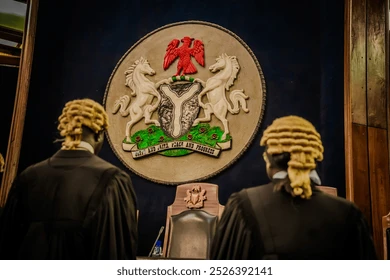
The Searchlight’s verdict, after these three investigations, is that Nigeria does not have a justice system. It has a system of social control that distributes punishment according to class and distributes protection according to power. The consequences are not abstract. They are:
– The death of trust. When a mother whose only son is killed by thugs watches the President say nothing, she learns a lesson about whose life matters. When a hungry man is imprisoned for stealing food while an embezzler pays a fine, every poor Nigerian learns the same lesson that “the law is not for us”.
– The normalization of impunity. When the powerful discover that crime has a price they can afford, crime becomes a cost of doing business. Corruption ceases to be a crime and becomes a fee.
– The procedural death of democracy. When courts can be bought, elections decided by violence, and voters coerced by council chairmen, the ballot box becomes a formality. Democracy survives in name; it dies in substance.
What Must Happen
The Searchlight does not believe that the political class currently in power will voluntarily dismantle the architecture that sustains it. Reform will not come from those who benefit from the status quo. But this newspaper has a duty to state what must happen, regardless of who is willing to hear it:
One: Judicial financial autonomy must become enforceable law. The judiciary’s budget must be disbursed directly from the Consolidated Revenue Fund, severing the executive’s ability to influence rulings through resource allocation.
Two: Election tribunals must be subjected to independent financial and procedural audits. The purchase of judgments must be publicly investigated, not accepted as an open secret.
Three: Hisbah’s quasi-judicial powers must be abolished. Any punishment involving personal liberty, detention, flogging, imprisonment, must be imposed only by regular courts through due process. The constitution’s supremacy is not optional, and religious sensitivity is not a licence for constitutional violation.
Four: The President must condemn all political violence without partisan qualifiers, and must direct the Attorney-General and Inspector-General of Police to investigate the statements of the FCT Minister and the Kuje council chairman as criminal threats to electoral freedom.
Five: Every politician who claims to respect the rule of law must answer one question publicly: Do you support public scrutiny of judges’ financial records, asset declarations, and sentencing patterns? Do you support auditing the election tribunals? Do you support applying the same law to your own party’s thugs that you apply to the opposition? Silence or evasion is the answer.
The Choice Before Nigeria
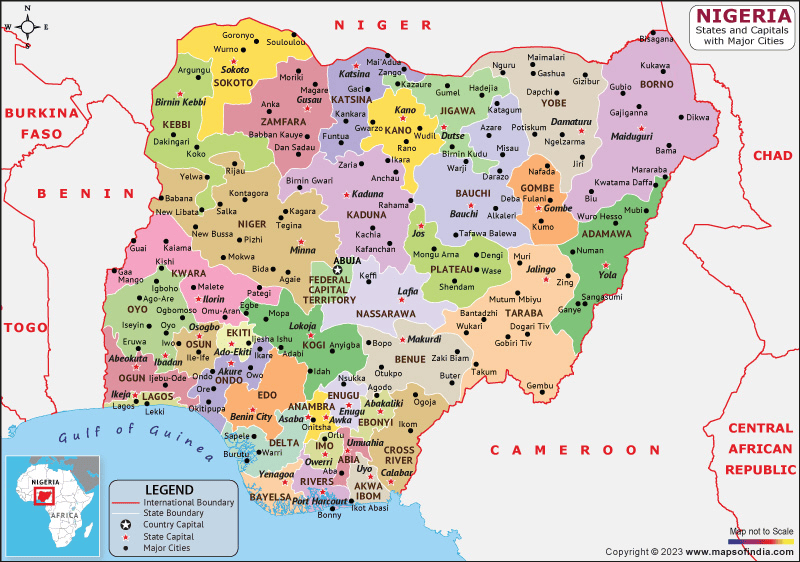
The three investigations published by The Searchlight are not merely exposés of wrongdoing. They are a portrait of a country at a crossroads.
One road leads toward a Nigeria where the law means what it says, where a yam thief and an embezzler face the same justice, where a council chairman cannot threaten a voter, where a President speaks when citizens are killed, where religion is a source of moral authority rather than a tool of class control. That road is difficult. It requires confrontation with the powerful. It requires institutions that answer to the constitution, not to the highest bidder.
The other road leads toward a Nigeria where the law is a weapon of the strong against the weak, where elections are decided by violence and money, where justice is a commodity and the poor are its victims. That road is easier. It requires only silence.
The President’s silence, the Attorney-General’s inaction, the Hisbah’s selective enforcement, the election tribunals’ corruption, these are all choices. They are not inevitabilities. They are decisions made by people who have decided that the current arrangement serves their interests.
The Searchlight will continue to record those choices. We will continue to name those who make them. We will continue to ask the questions that power would prefer not to answer.
History will record who spoke, and who chose silence. This newspaper has chosen to speak.
This editorial is based on three investigative reports published by The Searchlight: “When Law Becomes a Commodity” (on the two-track justice system), “Sharia’s Class System” (on selective enforcement in northern Nigeria), and “The Silence Before the Brink” (on political violence ahead of the 2027 elections).


Leave a Reply