
By Matthews Otalike, The Searchlight Investigative Analyst / November 25, 2026
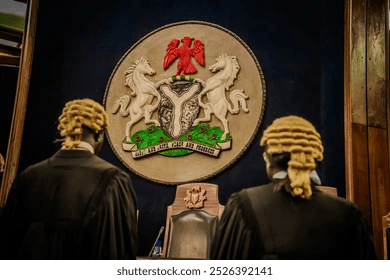
Nigeria’s justice system is no longer “the last hope of the common man”, as popularly touted. It has been systematically refashioned into an instrument serving the wealthy and the powerful. From a magistrate court sentencing a man to three years’ hard labour for stealing tubers of yam, to a Federal High Court offering an official who embezzled N225 million the option of a fine; the line is drawn with brutal clarity: the weight of the law depends on the weight of the defendant’s bank account. This is not episodic judicial unfairness. It is a system captured by political money, operating as designed. When the central promise of the rule of law, the same rules apply to everyone, is openly broken, the foundations of Nigerian democracy are eroding at a speed visible to the naked eye.
The Two-Track Justice System: A Chain of Evidence Built from Cases and Data

Nigeria’s criminal justice system has produced a de facto two-track arrangement. One track leads to prison. The other leads to freedom. In February 2026, an Osogbo Chief Magistrate’s Court heard the case of Akim Jimoh, a 28-year-old mechanic, convicted of stealing 17 tubers of yam valued at N35,000. He was sentenced to three years’ imprisonment with no option of a fine. His stated motive, in open court, was hunger.
In the same period, a Federal High Court in Lagos delivered a judgment of a different logic entirely: Calistus Obi, former acting Director-General of the Nigerian Maritime Administration and Safety Agency, convicted of embezzling N225 million in public funds, was sentenced to seven years, but “given the option of a N42 million fine.” He paid the N42 million and walked out of the courtroom. Between the two cases, the sums differ by a factor of more than 6,400. The direction of punishment is exactly inverted.
The Executive Secretary of the National Human Rights Commission, Tony Ojukwu, has named the essence of the problem: “Thousands of people spend years in prison awaiting trial, not because they are guilty, but because they are poor. Meanwhile, the wealthy escape justice through bail and access to legal defence. This is systemic bias at its worst.”
The Sultan of Sokoto, Muhammadu Abubakar, offered an even sharper characterization in a 2025 public address: “Today, justice is increasingly becoming a commodity that can be purchased. The poor are the victims of this justice, while the rich commit all manner of crimes and go scot-free.”
These are not opposition talking points. They come from within the establishment, the head of a national human rights institution, a traditional religious leader, and legal academics.
The Substantive Promise of the Rule of Law: Why “Equal Application” Is Non-Negotiable
The rule of law is not an abstract concept of legal philosophy. The United Nations Office of the High Commissioner for Human Rights defines it concisely: legal rules apply equally to all, regardless of status, origin, wealth, or any other factor; courts must be independent and accessible to all; judges must not favour any party. The Council of Europe puts it even more plainly: the rule of law means “no set of rules applies to the rich and powerful while another applies to everyone else.”
The substance of this promise is simple: when a person enters a courtroom, what determines their fate should be the facts and the law, not their ability to pay or their political connections. This is the fundamental dividing line between the rule of law and “rule by law.” Under rule by law, the law is a tool which the ruler uses to govern; under genuine rule of law, the law binds even the rulers themselves.

Nigeria’s problem is that the constitution speaks of the rule of law, but the operating logic is rule by law. Nigeria ranked 120th globally in the 2026 World Justice Project Rule of Law Index, scoring 0.33 on “absence of corruption” and 0.47 on “constraints on government powers”, a score that continues to deteriorate. What these numbers describe is a system that is harsh downward and lenient upward.
The Machinery of Capture: How the Judiciary Became an Appendage of Power
It sounds convenient to attribute judicial injustice in Nigeria to “a few bad judges”. However, the problem lies in structural incentives.
Financial dependence. The judiciary’s budget has long been subject to the executive arm. When a judge’s vehicle, office renovation, and promotion prospects are controlled by political actors, “independent adjudication” ceases to be an executable career option. The observation of activist Dobo Adeniran cuts to the bone: “When a judge knows that making the ‘wrong’ ruling, one favourable to the opposition, could cost him promotion or invite a malicious petition, the scales of justice are already tilted.”
Corruption in the election tribunals. A Leadership newspaper commentary had disclosed that in election petition tribunals, “large-scale bribes routinely change hands,” and the political class, “backed by billions in stolen public funds, weaponizes wealth to purchase judgments, on the firm belief that every judge has a price.” This explains an uncomfortable phenomenon: the ruling party dares to openly challenge opponents to “go to court,” because the courts have themselves been incorporated into the map of power. The judiciary is used as a “bureaucratic graveyard”, when an opponent enters the legal battlefield, the judgment has already been “bought, paid for, and sealed.”
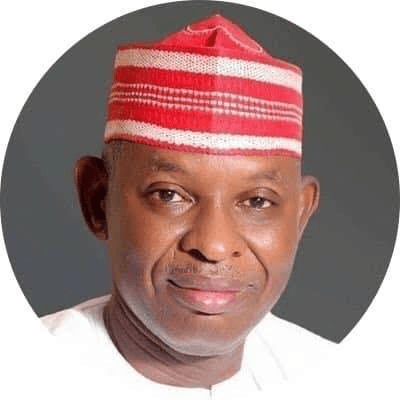
The 2023 Kano governorship case. In November 2026, the African Democratic Congress (ADC) publicly accused President Tinubu of interfering in the Supreme Court’s judgment on the Kano governorship election in exchange for Governor Abba Kabir Yusuf’s defection to the APC. The ADC’s statement was blunt: “The President has turned the administration of justice into an instrument of political transaction… He has sent a signal to the world that the rule of law in Nigeria is dead.” Whether or not this specific allegation is ultimately proven, it carries credibility precisely because the structural conditions described above already exist.
Where Does a Society That Protects the Powerful and Punishes the Weak End Up?
The foregoing shows that the consequences unfold in three layers, each already visible in Nigeria today.
Layer one: the collapse of trust. When citizens repeatedly observe yam thieves imprisoned and embezzlers of hundreds of millions paying a fine and going home, their understanding of the legal system undergoes a fundamental shift, that the law is not there to protect me; the law is there to manage me. Once that perception hardens, the willingness to cooperate disappears. Witnesses fail to appear, communities refuse to assist investigations, disputes are diverted to extra-legal resolution, not because Nigerians “don’t respect the law,” but because they rationally conclude that the legal system will not give them justice.
Layer two: the self-reinforcement of impunity. When the wealthy and powerful discover that the legal cost of crime can be offset by wealth and connections, what constrains their behaviour is no longer legal deterrence but the calculation of political risk. Corruption evolves from “a crime to be hidden” into “a cost to be managed.” Meanwhile, harsh punishment of the poor is deployed to prove that “the law is working”, a performative justice whose function is to sustain the system’s appearance of legitimacy, not to deliver fairness.
Layer three: the procedural death of democracy. Elections are the input end of democracy and courts are the adjudicators of electoral disputes. When the adjudicators themselves can be purchased, election results lose their ultimate anchor of legitimacy. It is the reason Adeniran’s warning deserves full quotation: “If the judiciary continues to be deployed as a tool for disqualifying opponents and legitimizing repression, we are not heading toward elections; we are sleepwalking into a one-party state disguised as a democracy.”
Professor Osaretin Izevbuwa of Igbinedion University, in a keynote address to the Nigerian Bar Association’s Benin branch in 2026, distilled it all into a single judgment: “When justice is for sale, innocent citizens suffer, criminals escape accountability, investors lose confidence, and democracy itself becomes fragile.”
The Searchlight’s Position
This Searchlight is not satisfied with repeating the already widely recognized fact of “judicial corruption.” What we must point out is the deeper problem: the crisis of the rule of law is not a crisis of judicial institutions; it is the chosen outcome of a political class that treats the justice system as spoils and will not voluntarily repair it. Reform will not come from those who benefit from the status quo.
Accordingly, this medium demands the following:
One: judicial financial autonomy must become an enforceable legal reality and not decoration in constitutional text. The judicial budget should be disbursed directly from the Consolidated Revenue Fund, severing the channels through which the executive arm can influence adjudication through resource allocation.
Two: the operation of election petition tribunals must be subjected to independent financial and procedural audits. The cost of purchasing judgments should be publicly investigated, not accepted as an open secret.
Three: civil society and the media should systematically document every “asymmetric judgment”, heavy sentences for stealing small amounts versus fines for embezzling vast sums, and convert these records into comparable public data. Naming injustice is the first step toward changing it.
Four: every politician who claims to respect the rule of law should be asked one simple question: Do you support public scrutiny of judges’ financial records, asset declarations, and sentencing patterns? Silence or evasion is itself the answer.
Conclusion: The death of the rule of law does not require tanks rolling into the courthouse. It only requires convincing the poor that the law was not written for them; convincing the rich that the law will not touch them; and convincing everyone that the outcome of walking into a courtroom is decided before they cross the threshold. How far Nigeria is from that condition depends on how many people are still willing to say what is happening. This Searchlight chooses to say it.


Leave a Reply