
The Searchlight Editorial Desk · Investigative Report / November 24, 2026
With less than two months to Nigeria’s presidential election on 16 January 2027, political violence is spreading at a dangerous pace. Multiple lines of evidence point to thugs linked to the ruling All Progressives Congress (APC) carrying out systematic attacks on campaign events of opposition parties, particularly the Nigerian Democratic Congress (NDC) and the African Democratic Congress (ADC). More alarming still is the silence at the highest levels of government, and the openly inflammatory statements by figures such as Federal Capital Territory (FCT) Minister Nyesom Wike and Kuje Area Council Chairman Samuel Danjuma Shekwolo, which are providing de facto cover for violent conduct. This is not a series of isolated security incidents. It is a structural assault on the credibility of Nigeria’s democratic electoral process.
The Pattern of Violence: Organized, Targeted, and Unpunished
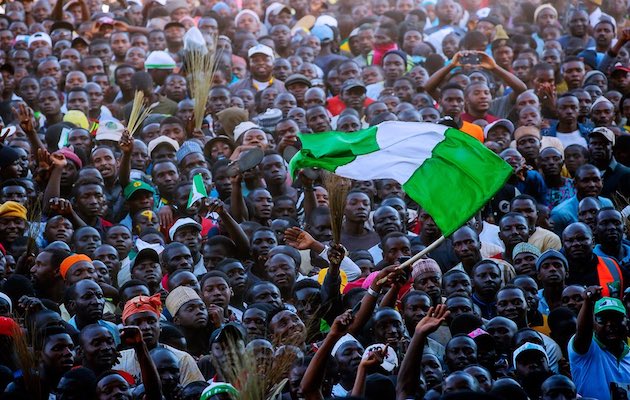
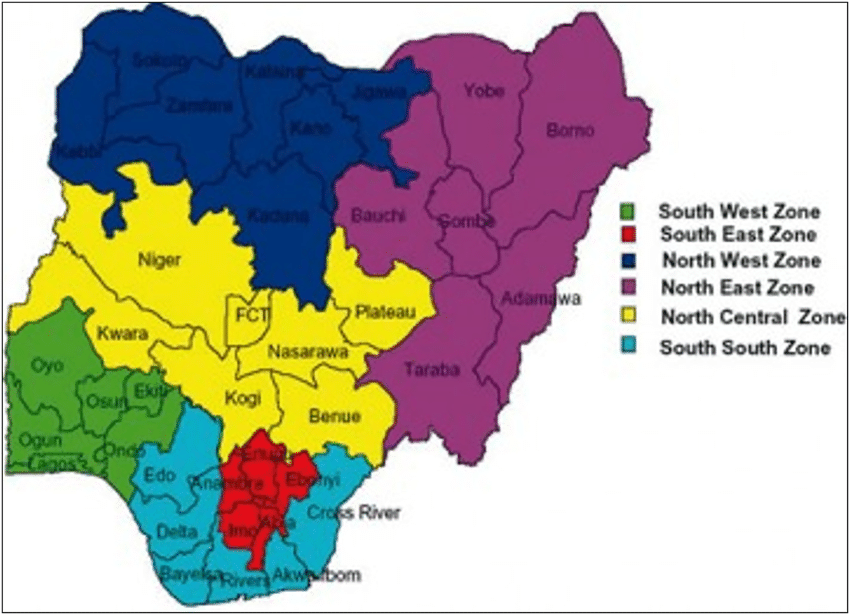
Since the formal launch of campaigns on 19 August 2026, politically motivated attacks have been recorded across Kogi, Benue, Kano, Enugu, Kaduna, Delta, and Rivers states, among others. While the APC also claims that its members have been attacked, the overwhelming weight of reporting indicates that the targets are disproportionately opposition parties, the NDC, the ADC, and the Peoples Democratic Party (PDP).
The specific incidents establish a pattern. On 15 September in Kogi State, suspected APC-funded thugs disrupted an ADC meeting in Ejule, Ofu Local Government Area, firing shots into the air and leaving at least one ADC member seriously injured. On 8 September in Benue State, the convoy of NDC presidential candidate Peter Obi was blocked by suspected thugs in Makurdi, with more than ten supporters injured and taken to hospital. In Delta State, thugs disrupted an NDC campaign rally in Warri, with reports of gunfire directed at campaign teams. In Kaduna, ADC members welcoming their governorship candidate back from a pilgrimage were attacked, with multiple vehicles destroyed. In Enugu, an NDC meeting was shot at, leaving members wounded.
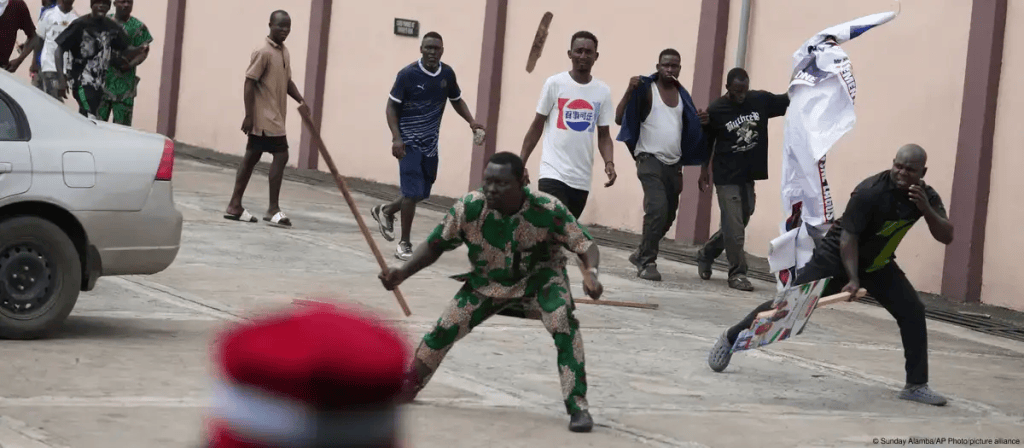
The Searchlight notes that the attacks are not random. They are concentrated in the period when opposition parties, particularly the NDC and ADC, are attempting to build the kind of coordinated electoral challenge that could threaten the APC’s hold on power. The physical intimidation of opposition campaign events is the lowest-cost method of suppressing political competition.
Wike and Shekwolo: Public Officials Weaponizing State Authority
If street violence is the symptom, the public statements of officials are the cause. FCT Minister Nyesom Wike has publicly defended a promise of N10 million to councillors who “deliver” their wards to Tinubu in January. Wike insists this is “reward for political mobilization and commitment,” not vote-buying. His analogy: telling a son you will buy him a house if he comes first in class, is not bribery.
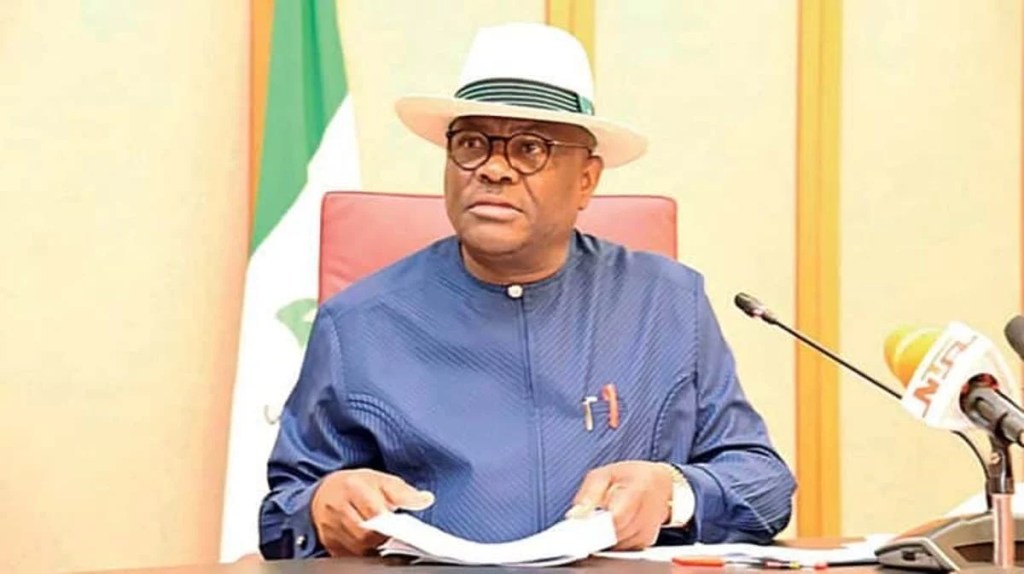
This defense fails on its own logic. The distinction between a “reward” and a bribe turns not on timing but on consideration. What Wike is promising to purchase is the “delivery” of a ward, a phrase that in Nigerian political usage points toward control of the outcome, not persuasive mobilization. A cabinet minister offering cash incentives conditioned on electoral “delivery” is not deploying persuasion. He is deploying the weight of his office and access to resources. Even if the funds were private, his position as the chief executive of the FCT gives the promise an unmistakable coercive undertone.
More direct still is the threat from Samuel Danjuma Shekwolo, Chairman of Kuje Area Council. In a widely circulated video, he declared that in his jurisdiction, residents must either support the APC or leave. He is reported to have warned that anyone who would not vote for the APC in January should exit the council area. Amnesty International’s Nigeria section has rightly characterized this as “a call to violence” and “a direct attack on freedom of association and liberty of person.” A local government chairman publicly using residency as leverage to coerce political choice has crossed the line from free speech into criminal intimidation.
Tinubu’s Silence: Strategic Tolerance or Loss of Control?
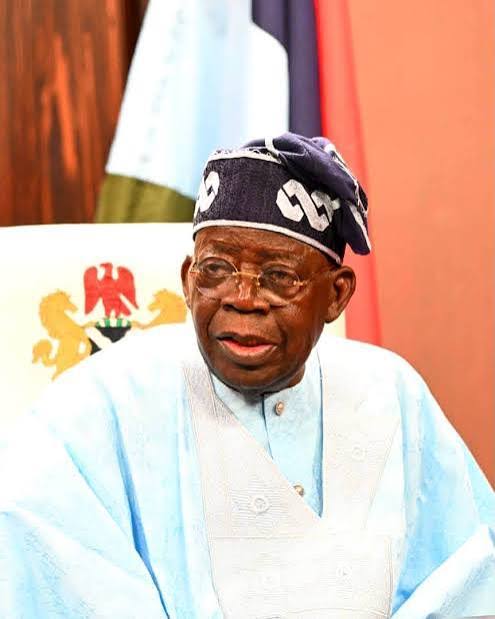
The Searchlight must point to an uncomfortable pattern: in the months during which these attacks have intensified, President Bola Tinubu has remained largely silent. The ADC presidential campaign committee has stated directly that the President’s condemnations of political violence “appear directed at opposition parties rather than members of his own party,” and that he has “not deemed it necessary to call his governors and party members to order.”
Human rights activist Aisha Yesufu has posed the question that the President’s handlers have failed to answer: when people are killed and buried, what has Tinubu said? She noted specifically the killing of an NDC supporter in Enugu, a sole surviving son, whom Peter Obi visited to condole, while the President and the APC said nothing.
This silence is not neutrality. In political ethics, when violence has a clear partisan direction and the head of state chooses not to speak, the silence itself is a signal: the perpetrators will not be held accountable.
A defense worth considering is that the APC has also suffered violence. In November 2026, armed thugs attacked an APC governorship campaign rally in Kaduna, destroying journalists’ equipment and forcing attendees to flee over walls. But this fact strengthens rather than weakens the case for accountability. The proliferation of violence regardless of victim identity is directly linked to the systematic failure of law enforcement to act. The Kaduna attack occurred at a stadium a wall away from the state police headquarters. That detail alone suggests that the problem is not one of capacity.
The Consequences for Democracy: Not Just “Another Violent Election”
Nigeria is not facing election violence for the first time. What makes 2027 distinct is the convergence of three factors.
First, the opposition is beginning to coordinate. The ADC, NDC, SDP, and other parties have signed agreements and are planning a joint platform aimed at “ensuring the credibility of the 2027 presidential election results.” The timing of the attacks, precisely as opposition coordination accelerates, is not coincidental. When a loose opposition coalition begins to acquire electoral viability, physical intimidation of its campaign events becomes the cheapest available tool of containment.
Second, violence is proceeding alongside a crisis of credibility at the electoral commission. The ADC has publicly questioned the Independent National Electoral Commission (INEC) over what it calls impossibly short preparation windows for party accreditation exercises, describing the process as an “ambush” rather than preparation. When physical violence and procedural exclusion occur simultaneously, the twin pillars of electoral legitimacy are under strain at once.
Third, the erosion of international credibility is gradual but irreversible. Nigeria is often described as Africa’s largest democracy. The substance of that title lies not in the frequency of elections but in the credibility of power alternation. The precedent established by Jonathan’s peaceful handover in 2015 is being replaced by a different logic of governance: elections are no longer a process of competitive authorization but an interest to be “defended.”
The Searchlight’s Demands
Based on the foregoing, The Searchlight demands:
1. President Tinubu must immediately, unequivocally, and unconditionally condemn all political violence, without partisan qualifiers and without distinguishing between perpetrators. Specifically, he should publicly direct the Attorney-General and the Inspector-General of Police to open criminal investigations into the statements of Wike and Shekwolo, on grounds of threats to personal safety and electoral coercion. Every day the President’s silence continues, the expected cost of violent conduct falls further.
2. FCT Minister Wike must withdraw the N10 million “reward” promise. Whatever its legal characterization, in an election cycle marked by escalating violence, a cash-for-ward-delivery incentive only reinforces the perception that electoral outcomes are commodities to be purchased with money and power. That perception is the psychological soil in which political violence grows.
3. The Inspector-General of Police and the National Security Adviser must conduct independent investigations into documented violent incidents and publish the identities and dispositions of those involved. The Kaduna stadium attack, the killing of Nwolieye, and the Oregun town hall attack should be prioritized. The results must be public, not an internal report, but a public record open to scrutiny by civil society and the media.
4. International observers, including the Commonwealth, the European Union, and the African Union, should incorporate the statements of Wike and Shekwolo into their pre-election assessments and explicitly characterize them as threats to free and fair elections, not as “campaign rhetoric.”
Conclusion: Fifty days to the 16 January election, Nigeria stands at a familiar crossroads: whether to allow violence to become the normal accompaniment of elections, or to make accountability the baseline. The President’s silence can be read in more than one way. But for the mother in Enugu who lost her only son, for the journalist who fled over a wall at the Kaduna stadium, for the ordinary resident of Kuje told to “support or leave,” the silence has only one meaning. History will record who said what and when. It will also record who chose to say nothing at all.


Leave a Reply