
By Matthews Otalike, The Searchlight Investigative Desk / November 23, 2026
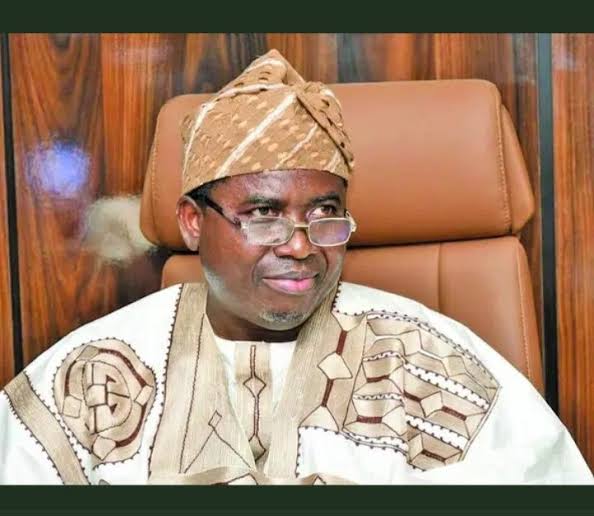
The fact that INEC Chairman Joash Amupitan had to announce the removal of 1,609,553 records from the preliminary voter register is itself the most damning evidence against the commission’s credibility. A clean-up of this magnitude, disclosed less than two months before a general election, does not restore confidence. It confirms the precise fear that has gripped Nigeria since the register went online in October: that the database underpinning the 2027 election was compromised, and that the people who compromised it were inside the commission.
The Numbers Amupitan Disclosed and What They Conceal
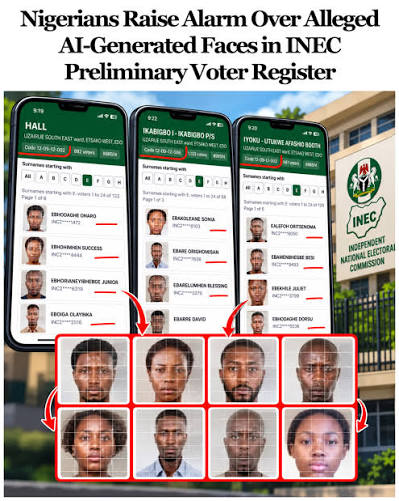
On 9 November 2026, Amupitan briefed journalists in Abuja on the outcome of the review of the Preliminary Register of Voters. The figures were precise: 11,088,238 records harvested from the 2025/2026 Continuous Voter Registration exercise; 1,545,052 initially flagged by the Automated Biometric Identification System (ABIS); 1,277,052 confirmed invalid and excluded before the preliminary register was published; a further 331,608 invalid registrations identified during the review; and 873 records belonging to verified deceased persons were discovered. Put together, the 1,608,660 invalid registrations plus 873 deceased records total 1,609,553.
The precision is both reassuring and incriminating. It demonstrates that INEC possesses the technical capacity to identify anomalies. It also demonstrates that those anomalies existed at scale, and that they entered the system through channels the commission did not control.
Amupitan himself identified the vector. “You see, it takes just one person to compromise the password,” he said. “Some of those things are given in authority. And when that is done, you know what AI can do”. Fifty-four persons across ten states have been identified as complicit and face disciplinary action including possible prosecution.
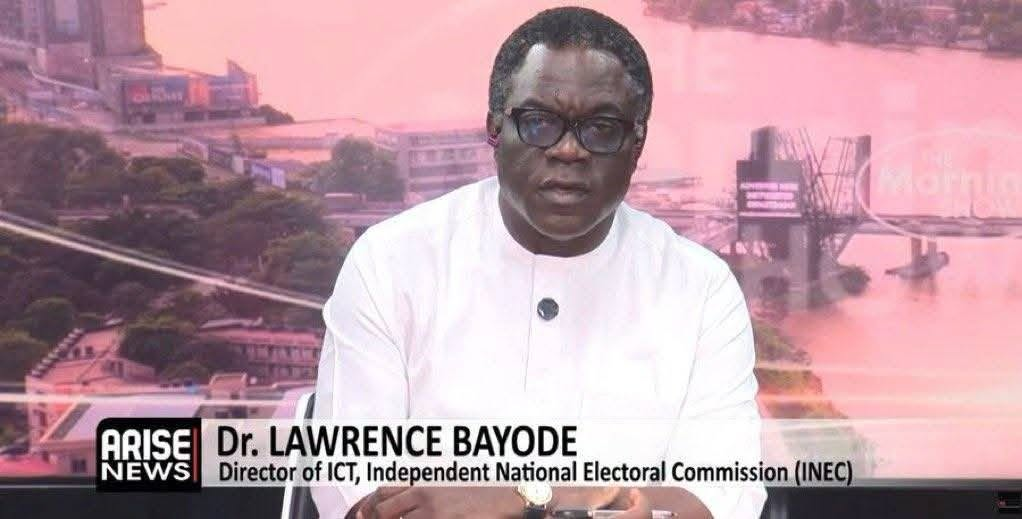
The commission’s Director of Information and Communication Technology, Lawrence Bayode, was more explicit. He admitted that the commission’s own registration officers uploaded AI-generated photographs into the national voter database, using their official login details to deliberately inject fake records.
This is not a technical glitch. It is an insider breach, executed by people whose job was to protect the integrity of the register. The fact that ABIS eventually flagged the anomalies does not absolve the commission of responsibility for allowing them to enter the system in the first place.
The Ten Million Ghost Voter Allegation: What Can and Cannot Be Said
Opposition figures and online commentators have alleged that INEC has created over ten million fake voters for use by the Tinubu/APC ticket in January. The claim has been circulating widely on social media, but it has not been substantiated by any named whistleblower, leaked document, or forensic audit.
What is verifiable is that the Peter Obi Media Office has accused “operatives linked to the Presidency, working with some INEC officials” of plotting to insert fictitious names into the voter register and relocate polling and collation centres, particularly in the South-East. However, these are allegations, not established facts.
But the political significance of the ten-million claim does not depend on its factual accuracy. It depends on the fact that a substantial portion of the Nigerian electorate is prepared to believe it. That belief is not irrational. It is the logical consequence of a commission that published its register late, acknowledged AI-generated entries within it, and has not yet submitted its clean-up process to independent forensic scrutiny.
The Forensic Audit Demand and INEC’s Refusal to Submit
The Southern and Middle Belt Leaders Forum (SMBLF), in a statement jointly signed by Afenifere leader Oba Oladipo Olaitan, Middle Belt Forum President Dr Bitrus Pogu, Ohanaeze Ndigbo President-General John Azuta-Mbata, and PANDEF National Chairman Amb Godknows Igali, demanded an “urgent, independent forensic audit of the voters’ register, by electoral technology specialists, civil society representatives and other qualified stakeholders”.
The Guardian Nigeria’s editorial board reached the same conclusion: “The Commission should therefore undertake a comprehensive audit of the register, strengthen its technological safeguards, and ensure compliance with electoral laws”.
INEC has not announced such an audit. It has chosen internal review, internal discipline, and internal assurances. For an institution whose data integrity has been publicly breached by its own staff, self-audit is not accountability. It is containment.
The Commission’s admission that many of the questionable photographs and multiple-registration complaints circulating publicly relate to records captured between 2011 and 2023 makes the case for external scrutiny even stronger. The problem is not a one-off glitch in the current registration cycle. It is a decade-old accumulation of unverified entries that INEC is only now attempting to address, with less than two months before the vote.
“Rig and Die”: The Grammar of Desperation and the Law’s Limits
The slogan “Rig and Die” has become the defining rhetorical weapon of the 2027 election cycle. It entered mainstream political discourse in October 2026 when former Deputy Senate President Ovie Omo-Agege, speaking at a campaign event in Delta State, declared: “Anybody who rigs the election on that day, we will kill him! If you don’t value your life, come and rig the election. It is rig and die”.
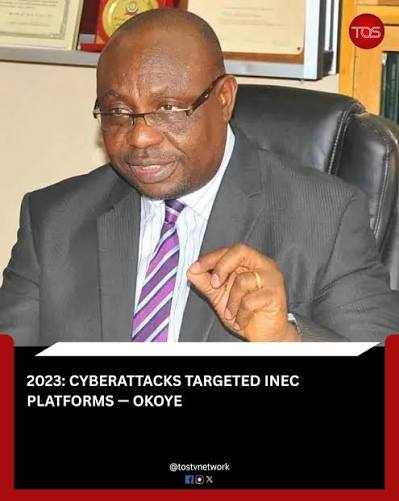
The legal response has been swift and, in its own terms, correct. Former INEC National Commissioner Festus Okoye, appearing on Arise News, invoked Section 132 of the Electoral Act: “No individual, even under Section 132 of the Electoral Act, is permitted to treat anybody with the use of force or violence. If you believe that anybody has committed an offence during an election period or during an election, your responsibility is to report the person to the lawful security agencies… but not to incite people to take the law into their own hands; that is self-help, and self-help is not permitted in a democratic system”.
Human rights lawyer Inibehe Effiong offered a different reading. “Rig and die does not mean vote me or die,” he argued. “If you decide to engage in thuggery and try to disrupt the electoral process, whatever happens to you is entirely your choice”. Effiong also raised a pointed historical comparison: former President Muhammadu Buhari warned in 2019 that ballot-box snatchers would do so “at the risk of their lives,” and both Bola Tinubu and Festus Keyamo publicly defended that warning at the time.
Both positions contain truth. Okoye is right that private violence has no place in a constitutional order. Effiong is right that the outrage directed at opposition warnings rings hollow when the ruling party’s own standard-bearers once used identical language.
But the deeper issue is what the slogan reveals about the state of public confidence. When citizens conclude that the formal mechanisms for redressing electoral fraud, INEC’s complaints process, police investigation, and judicial adjudication, are unlikely to deliver accountability, the temptation to substitute private enforcement becomes overwhelming. “Rig and Die” is not a legal doctrine. It is a symptom of institutional failure.
The Northern Crack: “Tinubu Must Go” and the Jingir Backlash
The political geography of 2027 is shifting in ways that should trouble the APC regardless of what happens with the voter register.
Daily Post reports that campaign slogans such as “Ba ma yi” (We don’t want) and “Tinubu Must Go” are gaining traction in parts of the North, driven by economic hardship and insecurity. A viral video showed school children in Maiduguri chanting “Tinubu Must Go”. These are anecdotes, not polling data. But they reflect a mood that the APC cannot afford to dismiss.
The religious dimension is equally fraught. Sheikh Sani Yahaya Jingir, the influential Izala cleric who campaigned for the Muslim-Muslim ticket in 2023, reignited controversy in August 2026 by declaring at a state-sponsored mass wedding in Kano: “I am calling on people to come and let us do Muslim-Muslim again.” He described Nigeria as a Muslim-majority country and said: “I know this statement pains the unbelievers”.
The backlash was immediate and came from unexpected quarters. Former Kano Governor Rabiu Kwankwaso, now the NDC vice-presidential candidate, said the “good people of Kano do not endorse or support these divisive remarks”. Femi Fani-Kayode, a prominent APC figure and ambassador to South Africa, condemned the rhetoric as “extremist” and warned that it could alienate Christian voters: “For us to win, we need both Muslim and Christian votes. What he has done is give the opposition something to hold on to and use against us, and this is unfortunate”.
Fani-Kayode went further, suggesting that Jingir may be “secretly working against” Tinubu and Shettima. Whether or not that accusation is true, it captures the self-defeating logic of Jingir’s intervention: in attempting to mobilize Muslim voters on religious identity, he has handed the opposition a weapon to portray the APC as sectarian and exclusionary.
Recommendations: What Nigerians Can Do
First, demand the forensic audit as a non-negotiable condition. The SMBLF, The Guardian, and civil society organizations have all called for it. INEC has not agreed. The pressure must be sustained until the commission publishes the name of the auditing firm, its terms of reference, and its full report, before the final register is certified on 15 December.
Second, treat the 54 identified officials as a test case. Amupitan said they face disciplinary action and possible prosecution. Nigerians should track what actually happens to them. If the consequences are administrative slaps on the wrist, the deterrent effect will be zero, and the next round of manipulation will be more sophisticated.
Third, redirect the energy behind “Rig and Die” into organized polling-unit defence. Threats of violence are legally indefensible and politically counterproductive. The same determination should be channelled into party agents at every polling unit, independent parallel vote tabulation, and real-time documentation of results before they leave the polling station.
Fourth, hold religious leaders accountable for the political uses of faith. Jingir’s remarks were condemned by Kwankwaso, Fani-Kayode, and the Ecumenical Youth Association. The APC government has kept mum as if it bought into what Jingir said. Northern voters should ask their clerics a simple question: does this political arrangement put food on the table, secure the roads, and create jobs? If the answer is no, the religious argument is a distraction from the material stakes.
Fifth, prepare for the possibility that the result will be contested, and build the legal and civic infrastructure to contest it credibly. The 2023 experience showed that INEC’s technological promises can falter. 2027 cannot rely on the same assumptions. Lawyers, data analysts, and civil society monitors should be ready to document irregularities in real time and pursue redress through the courts, and not on the streets.
Conclusion
INEC’s 1.6 million deletions are a confession disguised as a correction. They tell Nigerians that the register was contaminated, that the contamination was internal, and that the commission’s response has been to clean house behind closed doors while asking the public to trust the outcome.
Amupitan has promised that the final register will be published on 15 December. Between now and then, the commission has a choice. It can submit its work to independent forensic scrutiny and accept whatever findings emerge. Or it can continue to manage perception through press briefings and internal discipline, and hope that Nigerians accept its assurances on faith.
The evidence so far suggests that the Nigerian public is not in a trusting mood. The slogan on the streets, however problematic its legal status, is a warning. The question for INEC is whether it will be remembered as the commission that cleaned up its register and proved it, or the one that cleaned up its register and asked Nigerians to take its word.


Leave a Reply