
By Matthews Otalike, The Searchlight Investigative Desk / November 21, 2026
On October 28, 2026, The Searchlight wrote on “The Borrowed Republic: Where Tinubu’s Foreign Loans Went, and Why Nobody Can Say”. We asked where the money went, and Abuja went silent.
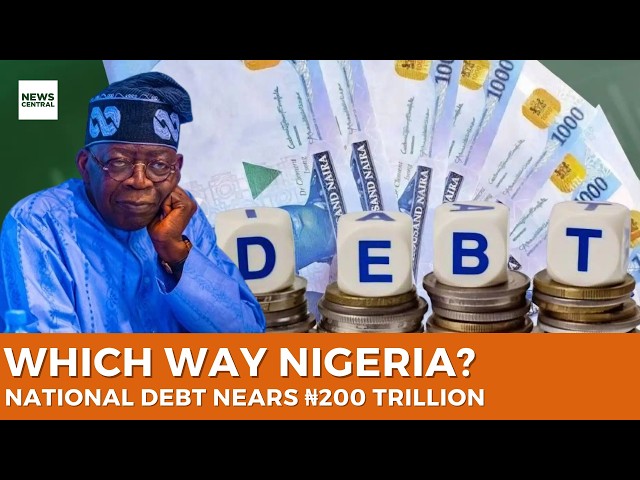
When we published that investigative article, we expected anger. We expected denial. We expected, at least, an explanation. What we got was silence. That silence is now our story line. Nigeria did not borrow in secret. The World Bank publishes its approvals. The Debt Management Office publishes our debt stock. What Nigeria has refused to publish is the most important thing: a state-by-state, naira-by-naira account of where the disbursed money went. Let us put the figures on the table, so no one can accuse us of guessing.
The Figures Abuja Cannot Deny
1. Adolescent Girls Initiative for Learning and Empowerment (AGILE)
$700 Million loan was approved and so far, the amount disbursed is $148.35 million.
The undisbursed amount is $558.22 Million. This project was designed in 2020, before President Tinubu took office. It was meant for girls in secondary schools. Seven states were to benefit at first, then expanded to cover eighteen states. If $148 million has been spent, where are the classrooms? Where are the girls? Name the schools. Name the local governments. State when and where the balance $558.22 million will be released for the project.
2. For the Nigeria Women Programme (NFWP-SU), the sum of $500 million loan was approved and what has been disbursed so far is $109.62 Million. This was reportedly meant for Women Affinity Groups, that is, poor women in cooperatives. If $109 million has been released, list the groups, list the women, and list the amounts they received. In a country where a woman sells akara to feed her children, $109 million cannot disappear without a trace. What happened to the unspent $390 million?
3. The Big Borrowing
In June 2024, $2.25 Billion loan was approved for economic reforms. In September of the same year (2024), another $1.57 Billion was approved for HOPE and SPIN; health, education, and power.
In March 2025, another $1.08 Billion loan was approved. Now, the government is seeking another $21.67 Billion in external borrowing. The total external debt has risen from $43.1 Billion in May 2023 to $54.5 Billion by June 2026.
The Searchlight is not against borrowing. Every nation borrows. We are against borrowing in the name of the poor, and spending in the dark. The Question Is not whether we borrowed. The question is: Where is the impact? Go to any village in any state in Nigeria and ask the market women: “Did the $500 million for women reach you?” Ask the school girls in the first seven and later eighteen states: “Did the $700 million for girls reach your school?” Their answer is the economy. Their hunger is the audit.
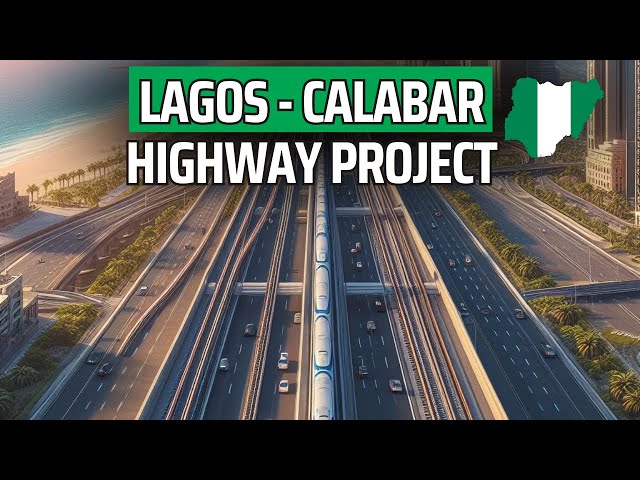
While the poor wait, we watch a different kind of spending, the politics of defection, the wooing of governors, the endless campaign for 2027 while 2026 is still hungry. The Searchlight is not accusing. We ask: If there is no money for the poor, where is the money for politics coming from? While the poor wait, we watch one company, Hitech, owned by Gilbert Chagoury, a long-time friend of the President receive the Lagos-Calabar Coastal Highway through direct procurement, without open competitive bidding. The Minister of Works, David Umahi, says this is lawful. We do not say it is unlawful. We say: Publish the Bureau of Public Procurement certificate. Publish the full contract. Let Nigerians judge.
While the poor wait, we hear an APC chieftain, Alwan Hassan, say on national television that ministers pay billions to be appointed, and then seek to recoup it. The APC says he was speaking of the past. We say: If it was the past, name the past. If it is not the present, prove the present is clean by publishing how appointments are made.


Leave a Reply