
By Matthews Otalike, The Searchlight Investigative Desk / November 19, 2026
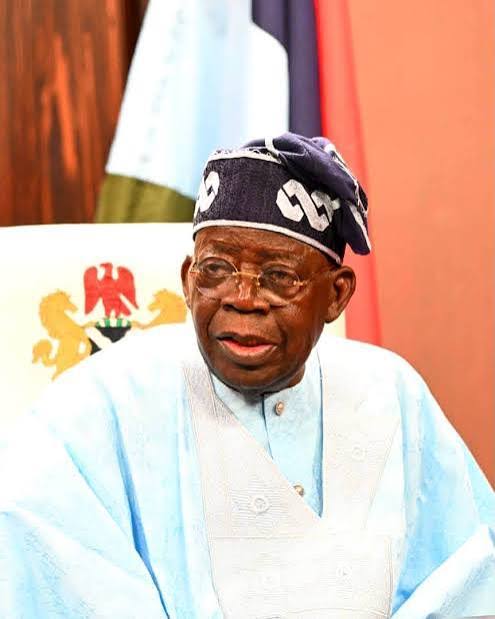
President Bola Tinubu’s two signature utterances from the 2023 campaign, the London “snatch it, grab it, run with it” remark and the Lagos pledge that “if I don’t provide electricity, don’t vote for me”, serve as dual tests of his leadership integrity. Three and a half years later, the logic of political acquisition embedded in the former has persisted in his governing rhetoric, while the latter has been falsified by the actual deterioration of electricity supply and public admissions from his own spokesmen. This instrumentalization of campaign promises does more than damage the baseline of executive accountability. It sends a dangerous signal to the electorate: that electoral mandates can be built on words that need not be honored, and that democracy’s substantive core, the use of the ballot to hold power accountable, is being systematically hollowed out.
I. “Snatch It, Grab It, Run With It”: From Campaign Rhetoric to Governing Logic
Before the 2023 election, Tinubu’s remarks to supporters in London were widely recorded and have continued to reverberate. A fact-check by Dubawa confirmed that Tinubu said: “Political power is not going to be served in a restaurant. It is not served a la carte. It is what we are doing. It’s being determined to do it at all costs. Fight for it! Grab it! Snatch it and run with it!” The fact-checker correctly noted that the clip did not explicitly mention ballot boxes or election day, and that the claim he was directly instructing supporters to snatch ballot boxes was false. But the more consequential issue is not the literal reference to ballot boxes. It is the framing of political power as an object to be seized “at all costs”, a framing that, once normalized at the top of a political movement, inevitably shapes the conduct of actors further down the chain.
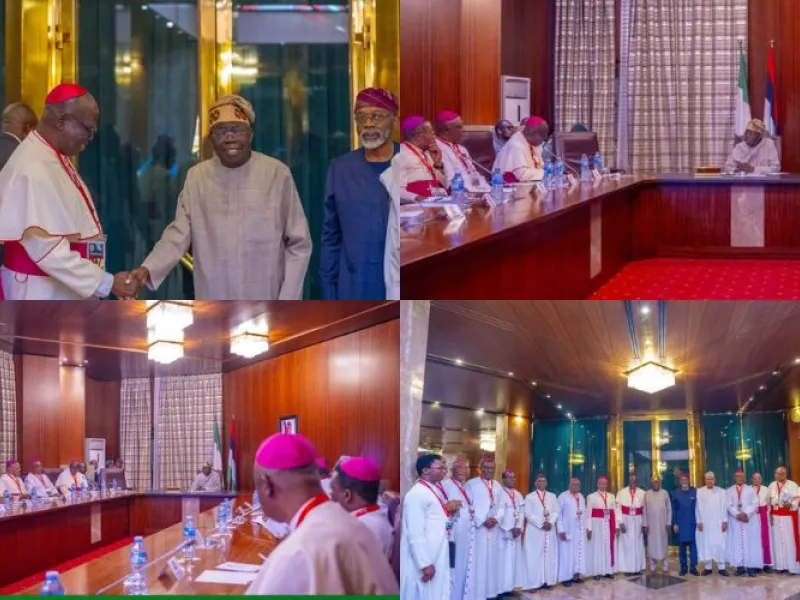
What is more troubling is that this acquisitive logic did not recede after Tinubu entered the presidency. In July 2026, during a meeting with Catholic bishops, he remarked that “all is fair in politics”. Professor Damian Opata, while defending the statement as a reflection of political realism, conceded that critics were justified in arguing that a president “should exercise greater caution in his choice of words because his office embodies the country’s conscience and ethical standards”. The trajectory from “snatch it and run with it” to “all is fair in politics” is not a story of a candidate maturing into a statesman. It is a story of a political ethic being openly articulated, then openly defended, at the highest level of government.
II. The Electricity Pledge: A Verifiable Broken Promise
If the “snatch it” remark points to questions about the quality of democratic procedure, the electricity pledge is a naked accountability test. In December 2022, Tinubu told an audience in Lagos: “Whichever way, by all means necessary, you will have electricity, and you will not pay for estimated bills anymore. A promise made will be a promise kept. If I don’t keep the promise and I come for a second term, don’t vote for me”. He explicitly attached his own re-election to a measurable outcome.
The record three and a half years later is damning. When Tinubu was sworn in on May 29, 2023, Nigeria’s peak electricity generation stood at 4,735.1 megawatts. By November 2026, generation had plunged to 2,945 megawatts, with twelve power plants producing zero megawatts and about sixteen others producing a combined output expected to serve more than 200 million Nigerians. The APC Presidential Campaign Council’s own spokesman, Dele Alake, has publicly acknowledged that improving the power sector remains “unfinished business”. Atiku Abubakar’s campaign council put it bluntly: “President Tinubu promised steady power and an end to estimated billing. That promise has not been kept”.
The critical point is not whether four years is sufficient to solve a decades-old infrastructure crisis. No serious policy analyst would claim it is. The point is that Tinubu himself chose to make the promise a verifiable trigger for accountability. By attaching “don’t vote for me” to the pledge, he invited the electorate to use that specific outcome as a measure of his broader credibility. When the measure reads failure, his defenders do not accept the verdict. Instead, they argue that the “full context” of the promise has been omitted, that Tinubu had added a caveat about providing “adequate reasons” for failure. Former Minister Babatunde Fashola went further, claiming the recording should have been played longer because Tinubu had said “unless I give you adequate reasons”. This retrospective clarification is itself more revealing than the power shortage. It demonstrates that the promise was, at the moment of its making, a tool for winning votes, not a governing contract.
III. The Deeper Damage to Democratic Development
These two threads converge on a deeper institutional consequence. Democracy depends on a basic norm: campaign promises need not all be fulfilled, but failure must carry an identifiable political cost. The destructive aspect of the Tinubu case is that it demonstrates two simultaneous escape routes from that cost. First, the retroactive reinterpretation of campaign language, the, electricity pledge is now said to have been “conditional,” despite the plain wording of the recording. Second, the definition of political competition itself as a domain unbound by normative constraints, which pre-emptively dissolves any rule-based demand for accountability.
The admission by Edo State’s information commissioner, Kazeem Afegbua, is telling: he acknowledged that Tinubu “may not have fully delivered on all the promises of 2023,” but immediately pivoted to a macro-narrative about economic reforms. This “acknowledge but redirect” mode of discourse is precisely the signature of an accountability vacuum: the failure is conceded as fact, yet generates no political consequence. When non-delivery becomes a condition that can be lived with, elections degrade from mechanisms of accountability into rituals of authorization, and the ballot loses its practical efficacy as a tool of redress.
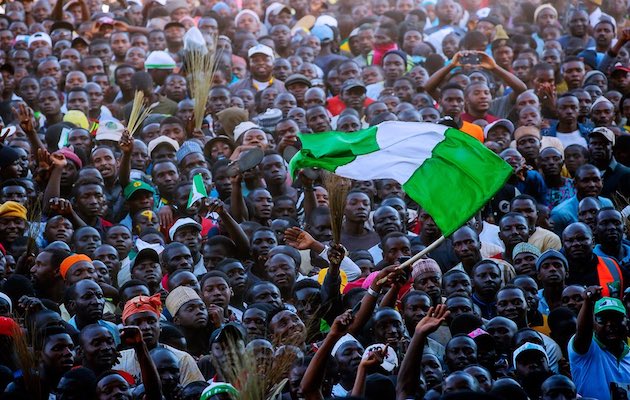
Nigeria’s democratic predicament is not that a president failed to deliver electricity. It is that a president can make a publicly verifiable vow, fail to meet it, and seek a second term without incurring a decisive political price. What Tinubu is doing, in effect, is further devaluing the word “promise” in Nigeria’s political vocabulary. And for a democracy still consolidating, the devaluation of the promise is the death of accountability.
Rebutting the “Inherited Crisis” Defence: Why Structural Reform Arguments Fail the Promise Test
Bottom line first: The “inherited crisis” defence has a factual basis, the Tinubu administration did inherit a power sector crippled by insufficient generation, fragile gas supply, a collapsing transmission and distribution grid, and crushing legacy debt. Yet this defence collapses precisely within the accountability framework that Tinubu himself constructed. His 2022 pledge carried no caveat of “subject to inherited conditions”; it bound “electricity supply” and “an end to estimated billing” directly to his own re-election. More critically, three and a half years later the data do not show generation climbing steadily along a “fixing the inheritance” trajectory, they show it falling from roughly 4,735 MW at inauguration to about 2,945 MW in November 2026, punctuated by repeated grid collapses. Structural reform can explain; it cannot substitute for the accountability trigger that Tinubu himself set.
Defence 1: “We inherited a mess”
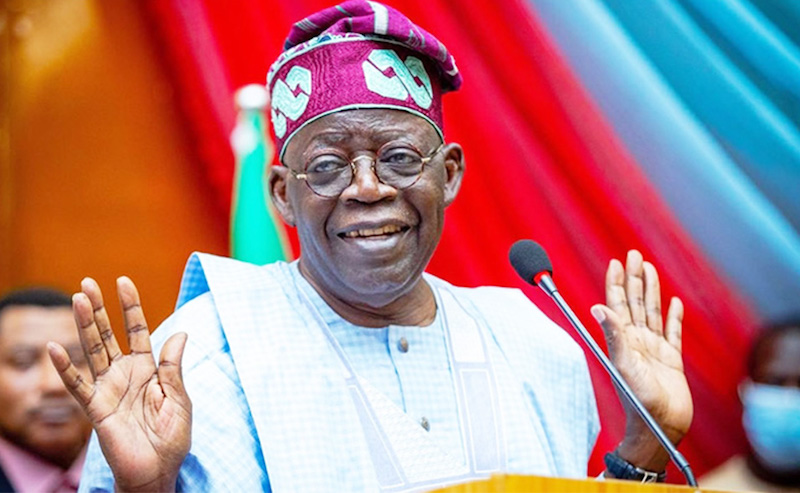
The defence: In his 2026 Democracy Day address, Tinubu laid out the inheritance argument systematically: on taking office in 2023, the power sector suffered from “chronic generation shortfalls, unreliable gas supply, and transmission infrastructure too fragile to evacuate available power,” while distribution companies carried massive losses and a metering gap of over four million, with the entire value chain “drowning in legacy debt.” APC spokesman Dele Alake quantified it further, claiming accumulated legacy debt between 2015 and 2025 exceeded ₦6 trillion.
The rebuttal: The inheritance argument is accurate in describing the starting point, but it dodges the central question: did Tinubu know that starting point when he made the promise? The answer is plainly yes. When he addressed the private sector in Lagos in December 2022, Nigeria’s power malaise was already a public, decades-old fact. He chose, knowing the inheritance, to set the promise as “if I don’t deliver, don’t vote for me,” which means he voluntarily accepted being judged by outcomes rather than by effort. The inheritance defence is essentially an argument that the standard of judgment should be changed. But the power to change the standard does not rest with the defenders; it rests with the man who made the promise, and he already locked the standard in place with “don’t vote for me.”
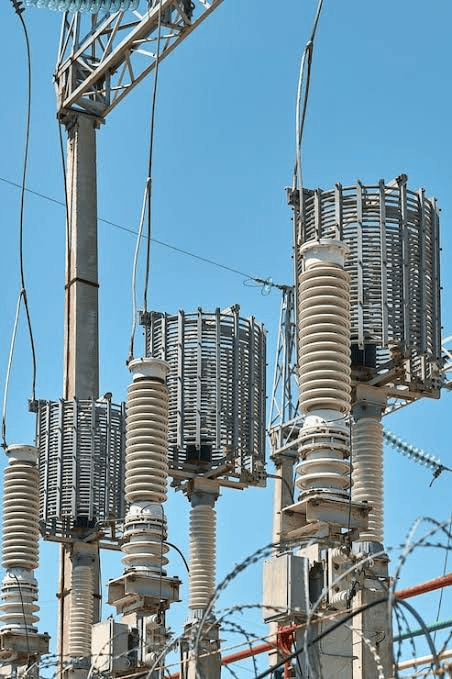
Moreover, the inheritance argument cannot explain the direction of the trend. If reform were producing results, generation should at least show a trajectory of upward movement amid fluctuations. The record shows the opposite: peak generation of about 4,735 MW at inauguration; a collapse to as low as 39 MW during three grid failures in January 2026; and roughly 2,945 MW nationally in November 2026, with twelve plants producing zero output. Conceding that the starting point was bad does not justify an ending point that is worse.
Defence 2: “Reform takes time; we’ve done substantial groundwork”
The government lists a series of structural measures: the Electricity Act signed in June 2023 devolving authority to states, approval of ₦3.3 trillion to clear legacy debt (with about ₦1.23 trillion paid), over 2.8 million customers metered under the Presidential Metering Initiative, more than 15,000 MVA of new transmission capacity, and a new national grid control centre. Alake concedes the power problem is “a work in progress” but insists the reform direction is correct.
These measures are not fictitious, but the problem is their logical relationship to Tinubu’s promise. Tinubu promised two perceptible outcomes “electricity supply” and “an end to estimated billing” not intermediate processes like legislative devolution or debt restructuring. Presenting a reform checklist as evidence of promise-keeping substitutes inputs for outputs and activity for results. The daily experience of Nigerians, prolonged blackouts across multiple states in November 2026, load-shedding by distribution companies, consumers turning to costlier generators, is the promise’s final scoreboard.
More tellingly, the government’s own accounts of the same facts are inconsistent. In his April 2026 resignation letter, Power Minister Adelabu claimed peak generation had risen above 6,000 MW, while contemporaneous Punch reporting and data cited by the opposition showed average generation below 4,000 MW. When the “reform progress” narrative depends on selective data to sustain itself, it undermines its own credibility.
Defence 3: “The promise carried an ‘adequate reasons’ condition”
Both Alake and former Minister Fashola argue that Tinubu’s original statement included the qualifier “unless I give you adequate reasons,” and that public commentary has ignored this. The implication: if the government can explain the failures (legacy debt, gas shortages, vandalism, hydrological conditions), the promise’s accountability clause should not be triggered.
This is the weakest link in the entire defence architecture, because it conflates “explanation” with “exemption.” Tinubu’s original structure was: if electricity is not delivered, and I seek a second term, don’t vote for me, unless I provide adequate reasons. But what is the nature of “providing reasons”? Is it for voters to judge whether the reasons are adequate, or does the president’s unilateral declaration of adequacy suffice to exempt the promise? If the latter, the promise’s accountability function is entirely dissolved: any failure can be presented alongside a set of reasons, and the adjudication of “adequacy” is quietly transferred from the voter to the person being held accountable.
The defence is also chronologically inverted. When Tinubu made the promise, he did not attach a list of “acceptable reasons for failure.” Having spokesmen define after the fact which factors constitute “adequate reasons” is essentially a retroactive rewriting of the promise’s terms. Power Minister Tegbe himself has conceded that the sector’s difficulties are “systemic rather than isolated,” involving gas supply, ageing infrastructure, vandalism, transmission bottlenecks, inadequate metering, and commercial weaknesses. If “systemic” is itself an adequate reason, did Tinubu not know in 2022 that this was a systemic sector?
Closing the Rebuttal
The most honest version of the inheritance argument would run like this: Nigeria’s power sector is structurally so damaged that no president could achieve in four years the outcome Tinubu promised; therefore, making that promise in 2022 was itself irresponsible, either he underestimated the depth of the problem, or he knew it could not be delivered and still used “don’t vote for me” to harvest votes. Either way, the question shifts from “did electricity improve” to “does the person who made a verifiable promise possess basic judgment or integrity.”
Defenders cannot hold two positions simultaneously: on one hand, that the problem is deep-rooted and will take years to solve; on the other, that the promise-maker bears no political consequence for failing to solve an unsolvable problem within four years. If the problem truly required more time, then the promise-maker should never have bound voters’ judgment with “if I don’t deliver, don’t vote for me.” Conceding the former is conceding that the latter is a question of political integrity, not policy execution. This is the core damage the Tinubu case inflicts on Nigerian democracy: it turns “a promise” into a campaign tool that can be reinterpreted after the fact, rather than a governing contract that can be enforced after the fact.
Truth must be told. The is the position of The Searchlight.


Leave a Reply