
By Matthews Otalike, The Searchlight Correspondent / November 16, 2026
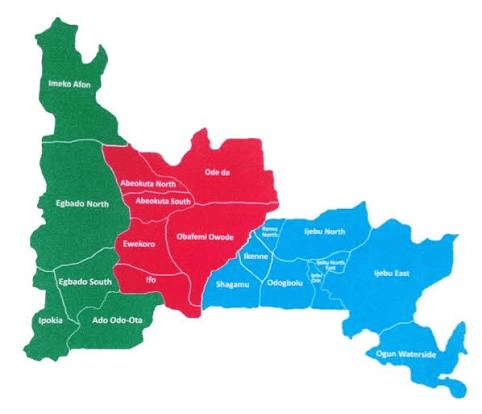
The Ogun State House of Assembly has passed the so-called Safe Termination of Pregnancy Law, 2026, and transmitted to Governor Dapo Abiodun for assent. Under the banner of reducing maternal mortality and promoting “reproductive health rights,” the legislators have crafted a bill whose grounds are so wide that it effectively opens the door to abortion on demand. This is neither progressive nor realistic. It is a reckless departure from Nigeria’s moral, religious and legal heritage, and history has already warned us against it.
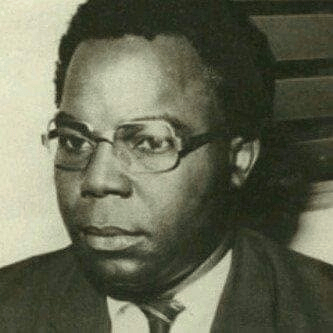
In 1981, a similar attempt was made at the National Assembly by Hon. Obatayo Ogunkoya. The bill to legalize abortion triggered protests and demonstrations across the country. Religious bodies, women’s groups and several State Houses of Assembly rose in unified opposition. The measure was ultimately thrown out. That rejection was not the product of ignorance or conservatism; it was a clear affirmation that the deliberate destruction of unborn life is incompatible with the Nigerian conscience. More than four decades later, the Ogun State legislators appear determined to ignore that lesson. They have not learned from history.
The present bill in Ogun State is particularly far-reaching. By allowing termination after mere counselling within the first twelve weeks, and by listing broad health, mental-health and social grounds thereafter, it creates a framework that can easily be stretched into abortion on request. Such expansive provisions go well beyond the limited life-saving exceptions recognized under the Criminal Code that still applies in southern Nigeria. To present this as a narrow public-health measure is disingenuous. The lawmakers have written a statute whose practical effect will be the routine legalization of abortion.

Across parts of the developed world where abortion was once liberalized, there is growing pressure to reverse course precisely because of the sanctity of the life of the unborn. In several countries, public opinion, scientific advances in foetal medicine, and moral reflection have forced governments to confront the human cost of unrestricted abortion. The unborn child is no longer dismissed as a mere “clump of cells.” Ultrasound technology, neonatal survival rates and ethical debate have restored visibility to the child in the womb. Nigeria should not rush to adopt a model that others are beginning to question.
Christianity and Islam, the two great religions that shape the moral landscape of this country, both uphold the dignity of every human life from conception. A law that treats the unborn as disposable collides head-on with that shared conviction. When legislators ignore the religious and cultural foundations of the society they serve, they legislate not for the people but against them.

Governor Dapo Abiodun now stands at a critical juncture. He can choose to assent to a bill that will place Ogun State outside the mainstream of Nigerian moral consensus, or he can withhold his signature and return the measure to the Assembly with a clear message: the sanctity of unborn life is not negotiable. Maternal health is a serious concern that demands investment in antenatal care, emergency obstetric services and support for women in crisis. Expanding the legal grounds for ending pregnancies is not the solution; it is an evasion of responsibility.
The Ogun legislators should have studied the 1981 experience. They did not. The Governor still has the opportunity to do so. History, faith and the dignity of the unborn all point in the same direction. The bill must not become law.
The 1981 Ogunkoya Abortion Bill Protests
Background of the Bill
In 1981, Dr. Obatayo Ogunkoya, a medical doctor and member of the House of Representatives, sponsored a bill titled “An Act to Enforce the Law Relating to the Termination of Pregnancy by Registered Medical Practitioners” (also referred to as the Termination of Pregnancy Bill).
The core provisions sought to legalize abortion when two registered medical practitioners, acting in good faith, formed the opinion that:
– Continuing the pregnancy would involve greater risk to the life of the woman, or injury to her physical or mental health (or that of existing children), than if the pregnancy were terminated; or
– There was a substantial risk that the child, if born, would suffer serious physical or mental abnormalities.
This framework was broadly modelled on aspects of the UK Abortion Act 1967. Ogunkoya later stated that the bill also contained other provisions on sex education, family planning, and a review of child adoption laws, but these were overshadowed by the abortion clauses.
Scale and Nature of the Opposition
The 1981 bill triggered one of the most widespread and unified public backlashes against proposed social legislation in Nigeria’s Second Republic.

Opposition came from multiple fronts:
– Street protests: In Kaduna, more than 1,000 women from various groups marched to the Government House to protest the bill.
– Religious bodies: Christian organizations (including the Catholic Women’s Organization) and Muslim voices strongly opposed it. The Catholic Women’s Organization in Benin argued that abortion should be permitted only on strict medical grounds advised by a doctor.
– State legislatures: Several State Houses of Assembly passed formal motions urging the National Assembly to reject the bill.
– Anambra State House of Assembly described it as a “violation of moral justice” and “a legalization of mass slaughter of human beings.”
– In Oyo State, Reverend Adeoye Adeyemi raised a motion warning that legalization could leave some women permanently barren.
– In Imo State, A.C. Tasie called abortion an “imported culture” and “a crime against God and mankind.”
– In Kano State, majority leader Mohammed Baba Yaro argued that Nigeria needed “as many hands on deck as possible” for national development and should not legalize abortion.
The opposition cut across regional, ethnic, and religious lines, a rare display of national consensus on a social issue.
The Outcome
When the bill eventually came up for first reading in the House of Representatives, it was rejected with an overwhelming chorus of “No.” It did not proceed further. Ogunkoya later expressed disappointment that lawmakers focused almost exclusively on the abortion provisions and ignored the other components of the bill.
Significance and Lessons
The 1981 protests demonstrated several enduring realities about abortion politics in Nigeria:
1. Deep cultural and religious resistance: Both Christianity and Islam, the two dominant religions, provided a strong moral foundation against liberalization, framing abortion as an attack on the sanctity of life and as cultural imperialism.
2. Mobilization capacity of civil society and religious groups: Women’s organizations, churches, mosques, and state assemblies coordinated quickly and effectively, showing that elite legislative initiatives could be stopped by organized public pressure.
3. Political cost: The swift and near-unanimous rejection at first reading signalled to subsequent lawmakers that expanding abortion grounds carried high political risk.
4. Precedent-setting effect: The episode established a pattern. Later attempts at reform (including efforts in the early 1990s and subsequent state-level initiatives) have repeatedly encountered similar religious, cultural, and political resistance.
In summary, the 1981 Ogunkoya bill protests were a decisive expression of Nigerian societal values at the time. They showed that proposals perceived as legalizing abortion on relatively broad grounds would face determined, cross-cutting opposition rooted in religious conviction, moral argument, and demographic considerations. This historical episode remains highly relevant to contemporary debates, including the 2026 Ogun State Safe Termination of Pregnancy Bill.
In the follow up, The Searchlight will expose the agencies insistent on expanding abortion in Nigeria.


Leave a Reply