
By Matthews Otalike, The Searchlight Correspondent / November 05, 2026
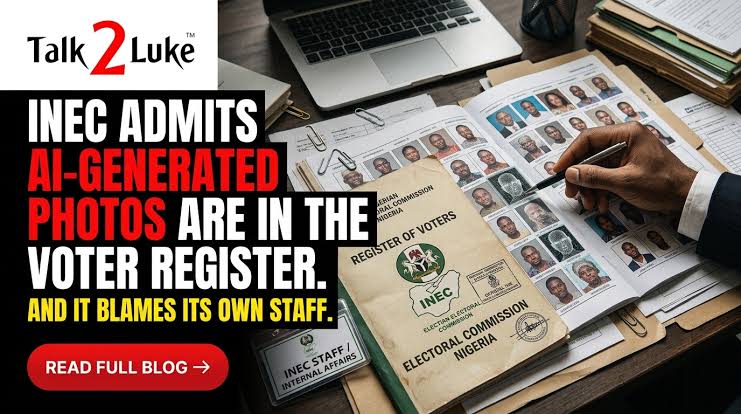
INEC’s ICT Director, Lawrence Bayode, had admitted that registration officers used official credentials to inject AI-generated photographs into the voter register. He said the commission knows who did it and how they did it, but not why. Since that admission, INEC has not announced any arrests, no suspensions, no forensic audit, and no explanation of whether the fabricated records are concentrated in opposition strongholds. The commission’s only response has been to call the register “preliminary” and promise a cleanup before 15 December. In a democracy, that is not an answer. It is a delay dressed as a procedure.
What INEC Has Admitted
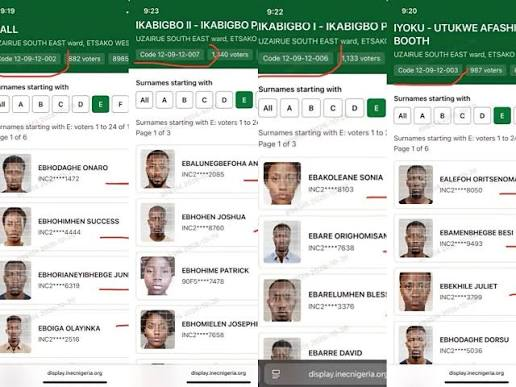
The facts, as they stand, are not in dispute. On 26 October 2026, INEC published its preliminary voter register online. Within hours, Nigerians flagged suspicious photographs in polling unit records, most prominently in Etsako West LGA of Edo State, that appeared to be AI-generated .
On 27 October, INEC issued a statement acknowledging that “questionable registration records” had been identified and flagged during the physical display of the register between 9 and 15 October. The commission said it was “examining the circumstances surrounding the suspicious photographs, including possible technical or procedural lapses,” and stressed that the online register was “not the final certified register”.
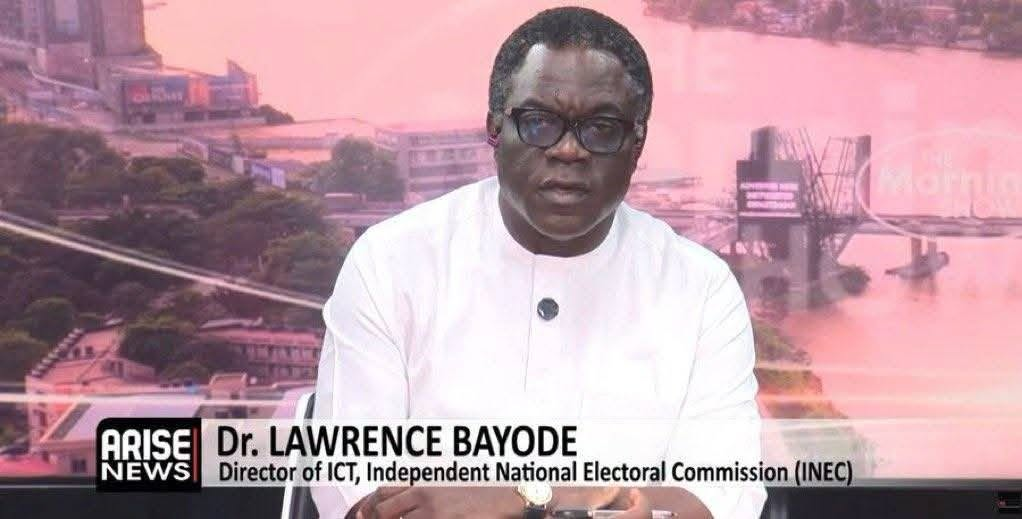
On 29 October, INEC’s Director of ICT, Lawrence Bayode, went further on Arise Television. He said registration officers across the country had used their official login credentials to introduce irregularities into the database. “Some of these pictures are AI-generated,” he said. “Some of them not AI-generated, but very bad registration. And this thing got into the register by the registration officers and because they have access to register people”.
Then came the sentence that has defined the scandal: “When the ABIS was run on the system, we saw these people. We know what they did. We know how they did it. But honestly, I don’t know why”.
INEC knows who. It knows how. It does not know why. And it has not arrested, suspended, or named a single officer.
The Allegations INEC Has Not Addressed
There are viral allegations that have circulated since the register went online: that AI-generated fake voters were inserted into polling units in areas where Peter Obi has significant support, so that authentic Obi voters would be rejected by the Bimodal Voter Accreditation System (BVAS) on election day.
There is yet no evidence confirming that the fabricated records were deliberately concentrated in opposition strongholds. What they do contain is a pattern of official silence on precisely the questions that would confirm or refute the allegation.
INEC has not disclosed:
– The number of affected records. Bayode mentioned ABIS flagged records, but no figure has been published.
– The geographic distribution of the irregularities. Edo State has been named, but INEC has not said whether other states are affected, or which ones.
– The identities of the officers involved, or whether any have been suspended, arrested, or referred to the police.
– Whether the affected records correspond to polling units with specific voting patterns.
– Whether the PVCs linked to the fabricated records have been printed or collected.

Obiageli Ezekwesili, in an open memorandum dated 3 November 2026, framed the problem precisely: “INEC cannot investigate INEC. Impossible.” She demanded an independent Citizens’ Electoral Rescue Team to take custody of the register, image files, access logs and audit trails, conduct a forensic audit, and ensure implicated officers are suspended and prosecuted.
Her warning deserves to be quoted in full: “The register of voters is the first ballot. If it is rigged, every ballot that follows is rigged before it is cast”.
The BVAS Question
The allegation about BVAS deserves separate treatment, because it is the mechanism through which a compromised register could translate into a compromised result.
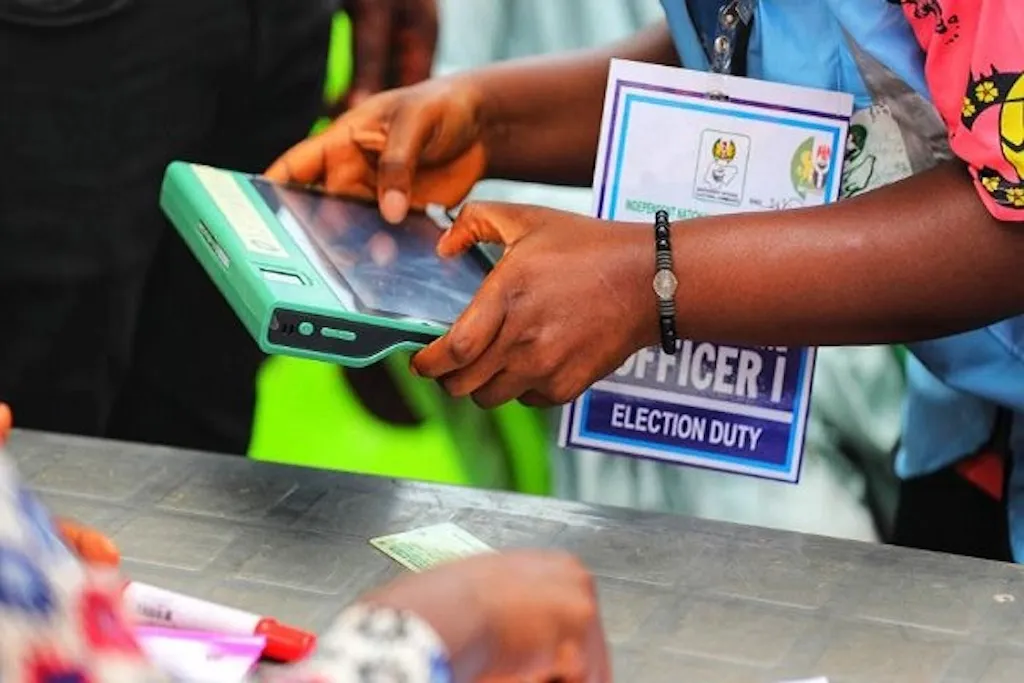
INEC has consistently argued that BVAS is a frontline defense. In August 2026, following opposition allegations of “ghost voters,” INEC Chairman Joash Amupitan said BVAS would ensure that “regardless of anomalies on the written register, identity theft and ghost voting will be effectively blocked at the polling unit”.
But this defense rests on an assumption that the biometric database is clean. If AI-generated photographs were inserted into the register, what biometric data accompanies them? Were fingerprints also fabricated? If the records are linked to real NINs, as Action Alliance’s Kenneth Udeze has claimed, then BVAS may authenticate a real person against a fraudulent registration, or reject a real voter whose NIN has been duplicated.
INEC has not explained how BVAS will distinguish between a genuine voter whose record was corrupted and a fabricated record designed to pass biometric checks. The commission has not published the ABIS audit trail that would show which records were flagged, why, and what was done about them.
If INEC cannot explain how the fake records entered the register, it cannot explain why BVAS will stop them from being used.
The Silence on Motive
Bayode’s “I don’t know why” is not a neutral statement. It is a strategic one. If INEC does not know why officers introduced AI-generated records, it does not have to investigate motive. If it does not investigate motive, it does not have to determine whether the irregularities were random acts of incompetence or a coordinated attempt to manipulate the register in specific locations for specific electoral purposes.
The timing of the irregularities does not support the “random incompetence” reading. The records were introduced by officers with login credentials, people who had been entrusted with registration duties. They were inserted across “states nationwide,” according to Bayode. They were detected by ABIS during the physical display period of 9–15 October, but INEC did not disclose them until after the register went online on 26 October and public outrage forced the issue.
And the 15 December certification deadline remains unchanged. INEC has not announced a delay to allow for an independent audit. It has not invited external forensic scrutiny. It has not published the access logs that would show which credentials were used, when, and from where.
The commission is asking Nigerians to trust that a cleanup is underway, conducted by the same institution that failed to prevent the breach, with no external oversight and no public reporting until the final register is certified.
What INEC Must Do to Restore Confidence
The Searchlight does not demand that INEC be abolished. It demands that INEC answer the questions that any credible electoral body would answer without being asked.
First, publish the audit trail. Which records were flagged by ABIS? How many? In which states, LGAs, wards, and polling units? What was the nature of the irregularity, AI-generated photograph, duplicate NIN, deceased registrant, or something else?
Second, name the officers. Bayode said INEC knows who did it. If the commission knows, it should suspend them, refer them to the police, and publish their names. An institution that knows the identity of the people who compromised its database and does nothing is not a victim of fraud. It is an accomplice to its concealment.
Third, accept independent forensic scrutiny. SERAP has asked the Nigeria Data Protection Commission to investigate under the Nigeria Data Protection Act 2023. Ezekwesili has proposed a Citizens’ Electoral Rescue Team. The opposition and civil society have demanded access logs and image files. INEC has rejected none of these explicitly. It has simply not responded and silence is not a defense. It is rather a refusal to be tested.
Fourth, explain the BVAS defense. If the register is compromised but BVAS will catch the fakes, INEC should show the mechanism. Publish the biometric data attached to the flagged records. Explain how BVAS will distinguish fabricated records from corrupted genuine ones. If it cannot, then the defense collapses.
Fifth, INEC should delay certification if necessary. The 15 December deadline is a statutory date, not a sacred one. If the audit cannot be completed by then, INEC should seek an extension or certify a register that has been independently verified. A delayed final register is infinitely preferable to a compromised one.
Conclusion: The First Ballot
Ezekwesili’s formulation is the one that should haunt INEC. She said: “The register of voters is the first ballot. If it is rigged, every ballot that follows is rigged before it is cast” .
INEC’s ICT director has admitted that the first ballot was compromised. He has admitted that the commission knows who compromised it and how. He has said he does not know why, and the commission has made no visible effort to find out.
The commission has not arrested anyone. It has not suspended anyone. It has not published the audit trail. It has not accepted independent scrutiny. It has not explained how BVAS will neutralize records that its own officers fabricated. Instead, it has called the register “preliminary” and pointed to a cleanup that only it will supervise, only it will verify, and only it will certify.
Nigerians are being asked to accept this on trust. But trust is precisely what INEC has spent the last two weeks destroying. The question is not whether INEC can restore confidence in the 2027 election. The question is whether it is even trying.


Leave a Reply