
By Matthews Otalike, The Searchlight Correspondent / November 04, 2026
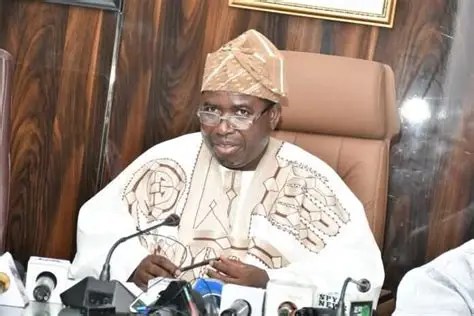
Two months ago, INEC’s Chairman Prof. Joash Amupitan announced the deployment of artificial intelligence “for result verification and cybersecurity,” promising “mandatory human oversight.” Two months later, INEC’s own ICT Director admitted on television that field registration officers used their login credentials to inject AI-generated photographs and fictitious names into the voter register. He knows “what they did.” He knows “how they did it.” But he says he does not know “why.”
When an electoral body can identify the fraud but cannot explain it, can admit the breach but arrest no one, and when opposition parties allege roughly 20 million suspicious records, all pointing in one direction, the answer does not need to be spoken aloud.
The Promise and the Reversal: AI as Tool, Then Weapon
On 5 October 2026, INEC Chairman Joash Amupitan announced at a national stakeholders’ meeting in Abuja that the commission had established a dedicated AI unit within its ICT department, was integrating automated AI audit tools into its result verification process, and was finalizing an “AI governance framework policy.” He promised that “The use of AI will be subject to mandatory human oversight.”
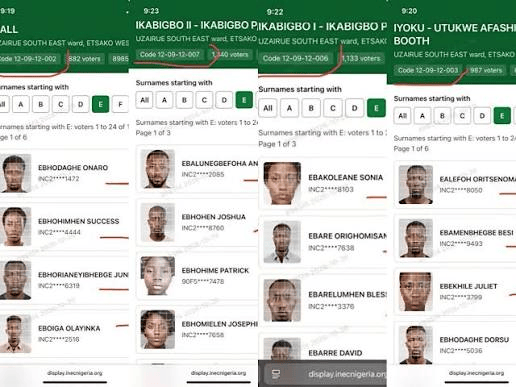
Three weeks later, on 26 October, INEC uploaded its preliminary voter register to its portal. Within hours, social media users began posting screenshots: in polling unit records from Etsako West LGA in Edo State, facial photographs showed unmistakable signs of artificial generation, visual irregularities, unnatural symmetry, the “uncanny valley” hallmarks of AI imagery.
On 27 October, INEC issued a statement acknowledging that “some questionable registration records were identified and flagged for further review,” but stressed that what was published online was the “raw preliminary register” and did not reflect ongoing data cleanup.
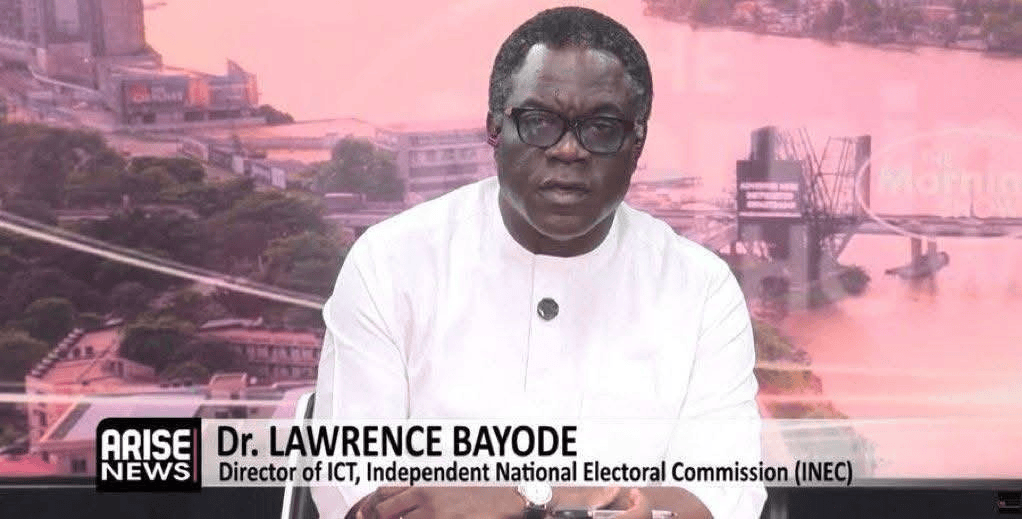
On 29 October, INEC’s Director of ICT, Lawrence Bayode, made the most specific admission to date. Speaking on Arise Television, he said: “We have registration officers on the field. And these registration officers, have login details to log into the system. So, what we have found is that some of these registration officers, not all of them now, some of them across the states nationwide, they’ve done different things to bring these irregularities onto the register”.
When asked whether the photographs were AI-generated, Bayode’s answer was: “Some of these pictures are AI-generated. Some of them are not AI-generated, but very bad registration. And this thing got into the register by the registration officers because they have access to register people”.
Then he said something that deserves to be quoted repeatedly: “When the ABIS was run on the system, we saw these people. We know what they did. We know how they did it. But honestly, I don’t know why”.
He knows who did it. He knows how they did it. But he does not know why. An institution holding a database of over 100 million registered voters, a commission that had just announced it would deploy AI to combat fraud, offered “I don’t know why” as its explanation after discovering its own officials injected AI-generated fake voters into the database.
The NIN Duplication: One Number, Multiple Names, Same Face
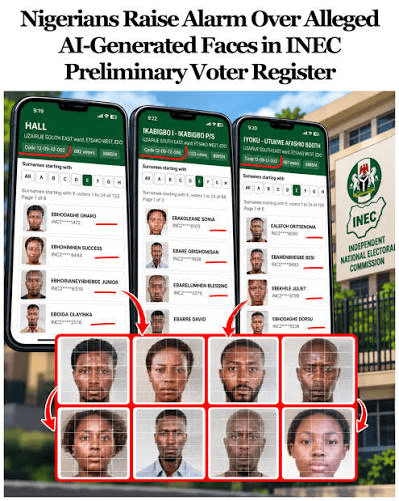
Bayode’s admission concerned only photographs. But the allegations from opposition parties and civil society point to a more systemic problem.
Kenneth Udeze, National Chairman of the Action Alliance, stated directly on 28 October: “using AI images to duplicate NIN of voters in the INEC register”. He called on INEC Chairman Amupitan to “probe and sack any staff involved in using Artificial Intelligence (AI) to duplicate the National Identification Number (NIN), in the voters’ register,” and to work with NIMC to resolve the NIN duplication issue.
The scenario described by users, the same NIN used to register the same person with the same photograph under five different names, has not been directly confirmed or denied by INEC in the search results. But TheCable reported on 26 October a related case: a social media user said that while registering for a PVC, the system flagged a duplicate record bearing the same name, date of birth, state and NIN as theirs, but with a different photograph, gender and LGA. An INEC official allegedly attributed the duplicate to “coincidence,” despite both entries carrying the same NIN.
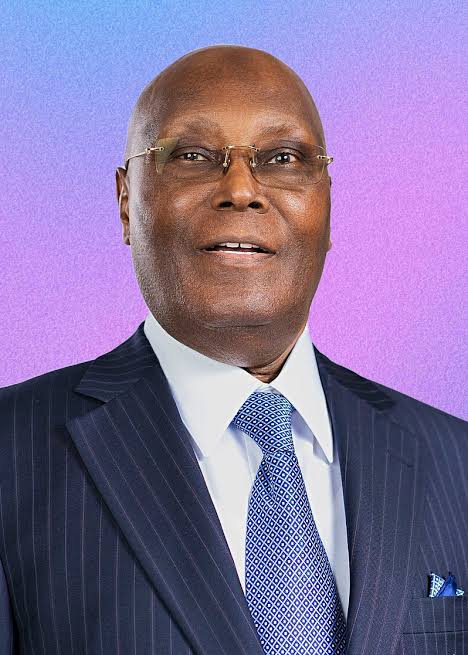
One NIN corresponding to two “same persons” of different genders and different photographs, and an INEC official calls it coincidence? If this were an isolated technical error, it could be fixed. But if it is systemic, as Atiku Abubakar alleges with “more than 20 million AI-generated images may be involved”, then what needs fixing is not the database, but the election itself.
Atiku’s statement was unambiguous: “INEC has admitted that some AI generated images are on the voter register and that registration officers introduced irregularities across the country. The Commission charged with protecting Nigerians’ votes has acknowledged that its own system was abused by those entrusted to operate it. This is a catastrophic failure of leadership and safeguards”.
Who Benefits? Timeline and Motive
To assess the nature of this “irregularity,” one must examine the timeline and the structure of benefit.
5 October 2026: INEC chairman announces AI deployment and promised human oversight.
9–15 October: Then register displayed physically at registration areas. INEC claims it “identified and flagged” suspicious records during this period.
26 October: The register went online and the public discovered AI photographs. INEC had faced sustained pressure from opposition and civil society over its delay in publishing the register. TheCable noted a social media claim: “This is why they refused to release the voters’ register until we called them out. This is exactly why Tinubu is not planning to campaign across the country, because INEC has already created Fake votes for him”.
29 October: Bayode admits on television that officials acted, but says “I don’t know why.”
15 December: The Scheduled date for the final register certification.
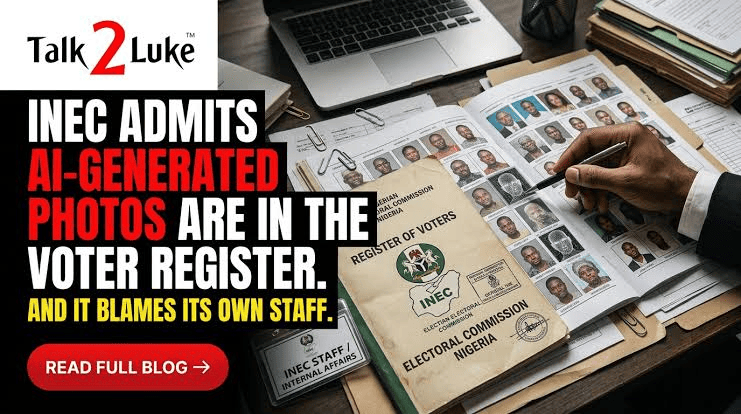
One detail in the timeline deserves attention: INEC claims it had already “identified and flagged” suspicious records during the 9–15 October physical display. But it was not until 26 October, after the register went online and public outrage erupted on social media, that INEC issued a statement acknowledging the problem. Bayode said ABIS “saw these people.” But when ABIS saw them, INEC chose not to disclose. It was public fury that forced the admission, not the institution’s internal procedures.
As for beneficiaries, it is still early to link the INEC’s register problems to APC or Tinubu’s campaign strategy. But the observation raised to the effect that APC launched its campaign earlier than other parties, and that Wike and APC governors speak of victory with “landslide” certainty, is partially corroborated. It may be likened to the famous saying that “if the witch cries at night and a child dies in the morning, the likelihood of holding the witch responsible is there”.
At the APC Presidential Campaign Council inauguration on 14 October, Wike warned governors: “if you don’t deliver your states and the president wins, don’t say we’ve won.” He added: “I told the Chief of Staff to the President, if the president doesn’t win in Lagos, don’t say we’ve won. By the grace of God, Rivers and FCT will vote massively for Bola Ahmed Tinubu”.
This is not a confession that “we know INEC is cheating for us.” But the FCT minister speaking with this level of certainty about the outcome three months before the election, and three weeks later INEC admitting its register was injected with AI fake records by its own officials, these two facts together constitute a coincidence that demands interrogation.
Who Is Demanding Investigations? From SERAP to ADC
INEC’s “I don’t know why” has not stopped civil society and political parties from making specific demands.
SERAP wrote to President Tinubu on 31 October, asking him to direct the Nigeria Data Protection Commission (NDPC) to investigate “suspected AI-generated photographs and alleged alterations to personal data” in INEC’s preliminary register, and to determine whether the Nigeria Data Protection Act 2023 was breached. SERAP also demanded an “independent forensic examination of INEC’s voter registration database” and publication of findings. It gave Tinubu seven days to act, failing which it would consider legal action.
Action Alliance demanded an “independent, transparent forensic audit of the register,” publication of a “verifiable cleanup and deduplication audit trail,” and the identification, investigation and dismissal of any “compromised staff involved in register contamination”.
ADC posed the sharpest questions: “If INEC knows that its own officials compromised the voters’ register with AI-generated photographs, why has nobody been arrested? Why have these individuals not been handed over for prosecution? What exactly is INEC waiting for?” The ADC also noted that INEC failed to publish the register online within the statutory 90-day deadline, and that Section 19(5) of the Electoral Act 2026 makes failure to comply a criminal offence punishable by fine, imprisonment, or both.
Atiku’s statement elevated the issue to the level of electoral credibility: “INEC must not quietly ‘clean up’ the register and bury the evidence. The allegation that more than 20 million AI generated images may be involved demands an independent forensic audit. Preserve every voter record, image file, access log and audit trail. Let accredited independent experts, political parties, civil society and credible international observers examine the evidence. No disputed record should be certified until the audit is complete”.
For now, INEC has not said anything about possible independent forensic audit, no officials arrested or suspended, no access logs published, and no explanation of why the Automated Biometric Identification System (ABIS) “saw” these people between 9 and 15 October but did not prevent them from entering the preliminary register.
Conclusion: Algorithms Do Not Need Explanations
Bayode said “I don’t know why.” But this question has an answer that does not require him to speak it. When a system is designed to allow field officers to inject new records into the voter database using personal login credentials; when ABIS is deployed to “detect” anomalies, but after detection no one is arrested, no records are published, no access logs are reviewed; when INEC’s chairman promises “mandatory human oversight,” and the result of that human oversight is officials personally manufacturing fake records; when the final register certification date is set for 15 December, and demands for independent audits are met with silence, the “why” of this system is no longer a technical question. It is a political question. And the answer to political questions is not written in code.
On 5 October, INEC announced AI would be used for “result verification and cybersecurity.” On 26 October, the public discovered AI had been used to manufacture voters. On 29 October, INEC admitted it, but said it did not know who, why, or how many. On 15 December, this register will be certified as the final voter roll for Nigeria’s 2027 general election.
If this process is not interrupted by an independent audit, if those access logs are not published, if the allegation of “more than 20 million” is neither confirmed nor refuted, then the 16 January election will begin from a starting point: a voter register that INEC itself admits was contaminated by its own officials, yet refuses to show the public evidence of its cleanup.
Nigerians are told their votes will be counted. But they first need to know how many of the names on that register, those AI-generated faces, duplicate NINs, records of the deceased, will be counted as “voters” on election day.
Bayode said “I don’t know why.” But Nigerians know why they are asking.


Leave a Reply