
By Matthews Otalike, The Searchlight Investigation Desk / October 31, 2026
The first episode argued that Nigerians must stop chasing every kite released by a political class skilled at redirecting attention. This second installment aims at confronting a harder truth: kites fly because the ground beneath them is fertile with distrust. A people who trusted their institutions would not be so easily diverted by religious and ethnic spectacles. A people who believed their votes, their taxes, and their daily labour could produce accountable governance would have less appetite for the emotional release that kite politics offers. The question is not merely why politicians deploy division, but why the soil is so receptive.
The Architecture of Distrust
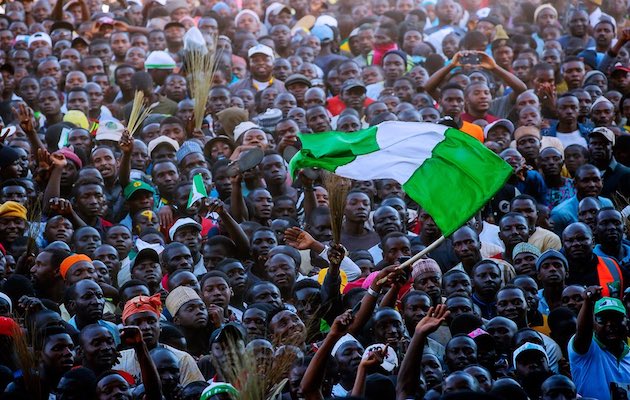
The 2026 Africa Polling Institute social cohesion survey provides the most precise diagnosis available. Trust in formal institutions has collapsed to levels that should be treated as a national emergency. The National Assembly records 77% expressing little or no trust. The Police, 76%. State Assemblies, 73%. The Judiciary, 73%. The EFCC, 73%. The Presidency, 72%.
Meanwhile, religious leaders command “some to a lot of trust” from 51% of respondents. People of other ethnic groups and other faiths each record 47%. Traditional leaders, 45%.
It is necessary to read those numbers again. Nigerians trust each other, across ethnic and religious lines, more than they trust the institutions that purport to govern them. Eighty-nine percent, report associating regularly with people from other ethnic groups in daily life. Business is the leading mode of that association at 69%, followed by work at 61%, neighbours at 56%, friendship at 46%. The interpersonal fabric of Nigerian society is, by the evidence, remarkably resilient.
This is the paradox that kite politicians exploit. Because formal institutions have forfeited legitimacy, the only authorities Nigerians still credit are those rooted in community, faith, and ethnicity. And those are precisely the identities that can be weaponized when a diversion is needed. The kite does not create division from nothing. It takes the trust that Nigerians still hold, in their pastors, their imams, their traditional rulers, their ethnic kin, and redirects it toward political ends that serve no one but the flyer.
The South East illustrates the danger most acutely. It records the highest perception of national division at 76%, the lowest cross-ethnic association at 75%, and the lowest rate of cross-ethnic friendship at just 26%. A region that feels most alienated from the national project is also the region where the interpersonal bridges that might repair that alienation are thinnest. Kites fly highest where the ground is most fractured.
The Poverty That Makes Diversion Welcome

There is a material dimension to this that cannot be moralized away. The World Bank’s 2026 Country Partnership Framework states that approximately 139 million Nigerians live below the national poverty line. More than 86 million lack access to electricity. Three to four million young people enter the labour market each year with limited employment opportunities. One in four Nigerian youths is neither employed, in education, nor in training.
But the bank’s more recent report which states that, “Why do so many Nigerian workers remain poor?”, sharpens the analysis in a way that should reframe the entire debate. Nearly half of Nigerians live below the poverty line despite an unemployment rate of just 5%. The report’s central finding says: “To escape poverty, it is more important what someone does, rather than whether they work”. Only around 15% of employed Nigerians hold a paid wage job or apprenticeship. Less than half of Nigerians with post-secondary education secure wage employment. Only one in ten workers are managers, professionals, technicians, or clerical support staff.
This is the economic ground on which kites land. A population that is working but not earning enough to escape poverty, educated but not credentialed into productivity, connected across ethnic lines in daily market transactions but structurally excluded from the formal economy, such a population is primed for distraction. The kite offers an explanation that requires no self-examination: your poverty is because of them. Your exclusion is because of their plot. The relief is emotional, immediate, and entirely false.
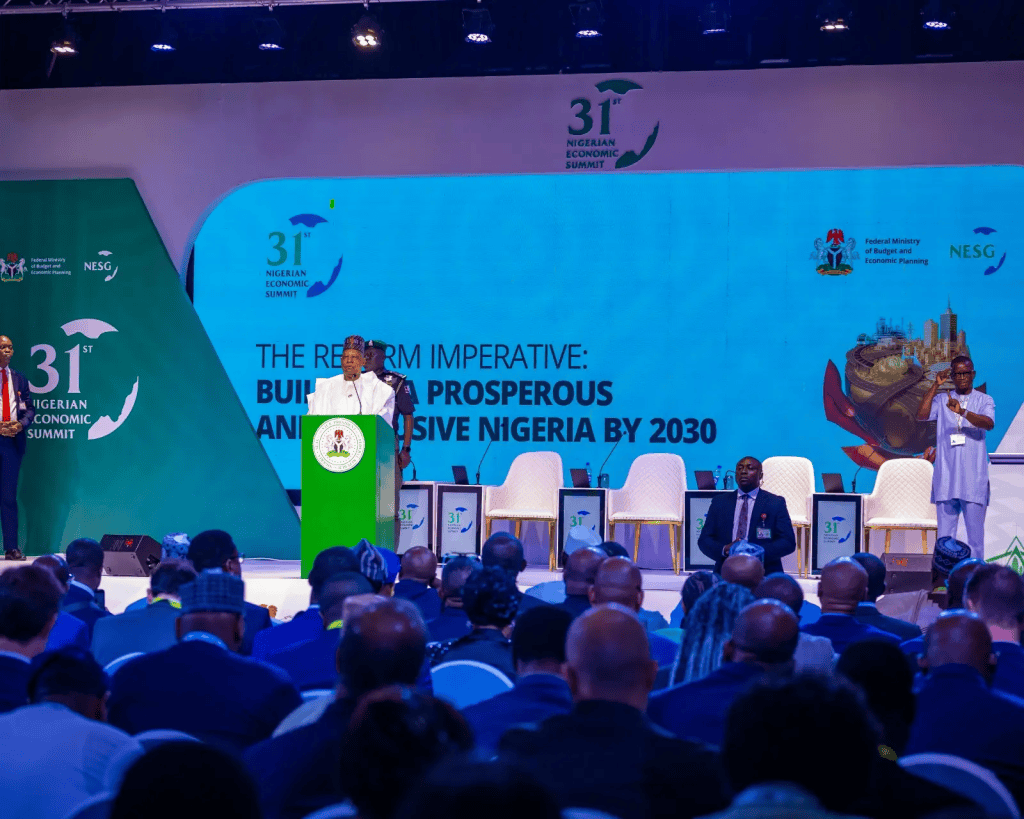
The Nigerian Economic Summit in October 2026 confirmed the arithmetic of escape. Former Central Bank Governor, Chukwuma Soludo told the gathering that 4% growth is insufficient. “Relative to where we need to be,” he said, Nigeria needs 7% to 9% growth to reduce poverty, and roughly 12% annually to reach the $1 trillion economy target by 2030. Nigeria invests only 17% to 20% of GDP, and government spending at all levels amounts to under $1 per person per day. Nigerians save enough, Soludo insisted. The challenge is channelling savings into productive ventures.
That last sentence deserves to be printed on every Nigerian’s wall. It is not a government statement. It is not a donor’s condescension. It is an economic fact that places responsibility squarely where the first episode of this analysis argued it belongs: on the choices of ordinary Nigerians with savings, however modest, and on the intermediaries, banks, cooperatives, investment platforms, community associations, that determine whether those savings build factories or buy dollars.
What Reflexivity Requires Now
The first episode of this analysis called for reflexivity. This episode must specify what that means in the face of the trust deficit.
First, we should stop treating institutional distrust as cynicism and start treating it as data. The 77% who distrust the National Assembly are not wrong. They are observant. But the reflexivity required is to ask the next question: if formal institutions cannot be trusted, what informal institutions can be built or strengthened to do the work that governance has abandoned? The answer is already visible in the survey data. Nigerians trust religious and traditional leaders at far higher rates than politicians. That trust is a resource. It can be used to mobilize ethnic grievance, or it can be used to mobilize community policing, local infrastructure maintenance, scholarship funds, health cooperatives, and civic education. The choice belongs to the leaders themselves, but also to the communities that hold them accountable.
Second, recognize that the 89% who associate across ethnic lines are the real Nigeria, not the exception. The kite narrative insists that Nigeria is irreparably divided but the data says otherwise. Business transactions across ethnic lines are the norm. Workplaces are integrated. Neighbours of different faiths coexist. The reflexivity required is to defend this ordinary integration actively, to name it, to celebrate it, to refuse the framing that treats ethnic difference as inherently conflictual. When a politician or a preacher or a pundit tells you that “they” are your problem, the reflexivity required is to look at your own daily life and ask whether that claim matches your experience. For most Nigerians, it does not.
Third, confront the savings paradox directly. Soludo’s observation that Nigerians save enough but do not channel savings productively is an invitation to action that requires no government permission. Every Nigerian with a bank account, a cooperative membership, or an informal savings group (esusu, ajo, adashe) is already participating in a financial system. The question is whether that system builds productive capacity or merely circulates consumption. The reflexivity required is to ask, of every naira saved: where does this go, and what does it build? A dollar held abroad is not evil. But a hundred thousand Nigerians each shifting a fraction of their savings into a local productive enterprise, a cooperative-run poultry farm, a community-owned solar mini-grid, a transparently governed small manufacturing fund, would constitute a form of citizen-led development that no kite can distract from, because it produces visible, tangible results.
Fourth, prepare for the 2027 election as if it matters, because it does. INEC reports that 103 million Nigerians are registered to vote across 176,846 polling units. The commission has procured 57,000 new BVAS machines and introduced printable PVC technology to reduce collection delays. But the Chairman’s own warning although important, has its draw back. He said: “The greatest threats to our democracy are not hacking of ballot boxes, but the hacking of voters’ minds”. Deepfakes, synthetic audio, fabricated endorsements, and automated disinformation are the next generation of kites. It does not however, address the distrust in INEC in view of past rigging. The reflexivity required between now and 2027 is to build the civic immunity to recognize a manufactured controversy when it appears, and to vote on the basis of verifiable records rather than manufactured outrage.
The Kite Flyer’s Worst Nightmare
A kite politician needs two things: a distracted public and a distrustful public. The first episode addressed the distraction. This episode addresses the distrust. The two are linked. Distraction works best when people believe there is no alternative. Distrust of institutions becomes fatalism when it is not accompanied by trust in something else, in each other, in ordinary cross-ethnic cooperation, in the small productive ventures that can be built without waiting for Abuja.
The kite flyer’s worst nightmare is not an angry population. Anger is easily redirected. The kite flyer’s worst nightmare is a population that has stopped looking up, that has decided the sky is not where its future lies, and has turned its attention to the ground, to the work of building, saving, cooperating, and holding each other accountable.
The Searchlight will continue to document that ground-level work in the next installment.


Leave a Reply