
By Matthews Otalike, The Searchlight Investigation Desk / October 31, 2026
The first two episodes of The Searchlight focus on distracted citizens, diagnosed the problem: a political class that uses religion and ethnicity to redirect attention, and a trust deficit that makes the diversion effective. This third and final installment turns to the harder question of construction. What does it actually look like for Nigerians to build their country without waiting for a government that has not yet arrived?
The answer is not abstract. It is already happening, in fragments, in places the kites do not reach. The task is to recognize it, scale it, and refuse the narrative that nothing can be done until the centre fixes itself.
The Missionary Insight
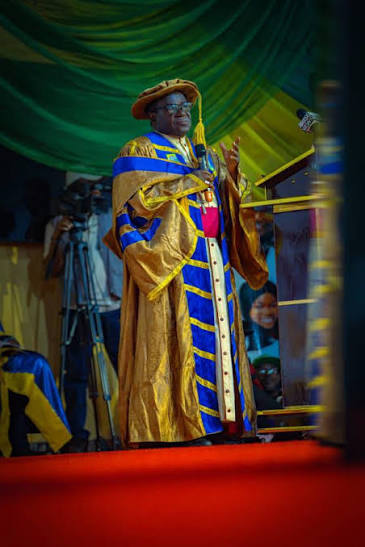
The observation by the Bishop of the Catholic Diocese of Sokoto, Most Reverend Matthew Hassan Kukah in a convocation lecture at the Augustine University, Epe, cited in the first episode, bears repeating because it is the intellectual foundation of everything that follows: the missionaries who built Nigeria’s schools and hospitals did not wait for a “good government” to appear first. They built institutions of lasting value in a colonial environment that was often hostile to their presence and indifferent to their purpose. They did not ask permission from the state to educate children, heal the sick, or train teachers. They mobilized resources, built structures, and created facts on the ground.
This is not nostalgia for colonialism or for missionary Christianity. It is a historical observation about what is possible when people decide that the absence of a supportive state is not a reason for inaction. The missionaries were not saints. Their institutions were not perfect. But they demonstrated a principle that Nigerians today have largely forgotten: institutions can be built from below, by people who decide that the work is worth doing regardless of who occupies the government house.
The Diaspora as Institution Builders, Not Just Remitters
Nigeria’s diaspora remits approximately $22 billion annually, ranking among the top remittance-receiving countries globally. The Central Bank of Nigeria has set a target of $1 billion in monthly diaspora transfers by the end of 2026, emphasizing the need to streamline official channels and reduce transfer costs. But remittances, however vital for household consumption and resilience, are not the same as investment. The reflexivity required of the Nigerian diaspora is to ask a harder question: what am I building, not just what am I sending?
The difference is concrete. A remittance pays school fees. An investment builds a school. A remittance covers a medical bill. An investment capitalizes a clinic. A remittance sustains a family. An investment creates a business that employs other families.
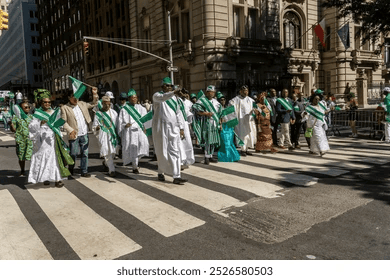
The diaspora professional who teaches a rigorous online course to Nigerian university students, who serves as a non-executive director on the board of a Nigerian SME and insists on audit standards, who mentors a young entrepreneur for two years rather than delivering a single motivational speech, who pools resources with other diaspora professionals to fund a transparently governed small manufacturing venture, that person is building institutions. The diaspora that treats remittances as the ceiling of its contribution has accepted the kite narrative that the only thing Nigerians abroad can do is send money home and hope for the best. The diaspora that treats institution-building as its mandate has rejected that narrative.
The Tax Question: Reframing Civic Duty
The tax debate in Nigeria is distorted by a fundamental confusion. The government’s tax reform agenda, as articulated by the National Tax Policy Implementation Committee, aims to raise the tax-to-GDP ratio from its current range of 6% to 10% toward approximately 16%, citing comparisons with South Africa at 26%, Kenya at 16%, and OECD countries above 30%. The reforms include exemptions for individuals earning below N800,000 annually and nano businesses below N12 million, alongside a reduction in corporate income tax from 30% to 25% for larger firms.
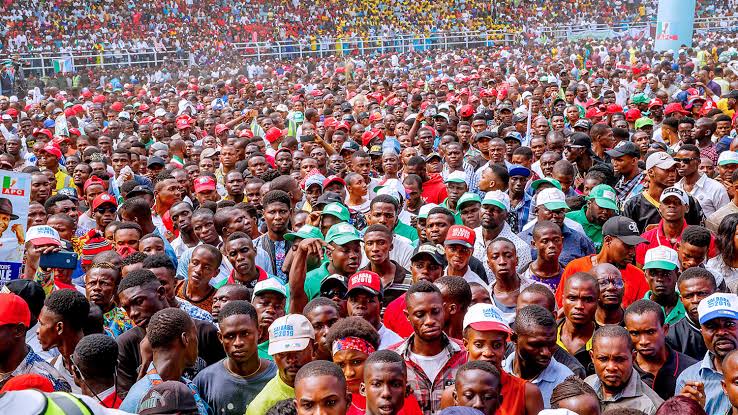
The standard objection is that Nigerians cannot be expected to pay taxes to a government that wastes what it collects. This objection is not irrational. The reflexivity required is to separate two questions: what does the government do with tax revenue, and what does the act of paying tax do to the citizen? The first question is legitimate and must be answered with transparency. The second question is rarely asked, and it matters.
Paying tax is not merely a financial transaction. It is a civic practice. It establishes a relationship of obligation and accountability between citizen and state. A citizen who pays tax has standing to demand services. A citizen who evades tax has forfeited the moral ground from which to make claims. This is not a defense of government waste. It is an argument that the refusal to pay tax, however justified by government failure, entrenches the very dynamic that makes government failure possible: a state that relies on oil revenue and borrowing has no incentive to be accountable to citizens, and citizens who do not pay have no structural leverage to demand accountability.
The reflexivity required is to shift from “I will pay tax when the government proves it deserves it” to “I will pay my fair share, demand transparency in its use, and organize with other taxpayers to audit and challenge waste.” This is what civic maturity looks like. It is harder than evasion. It is also the only path that builds the fiscal foundation for any serious development project.
What Ordinary Nigerians Are Already Building
The Searchlight does not argue that Nigerians are doing nothing. It argues that the energy Nigerians expend on kite-chasing is energy that could be directed toward the construction that is already underway in fragments.
Consider the cooperative movement. Across Nigeria, informal savings groups, esusu, ajo, adashe, pool billions of naira annually. They are not registered, not regulated, not connected to the formal financial system. But they are the most widespread form of financial intermediation in the country. If even a fraction of these cooperatives were formalized, linked to productive investment opportunities, and governed with transparency, they would constitute a domestic capital market that no kite could distract from, because it would produce visible results: a cooperative-owned processing plant, a community solar installation, a shared irrigation system.
Consider the alumni associations of Nigerian secondary schools and universities. They exist in every state. They have members with resources, skills, and emotional attachment to institutions that shaped them. Most of them do little beyond annual dinners and occasional donations. But they are institutional structures that already exist, already command loyalty, and already have the capacity to mobilize resources. An alumni association that decides to fund a permanent endowment for teacher salaries, or to build and maintain a science laboratory, or to create a scholarship fund that is independently audited, is doing the work of development without waiting for government.
Let us consider for example, the professional associations like the Nigerian Bar Association, the Nigerian Medical Association, and the Nigerian Society of Engineers. They have the technical expertise, the organizational capacity, and the professional networks to set standards, train members, and hold practitioners accountable in ways that no government agency has managed. A medical association that publishes transparent, independently verified data on hospital performance in its state is doing more for health outcomes than a thousand government press releases.
The Kite as a Test

The final argument is simple. Every time a kite rises, a religious controversy, an ethnic provocation, a manufactured outrage, Nigerians face a test. The test is not whether the grievance is real. Some grievances are real. The test is whether the response to the grievance builds or consumes. Does it build institutions, relationships, and productive capacity? Or does it consume energy that could have gone into construction?
The kite flyer does not care about the grievance. The kite flyer cares about the diversion. The reflexivity required is to ask, of every public controversy: who benefits from my attention here, and what is not being built while I look up?
The Nigeria that Nigerians deserve will not be delivered by a single election, a single leader, or a single policy. It will be built by the cumulative choices of millions of people who decide, day by day, that the work of construction is more valuable than the pleasure of outrage. It will be built by teachers who teach well, engineers who build well, doctors who treat well, civil servants who serve well, entrepreneurs who invest well, taxpayers who pay well, and voters who vote well.
It will be built by people who have stopped chasing kites.
The Searchlight will continue to document the builders.


Leave a Reply