
By Matthews Otalike, The Searchlight Investigation Desk / October 30, 2026
There is a technique of political rule whose essence is not to solve problems but to decide which topic gets ignited next. In Nigeria, this craft has been refined to the point of instinct: when economic data becomes suffocating, when the security situation defies explanation, when governance failure cannot be concealed, the trumpet of religion sounds on cue, or an ethnic wound is deliberately torn open. Public attention, like a startled flock, scatters from the issues that should be interrogated, leaving the real operators counting their gains in the dark. What is more disturbing than the kite itself is the crowd on the ground looking up and chasing it, expending energy that could have gone into cultivation, construction, and accountability on a spectacle that is designed to produce nothing.
This article does not ask “why is the government like this.” It asks a harder question on why do Nigerians repeatedly allow themselves to be treated this way and, more fundamentally, in the long interval while waiting for a “good government” to descend, what can Nigerians themselves do, should do, and must do?
The Anatomy of a Kite: How Attention Is Systematically Harvested
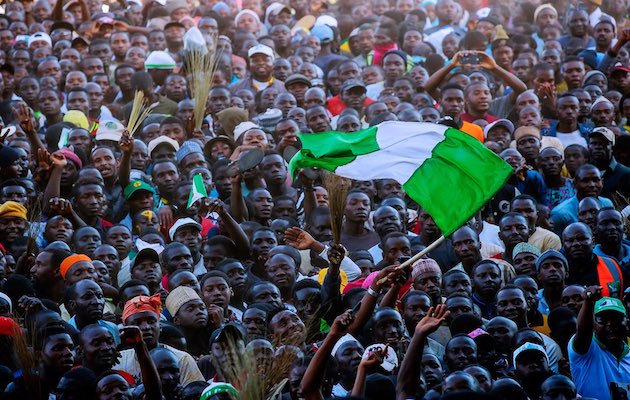
To describe Nigerian political discourse as “easily led astray” is too generous. More precisely, it is a carefully calculated management of political attention. Afrobarometer data from 2026 shows that 42% of Nigerians perceive a high level of polarization in the country, 49% agree that the country is more divided than four years ago, and 55% believe that the political division has worsened. These figures are not the product of a natural defect in national character; they are the output of an incentive structure.
Religion and ethnicity work as “effective kites” precisely because they have the highest conversion efficiency in Nigeria’s political marketplace. Research from Lagos State University shows that Islamic clerics mobilized over 17 million votes in the 2023 election, while Pentecostal pastors traded “prophetic endorsements” for access to the treasury. A religious leader in Kaduna put it plainly: “Our leaders do not want to integrate the people; they prefer to divide them in order to steal.” That indeed, is the core of the business model; not faith, but extraction.
The cost is staggering. ACLED data shows that politically targeted violence with a religious dimension has killed nearly 53,000 people since 2009. In 2025 alone, conflict-related deaths in Nigeria reached 11,968, exceeding several active theatres in the Middle East and North Africa. The discussions carried into the sky by kites, land on specific, named human beings.
Yet blaming everything on “cunning politicians” is another form of evasion. Naturally, a kite flies only because the ground provides enough updraft. Nigeria’s political class can repeatedly bury economic and security debates under religious and ethnic topics because a large number of citizens consent to the surrender of agenda-setting power. Examples abound. Whenever a senator floats an absurd “single sixteen-year term” proposal, or a former governor begins lobbing “political grenades” at old allies, the reaction pattern in the public sphere is predictable: outrage, taking sides, retweeting, forgetting. The real question is never asked to the effect that before the next kite rises, do we have the capacity to build a civic agenda that does not depend on kite topics?
Admiring Other People’s Orchards While Refusing to Bend Down in Your Own Field
Nigerians have a curious cognitive habit: they speak with genuine admiration of Singapore’s governance efficiency, Rwanda’s orderly discipline, and Ghana’s peaceful elections. The admiration itself is not wrong; it shows that Nigerians can recognize good governance but the problem is that recognition has never been converted into action.
The World Bank data shows that Nigeria’s economy grew 3.4% in 2024, with about 3.7% projected for 2025. Afreximbank similarly confirms moderate recovery around 4.0%. But the consensus among experts at the Nigerian Economic Summit is that growth must reach 7% to 9% to meaningfully reduce poverty, and close to 12% annually to achieve the $1 trillion economy target by 2030. Meanwhile, 38.8% of Nigerians live below the poverty line, and although inflation has eased from its January 2025 peak of 34.8%, it still remains high at 24.23%.
These numbers point to a fact repeatedly confirmed but rarely confronted that Nigeria’s growth is insufficient, and the quality of that growth is poor. A former Central Bank Governor and now governor of Anambra state, Chukwuma Soludo, made a sharper point at the same summit saying: Nigeria’s investment rate is only 17% to 20% of GDP, and combined spending across all tiers of government amounts to less than $1 per person per day. Nigerians are not incapable of saving; the problem is that savings are never channelled into productive ventures.
This leads to the argument which this article is most reluctant to make: when Nigerians complain about government corruption, they often avoid the isomorphic logic in their own micro-economic behaviour. A small business owner in Lagos or Abuja may curse politicians for looting the national treasury while evading tax, hiring on kinship rather than merit, and cutting corners on product quality. A highly educated professional may lament institutional decay while putting all savings into dollars or overseas property rather than any local productive asset. This is not “victim-blaming”; structural barriers are real; it is pointing out a brutal arithmetic and that is: if the economic energy of every honest individual is spent on self-preservation rather than construction, then even if a “good government” arrives, it would inherit a hollowed-out society.
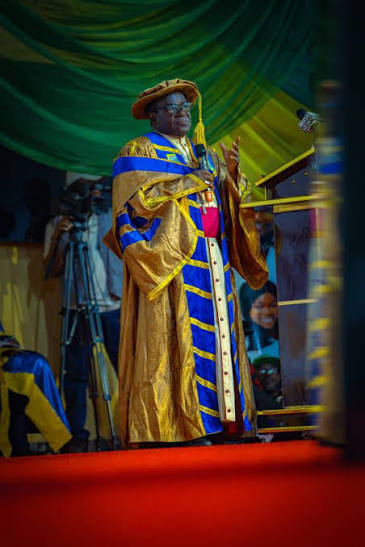
The Bishop of the Catholic Diocese of Sokoto, Most Reverend Matthew Hassan Kukah, in a convocation lecture at the Augustine University, said something that every Nigerian should copy down: “Let us stop complaining, stop focusing on those in power and their flaws, and ask ourselves how we can collectively help renew the face of the earth. Leadership is about ideas, not occupying positions.” He offered a concrete example of a tailor unable to complete an order for 50 school uniforms because electricity is unreliable. What that tailor needs is not another debate about “why the federal government cannot fix power,” but a distributed solution that lets him finish the order; solar, a small generator, or a reliable local power cooperative. Kukah’s core insight is that the missionaries who built schools and hospitals in Nigeria did not wait for a “good government” to appear first.
What Citizens Can Do: More Than They Imagine
So, what is the concrete, actionable list that does not depend on government reforming itself first?
First, build “attention budget” awareness and actively refuse kite agendas. Nigerian citizens need to manage public attention the way they manage money. When a religious or ethnic controversy suddenly occupies every broadcast frequency and social media trending list, the rational response is not to join the debate but to ask: what is being pushed off the agenda right now? Another forgotten report of disappeared persons? A tax clause quietly passing that hurts small businesses? A covered-up security failure? Nigerians need to develop a collective habit of “agenda auditing”; every major transfer of public attention should be recorded, questioned, and traced to its beneficiaries.
Second, channel even a small fraction of savings into local productive use. Nigeria’s savings rate is not low, but the direction of savings is distorted. If every middle-class professional shifted even a small portion, say 10% of the assets into local, transparent, accountable small productive enterprises (through formal private equity platforms, cooperatives, or direct equity in a local processing plant), the cumulative effect would be substantial. Nigeria does not need to wait for foreign direct investment; it needs Nigerians to invest productively in their own country. African Development Bank research repeatedly shows that Africa’s savings are sufficient to finance Africa’s development; what is missing is intermediation mechanisms and trust. Trust does not fall from the sky; it must be built through repeated, small-scale, successful, honestly executed collaborations.
Third, embed a “builder ethic” in professional identity rather than an “employee mentality.” Bishop Kukah’s charge to the young, deserves extension to every age group: “Your generation has tools which previous generations could not have imagined. The tools are in your hands. Build your life. Build your family. Build businesses. Build institutions. Build technology that serves human dignity.” This means an engineer asking, while doing their job, whether one process can be optimized so that the next user suffers a little less. A teacher asking, beyond the textbook, whether one more child in that classroom can truly understand rather than memorize. A civil servant asking, beyond the stamp, whether one unnecessary certificate can be eliminated. These small acts of “building” accumulate into a society’s resilience infrastructure when government fails.
Fourth, use consumption and professional choices to punish “kite politicians.” Nigerian voters’ choices at the ballot matter, but between elections citizens also hold non-electoral power. A politician who uses religious or ethnic incitement as primary political capital has business interests, clients for family enterprises, and media advertising placements that citizens can record and challenge in transparent, lawful ways. Nigeria’s media freedom space is under pressure, but digital platforms provide unprecedented capacity to document and disseminate, the same way as The Searchlight. Building a public database of “political attention polluters”, recording which political figures used which topics to divert public attention at which critical moments, is itself a civic education project.
Fifth, the diaspora’s role must upgrade from “remittance sender” to “institution builder.” Nigerian diaspora remittances run into tens of billions of dollars annually, but the vast majority flows into consumption and real estate rather than productive investment. The 2025 Nigerian Diaspora Investment Summit explicitly focused on technology, education, and entrepreneurship. But the real leverage is not in signing ceremonies at summits; it is in whether diaspora professionals can systematically and patiently transplant the institutional knowledge and professional standards they learned in Silicon Valley, London, or Johannesburg into Nigerian institutions, not through condescending “guidance” but through direct participation: teaching a rigorous course at a Nigerian university, serving as a non-executive director at a local firm and insisting on audit standards, providing months-long deep mentorship to local startups rather than one-off speeches.
Conclusion: The Kite String Is Held by Those on the Ground
There is indeed a class in Nigerian government skilled at operating kites. Their skill will not disappear automatically unless kites stop effectively distracting the ground. The string of a kite may appear to be in the hands of the flyer, but how high and how long a kite flies ultimately depends on how long the people on the ground are willing to look up.
Nigerians do not need to wait for a perfect government to begin building a country worth having. This is partly because most Nigerian politicians do not have service to the country as their topmost priority. What Nigerians need is to choose, when the next kite rises, to lower their heads and continue the concrete work in their hands, teaching that lesson well, repairing that generator, keeping that account honestly, building that small cooperative, asking the question that was meant to be ignored. A nation’s rebirth never begins with a declaration from the presidential villa; it begins the moment enough ordinary people decide to stop selling their attention cheaply.
The Searchlight will continue to document the work that was not carried away by kites, the work that stayed on the ground.


Leave a Reply