
By Matthews Otalike, The Searchlight Investigative Correspondent / October 29, 2026
With exactly 49 days remaining before Nigeria’s general elections begin on 16 January 2027, the Independent National Electoral Commission is confronting a credibility crisis of its own making. The commission missed a statutory deadline to publish the voter register. When it finally did so under public pressure, Nigerians discovered what appeared to be synthetic, AI-generated faces embedded in the official database. And the man charged with steering the commission through this minefield, Chairman Joash Amupitan, has offered the public almost nothing by way of explanation.
The Searchlight has reviewed the timeline, the legal requirements, the public record, and the allegations now swirling around INEC. What emerges is not proof of a rigged election. It is something more insidious: a pattern of institutional opacity that is making the question of rigging impossible to answer with confidence.
The Deadline That Was Missed
The Electoral Act 2026 is unambiguous. Section 19(1) requires INEC to publish the voters’ register on its website, alongside physical display at every registration area, for seven days before the 90-day mark to a general election. With the presidential and National Assembly elections scheduled for 16 January 2027, the seven-day display window had to be appointed by 18 October 2026.
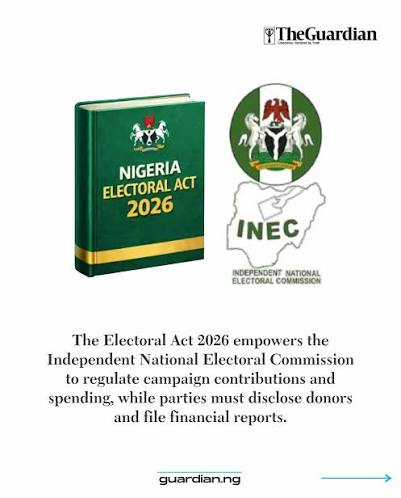
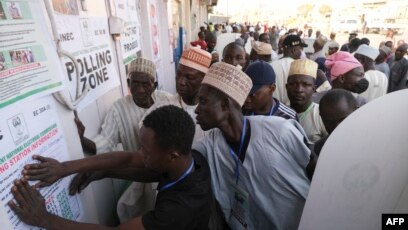
INEC conducted the physical display from 9 to 15 October. But it did not publish the register online by the statutory deadline. Premium Times reported that the commission “violated the electoral law by failing to publish the voter register on its website at the stipulated time”.
Only after public pressure mounted did INEC upload the preliminary register on Monday, 26 October, claiming that the online publication was an “additional measure” to complement the physical exercise already conducted. The commission’s spokesman, Mohammed Kudu Haruna, framed the move as a response to “the concerns expressed by Nigerians and other stakeholders regarding the desirability of making the Register accessible through its online platform”.
The law, however, does not describe online publication as optional or discretionary. Section 19(5) provides that an official who fails to display or publish the register as required “has committed an offence and is liable on conviction to a fine of N100,000 or imprisonment for a term of six months or both”. No one at INEC has been charged. No explanation has been offered for the delay.
The Ghosts in the Database
When the register finally went live, the questions did not end. They multiplied. Within hours of the online publication, Nigerians examining the database began sharing screenshots of entries that appeared to contain AI-generated photographs. The most widely circulated examples came from polling units in Ward 11, Etsako West Local Government Area of Edo State. Social media users flagged images that bore the hallmarks of synthetic generation, the telltale smoothness, the unnatural symmetry, the absence of the imperfections that characterize real photographs of real people.
One user, @SuleDeco, addressed INEC directly: “Can you explain why you have AI-generated images on the INEC Register in polling units in Ward 11, Etsako West LG, Edo State? We want an explanation. Who infused AI-generated images in the register? Who did the capturing? Who collected their PVCs, if they have been collected? We want answers!!!!!”
Another user, @bryma_007, raised a separate concern: “And the names are not even proper Edo names, not to talk of being Etsako. Omo!!!”
There were also allegations of duplicate entries, voters appearing multiple times with the same National Identification Number but different photographs, genders, and local government areas. Some Nigerians reported finding deceased family members still listed on the register.
INEC’s response, when it came, was to promise an investigation. The spokesman Haruna told the BBC that he would consult the commission’s technical department. “First of all, we have to verify whether it is truly AI pictures that are in our records, and secondly, they will tell me how that happened before I bring the information to you,” he said.
As of the time of this article, no findings from that investigation have been made public. The final register is scheduled for certification and publication on 15 December 2026. That leaves a narrowing window for the commission to explain how synthetic images entered a database that will determine who votes in January.
The Contradiction at the Heart of INEC’s AI Strategy
The AI controversy is not merely a technical glitch. It strikes at the heart of INEC’s own stated strategy for 2027.
The commission has repeatedly warned Nigerians about the dangers artificial intelligence poses to elections. It has identified deepfakes, synthetic images, cloned voices, and fabricated electoral information as emerging threats capable of undermining public confidence. It has established an artificial intelligence division within its ICT department and says automated AI auditing tools are being integrated into aspects of election administration, subject to human oversight.
Yet, the same commission now stands accused of hosting AI-generated content within its own voter register. As one analysis in TheCable put it: “An institution developing systems to detect AI-enabled electoral manipulation must be able to explain convincingly how suspected synthetic images could appear in the voter register it manages”.
The contradiction is not just embarrassing. It is structurally dangerous. If INEC cannot account for how suspicious entries entered its database, it cannot credibly assure Nigerians that those entries will not be used to inflate vote counts in January. The commission’s own IT systems, its own registration processes, and its own data integrity are now in question, and the commission has offered no forensic audit, no independent verification, and no timeline for transparency. This is dangerous to say the least.
The Silence of Amupitan
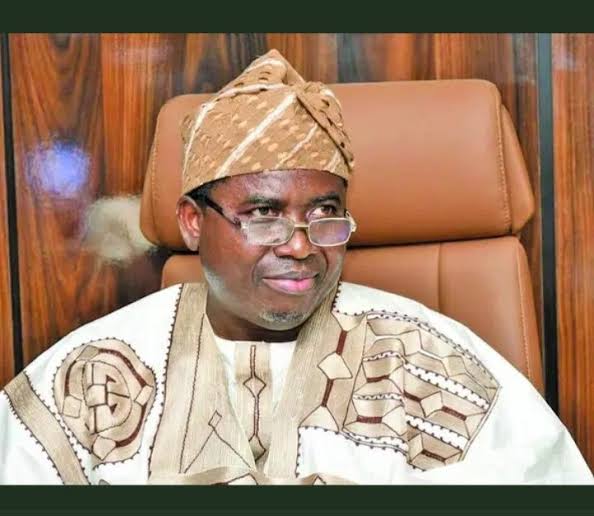
Throughout all of this, INEC Chairman Joash Amupitan has been largely invisible. He has not held a press conference to address the late register publication. He has not explained the AI allegations. He has not outlined what safeguards exist to prevent synthetic entries from being deployed on election day. His spokesman has fielded questions but the chairman has not.
This silence has not gone unnoticed. Critics have drawn a direct line between Amupitan’s reticence and the broader pattern of non-accountability that characterizes the Tinubu administration. The president has faced sustained criticism for avoiding unscripted press engagements and for governing through spokesmen rather than direct public engagement. INEC, under Amupitan, appears to have adopted the same playbook.
The Searchlight sought comment from INEC’s press office on the specific questions raised in this investigation: why the register was published late, what the commission’s investigation into the AI allegations has found, and whether Amupitan would address the public directly. No response had been received at the time of publication.
The Europe Meeting and the Allegations of a Dummy Server
The questions surrounding Amupitan’s leadership have been compounded by allegations that have circulated in the Nigerian media since September 2026.
A US-based political advisory firm, Von Batten-Montague-York, issued a statement in September in response to claims by social media commentator Nnaemeka Edeh that FCT Minister Nyesom Wike, INEC Chairman Amupitan, and the APC national chairman had travelled abroad to meet technology experts over an alleged plan to manipulate the 2027 election using a “dummy server”.
The allegations were never substantiated in any court or by any independent investigation. But they gained traction because of the timing. Questions had been raised about Amupitan’s absence from INEC headquarters in Abuja. The commission said he was outside Abuja on official assignment. Reports subsequently said he was in Canada, where he reportedly met Google’s Global Lead for Civic Responsibility, David J. Lopez, at a conference on responsible AI and elections.
The Searchlight has not been able to independently verify the allegations of a dummy server, nor the specifics of Amupitan’s foreign travel beyond what has been reported. What is verifiable is that the allegations exist, they are circulating widely, and INEC has not issued a comprehensive public explanation that would put them to rest. The commission’s failure to address the substance of the claims beyond general denials, has allowed them to fester.
Wike’s Chest-beating Certainty
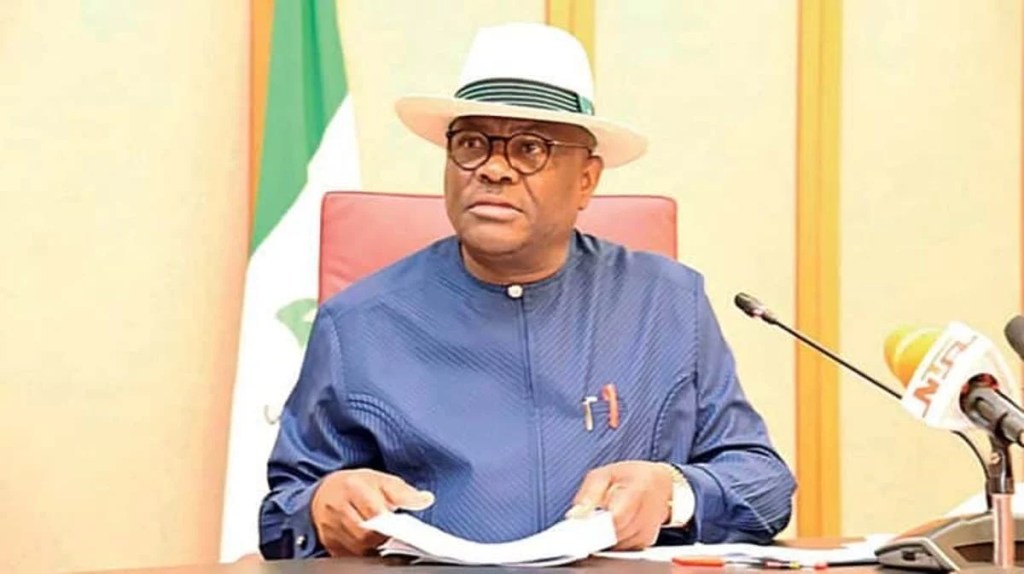
Against this backdrop, the statements of FCT Minister Nyesom Wike have taken on a particularly jarring quality. On 13 October 2026, at the inauguration of the APC Presidential Campaign Council at the State House, Wike pledged that Rivers State and the Federal Capital Territory would “vote massively for Bola Ahmed Tinubu”. He was speaking as the coordinator for both jurisdictions.
“Rivers and FCT, it is taken,” Wike declared. “I challenge any area council that can say they don’t see the presence of Mr President”.
Wike’s confidence is not inherently sinister. A campaign coordinator is expected to express confidence in his candidate. But Wike’s certainty is notable for what it assumes about the electoral environment. He is not saying Tinubu will win because the people of Rivers and the FCT will freely choose him. He is saying the outcome is “taken”, a word that implies control rather than persuasion.
When a minister who oversees the FCT, and who retains significant political influence in Rivers State, declares that two jurisdictions are already secured for the ruling party, and when the electoral commission has just been caught publishing a flawed and late voter register containing suspected synthetic entries, the cumulative effect is to make the question unavoidable: What does Wike know that the rest of Nigeria does not?
The Revolution Talk
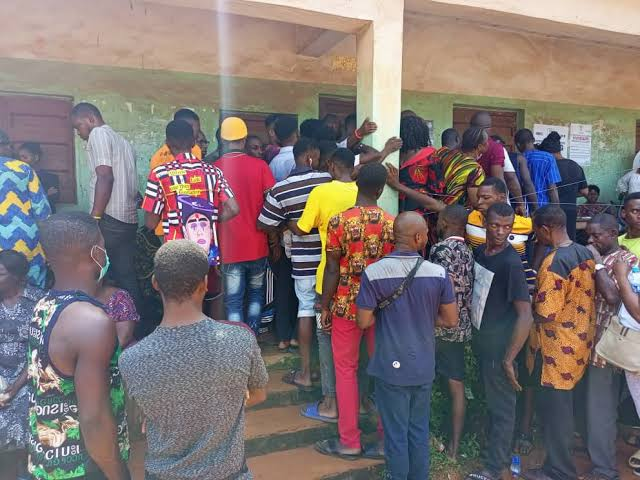
Ordinary Nigerians are not waiting for answers. They are preparing for the possibility that the answers will never come.
The African Democratic Congress has urged voters to collect their Permanent Voter Cards and defend their votes, warning that the narrative of a predetermined election is a ploy to suppress turnout. Peter Obi, now running under the Nigeria Democratic Congress, has said he is “ready to die” protecting his vote. The language of the 2027 election is already the language of confrontation.
The Searchlight does not endorse threats of violence. But we recognize the warning signs. When a significant portion of the electorate believes, before a single ballot is cast, that the electoral commission is complicit in a scheme to fabricate results, the legitimacy of the entire democratic process is at stake. The responsibility for preventing that outcome rests squarely with INEC.
What INEC Must Do
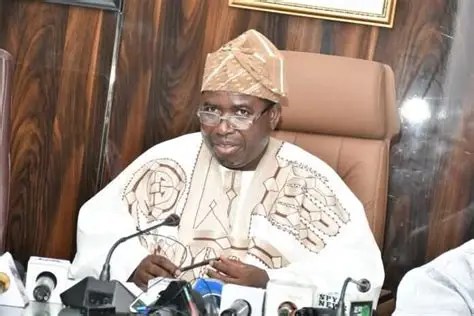
The Searchlight calls on Chairman Amupitan to take the following steps, immediately and publicly:
First, publish a full accounting of why the voter register was not made available online by the 18 October deadline, and identify who within the commission was responsible for the delay.
Second, commission an independent forensic audit of the voter register, conducted by credible cybersecurity and data experts not employed by INEC, to determine the provenance of the suspected AI-generated entries. The audit should be completed and its findings made public before the final register is certified on 15 December.
Third, explain to Nigerians, in detail, how the commission’s AI detection systems failed to flag synthetic entries before they entered the preliminary register, and what changes have been made to prevent a recurrence.
Fourth, address directly the allegations surrounding his foreign travel and the purported meetings with technology firms. If the meetings were legitimate and concerned election integrity, the commission should disclose the agenda, the participants, and the outcomes. Secrecy breeds suspicion.
Fifth, institute a clear conflict-of-interest and recusal policy for all senior INEC officials with family ties to political campaigns or candidates, and make that policy public.
Conclusion
The 2027 election is 49 days away. The register that will determine who votes is not yet final. The commission that will run the election is under a cloud of suspicion and it has done almost nothing to dispel it. The chairman who leads that commission has chosen silence over accountability.
This is not how credible elections are built. It is how the conditions for contested, disputed, and potentially destabilizing elections are created.
INEC has one final opportunity to demonstrate that it is an independent electoral umpire rather than an instrument of the ruling party’s ambitions. It can open its books, submit to independent scrutiny, and answer the questions Nigerians are asking. Or it can continue down the path of silence and defensiveness, and accept the consequences.
The Searchlight will continue to investigate and report. Nigerians deserve nothing less.


Leave a Reply