By Matthews Otalike, The Searchlight Investigation Correspondent / October 24, 2026
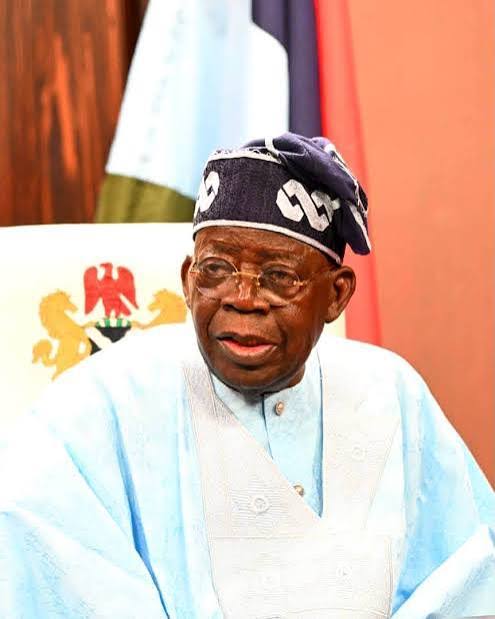
President Bola Ahmed Tinubu’s administration is in its fourth year amid mounting evidence of systemic vulnerabilities to corruption: the commercialization of public appointments, chronic under-implementation of capital budgets, diversion of funds meant for the vulnerable, and the political rehabilitation of officials under investigation.
A recent admission by a member of the APC Presidential Campaign Council (PCC), combined with documented scandals, has sharpened public scrutiny of how power and public resources are managed under the “Renewed Hope” agenda of the Tinubu administration,
The Insider Admission: Ministers as Investors Seeking Returns
On the night of 22 October 2026, Alwan Hassan, a spokesperson for the All Progressives Congress Presidential Campaign Council and former special adviser to ex-Vice President Yemi Osinbajo, appeared on Arise Television’s Prime Time programme, hosted by Charles Aniagolu. Defending President Tinubu’s tight personal control over government expenditure, Hassan made an unusually candid allegation:
“A lot of ministers pay billions and billions… to get themselves appointed. The first thing they think of is how to recoup that money.”
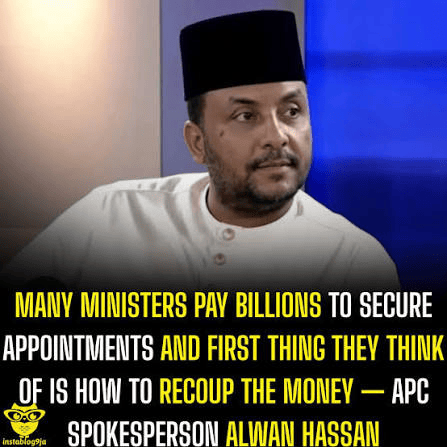
He went further: “Whatever it is a budget is supposed to do in this country in the last three and a half years, Asiwaju has done it by himself. Why do we need ministers? Why do we need budget to be given to ministers?” Hassan described ministers as among “the biggest fraudulent people you arrest after every government,” while insisting the practice of buying appointments long predated the APC and was not unique to the current cabinet.
Hassan offered no names, documents, or specific transaction details. Yet the remarks, coming from a senior campaign official, confirmed long-held suspicions that ministerial positions function as commercial investments. In the Nigerian political economy, the cost of securing high office, through campaign donations, facilitation fees, or direct payments to power brokers, creates a powerful incentive to recover those costs from public budgets once in office. Hassan presented Tinubu’s reluctance to fully release capital votes as a deliberate protective measure against such recovery efforts.
Chronic Budget Under-performance and Fiscal Opacity
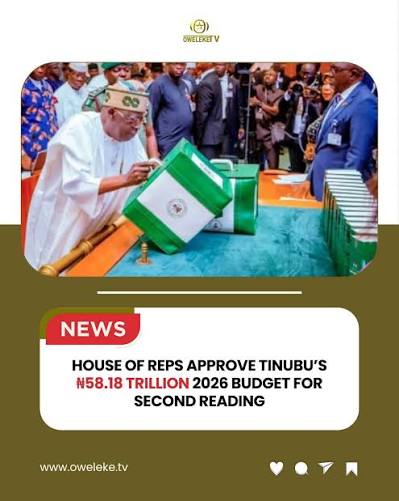
Budget data supports the pattern of restricted disbursements. In 2025, the Ministry of Transport received roughly 1 percent of its ₦256.73 billion capital allocation; the Ministry of Health and Social Welfare received only ₦36 million of ₦218 billion (0.0165 percent); Women Affairs received ₦394.8 million of ₦89.8 billion; Housing recorded zero capital releases; and Marine and Blue Economy received about 1.7 percent of its allocation. Similar shortfalls plagued the 2024 budget. While the administration cites revenue shortfalls and the need for fiscal discipline, the cumulative effect has been stalled projects, unpaid contractors, and eroded public trust.
Lawmakers have repeatedly complained about the non-release of capital funds, with some ministries reporting zero capital releases for consecutive years. The simultaneous implementation of overlapping budgets from previous years has further clouded accountability. Reports of unrecorded public expenditures amounting to significant portions of GDP have also circulated, raising questions about off-budget spending and the integrity of fiscal reporting. Contractors continue to face mounting arrears, while critical sectors such as health, education, and infrastructure suffer from underfunding despite formal appropriations.
The Adeniyi Adeyemi Scandal: Alleged ₦400 Million Bribe for a Phantom Agency
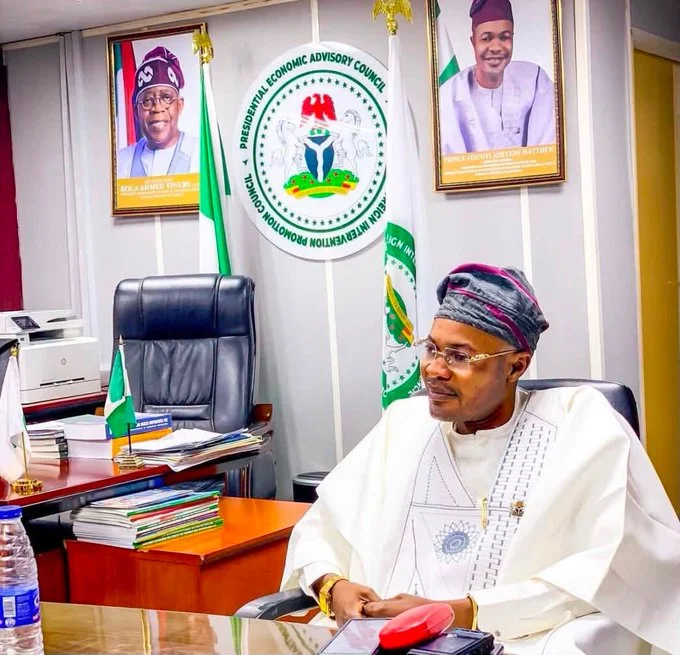
One of the most concrete illustrations of the alleged pay-to-play culture is the case of Prince Adeniyi Adeyemi Matthew. Adeyemi claimed he borrowed ₦400 million and paid it through a late associate, Dolapo Tanimola, to Femi Gbajabiamila, Chief of Staff to the President, in order to secure appointment as Director-General of the Presidential Foreign Intervention Promotion Council (PFIPC), sometimes styled as a Presidential Economic Advisory Council variant. He further alleged that an additional ₦200 million was later demanded.
The Presidency has flatly rejected these claims and declared the PFIPC a complete fiction. Officials state that the body was never established by law, presidential order, or gazette. Adeyemi is accused of operating on the basis of forged documents, including an appointment letter purportedly signed by Gbajabiamila and other presidential instruments. He allegedly secured office space in the Federal Secretariat, ran a website using official symbols and photographs of the President, issued contract awards, and somehow had the entity appear in federal budget documents (with at least ₦1.3 billion reportedly inserted at one point).
Adeyemi was arrested in Osun State in July 2026 after a bench warrant was issued. He was charged with forgery, impersonation, conspiracy, and related offences. In a Channels Television interview, he maintained that the appointment was legitimate and that he paid the ₦400 million for it. Police investigations, however, traced the funds to personal expenditure, vehicles, luxury items, and transfers to relatives, rather than any payment to the Chief of Staff. A businessman, Gbenga Collins of Divine Dopacy Limited, later told a House of Representatives ad-hoc committee that he paid Adeyemi ₦400 million in instalments as a “facilitation fee” for a purported ₦2.87 billion contract to refurbish what was presented as the DG’s official residence. Police recovered evidence of 58 bank accounts linked to Adeyemi and associated entities.
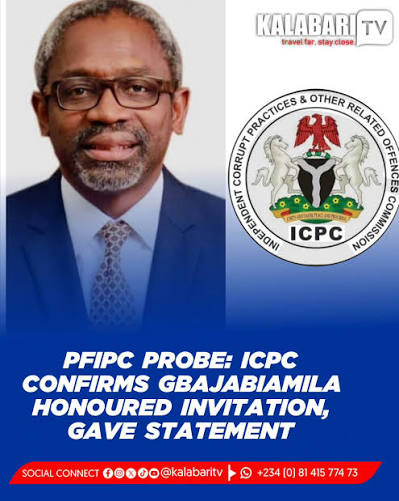
Gbajabiamila denied the bribery allegations and filed a ₦15 billion defamation suit. President Tinubu ordered an ICPC investigation while publicly expressing “100 percent confidence” in his Chief of Staff. In October 2026, the Federal High Court in Abuja struck out the original eight-count charge after the Attorney-General’s office identified jurisdictional issues and announced it would file fresh charges at the FCT High Court. Adeyemi remains in custody, with the legal process continuing.
The episode raises deeper questions: how a phantom agency obtained government accommodation, official-looking number plates, budget insertion, and enough credibility to extract hundreds of millions from private individuals before detection. What happened that the alleged intermediary between Adeyemi and Gbajabiamila died suddenly in a “fire incident” in a hotel in Abuja and the hotel was pulled down 48 hours later, not allowing investigations into the cause of the fire?
Betta Edu: From Suspension to Campaign Council

In December 2023, a memo signed by Betta Edu, then Minister of Humanitarian Affairs and Poverty Alleviation, directed the Accountant-General of the Federation to transfer ₦585,189,500, grants for vulnerable groups in Akwa Ibom, Cross River, Ogun, and Lagos, into the private UBA account of Bridget Mojisola Oniyelu, described as a project accountant. Nigerian public financial regulations prohibit the payment of public funds into private accounts; such transfers are treated as presumptuously fraudulent.
Public outrage followed the leak. On 8 January 2024, President Tinubu suspended Edu and ordered the EFCC to conduct a thorough investigation of the ministry’s financial transactions. Edu denied wrongdoing, insisting the payment followed due process for programme implementation. The EFCC subsequently recovered hundreds of millions linked to the broader probe of the ministry (reports at various points cited recoveries exceeding ₦500 million from the Edu-related transactions and larger sums from related social investment programmes). Over 50 bank accounts were examined. As of late 2026, the EFCC has stated that no one involved has been cleared and that investigations remain ongoing; full public reports on findings and prosecutions have not been released.
Despite the unresolved status of the investigation, Edu was named Director of Women Mobilization in the APC Presidential Campaign Council for the 2027 election. She has been active on the campaign trail, including mobilizing women in Kwara State in September 2026. FCT Minister Nyesom Wike defended her inclusion, arguing that an EFCC investigation does not equate to guilt and does not bar political participation. Critics, including the African Democratic Congress, have highlighted the contrast between the initial suspension and the later political rehabilitation, especially against the backdrop of further Auditor-General findings of tens of billions in unverifiable social intervention disbursements.
Social Intervention Programmes: A Recurring Site of Leakage
Social investment and poverty-alleviation programmes have repeatedly emerged as flashpoint. Beyond the Edu transfer, auditors and opposition parties have flagged larger sums that could not be matched to verified beneficiaries. The African Democratic Congress described findings of approximately ₦33.75 billion in unaccounted cash transfers within a broader intervention package as evidence of an “organized racket.” Earlier controversies involving the National Social Investment Programme Agency under previous coordinators, including alleged missing billions, have left a pattern of weak oversight in programmes designed to reach the poorest Nigerians.
These failures matter acutely in a period of high inflation, subsidy removal, and cost-of-living pressures. When funds intended for vulnerable households disappear into private accounts or remain unverifiable, the social contract frays further. Recoveries by the EFCC demonstrate that some leakages can be reversed, yet the absence of conclusive public reports and prosecutions has limited the deterrent effect.
The Campaign Council and the Politics of Rehabilitation
The composition of the APC’s 2027 Presidential Campaign Council has itself become a point of contention. In addition to Betta Edu, the lists have featured individuals with pending or recent corruption-related allegations, including Ngozi Olejeme (former NSITF board chair facing trial over alleged ₦1 billion embezzlement) and others linked to earlier probes. Critics argue that the inclusion of such figures is an indication that political loyalty and mobilization capacity outweigh unresolved integrity questions. Defenders counter that investigation is not conviction and that exclusion would amount to premature punishment.
The tension illustrates a broader challenge: anti-corruption rhetoric coexists with political pragmatism that reintegrates officials whose cases remain incomplete. This selective approach risks reinforcing public cynicism that high-level accountability is applied unevenly.
Official Responses and the Limits of Oversight
The administration’s consistent defence has been that President Tinubu exercises unusually close personal oversight of revenue and expenditure precisely to limit opportunities for ministerial mismanagement. Hassan’s remarks framed this as a virtue. The Presidency has pointed to EFCC and ICPC recoveries, suspensions such as Edu’s, and ongoing investigations as evidence of seriousness. Yet the slow publication of full probe outcomes, the jurisdictional resets in cases such as Adeyemi’s, and the political rehabilitation of suspended figures have undercut claims of consistent resolve.
Legislative oversight has produced hearings and summonses over budget under-performance, but has rarely translated into structural reforms that close the gaps between appropriation and actual release, or between investigation and conclusive prosecution.
Consequences for Governance and Public Trust
The cumulative effect of these patterns is a governance environment in which public office is widely perceived as a recoverable investment rather than a public trust. When capital budgets are chronically under-released, social programmes leak funds, phantom agencies briefly thrive, and officials under investigation return to high-visibility political roles, ordinary citizens experience the state as both extractive and unreliable. The economic costs appear in delayed infrastructure, unpaid contractors, and weakened social safety nets; the political costs appear in declining trust and heightened cynicism ahead of the 2027 elections.
Conclusion: The Need for Structural Change
Hassan’s televised remarks function as an inadvertent corroboration of the structural problem. When a campaign official openly states that ministers treat office as an investment to be recovered, and when concrete cases of alleged bribery for appointment and diversion of humanitarian funds remain only partially resolved, public confidence erodes. The administration’s defence, that Tinubu’s personal oversight protects public funds, itself acknowledges the depth of the trust deficit within the executive.
Nigeria’s anti-corruption architecture continues to generate recoveries and investigations. Yet the combination of delayed or unpublished probe outcomes, political rehabilitation of suspended officials, and the persistent culture of viewing public office as a recoverable commercial asset suggests that institutional reforms remain incomplete. Full transparency on the Edu and Adeyemi investigations, clearer rules and enforcement against the sale of public offices, consistent application of financial regulations prohibiting private-account transfers of public funds, and genuine separation of political loyalty from integrity standards would be necessary steps toward restoring credibility. Until such measures take root, statements like Hassan’s will continue to resonate less as defence of prudent governance and more as confirmation of a system still organized around private recovery of political investments.


Leave a Reply