By The Searchlight Investigative Desk / October 22, 2026
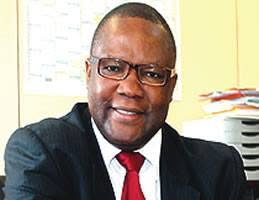
In August 2020, as Nigeria staggered through the haze of a COVID-19 lockdown, a former Deputy Governor of the Central Bank of Nigeria (CBN) sat before a radio microphone in Abuja and spoke words that would set his life ablaze. Dr. Obadiah Mailafia, an Oxford-trained economist and former presidential candidate, did not speak in riddles. He told Nigeria Info FM that repentant Boko Haram commanders had confided in him: a serving northern governor was the commander of the terrorist group; Boko Haram and bandits were one and the same; and while the rest of the country was locked down, the terrorists’ “planes were moving up and down as if there was no lockdown,” ferrying ammunition, logistics, and money across the country. He warned that the terrorists had already infiltrated the rain forests of the South and were planning a phased takeover, culminating in a civil war by 2022.
The state’s response was not an investigation into the allegations. It was an investigation into the man who made them.
The Hounding of a Whistle-blower
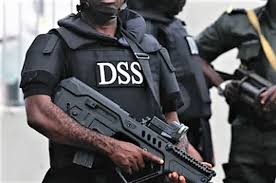
Within days, the Department of State Services (DSS) summoned Mailafia to its Jos office. He was grilled for six hours. The police followed with their own invitation. When he challenged the summons in court, the DSS summoned him again, a third time, prompting him to declare publicly that his life was in danger. “I have received serious warnings that my revelations have angered some members of the political class to the extent that they want me physically eliminated,” he wrote in a column titled Notes from the Underground. “I know that killer squads have been paid undisclosed sums to hunt me down”.
He was not imagining the threat. The Southern Kaduna Peoples Union (SOKAPU) later revealed that Mailafia had to take refuge in different locations to avoid persistent DSS harassment, and that he “did not die as a free man”. International bodies took notice. The UK Parliament formally asked whether reports of death threats against him had been assessed. A Swiss civil society organization, CSI, wrote to the Nigerian president urging protection. Yet the harassment continued.
On September 19, 2021, Mailafia died at the University of Abuja Teaching Hospital after a brief illness. He was 64. The government’s silence on his death was, as one commentator put it, “inexplicable”. But by then, the machinery of denial had already done its work: the messenger had been discredited, his claims dismissed as the ravings of a disgruntled politician, and the Nigerian public invited to move on.
What Mailafia Actually Said and What the Records Show
It is necessary to be precise about Mailafia’s claims, because the state’s rebuttal relied on caricature. He did not say he had seen Boko Haram members loading articulated vehicles. He said he had spoken with repentant high-ranking commanders who told him of a sophisticated logistics network that operated with impunity during the COVID-19 lockdown, moving weapons and personnel by air and road to destinations across the South and Middle Belt. He explicitly identified bandits and Boko Haram as a single network, not separate criminal enterprises. And he warned of a phased strategy: rural killings first, then a move into urban centres to assassinate prominent Nigerians, with the ultimate aim of triggering a second civil war.
Nearly every element of that warning has since found corroboration in official admissions, security reports, and events on the ground.
The Imo Kidnapping: A Case Study in the New Insecurity
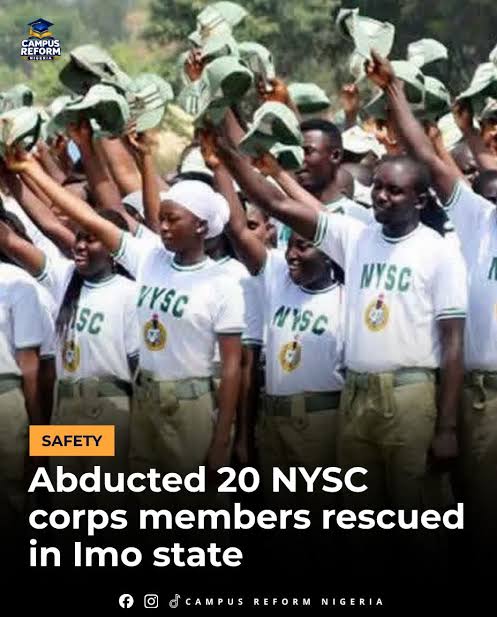
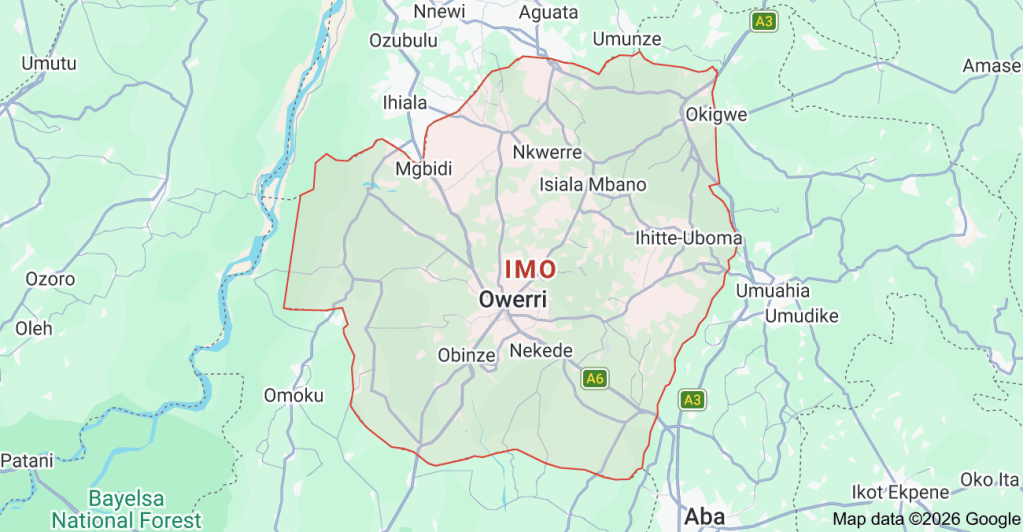
The October 2026 abduction of twenty prospective National Youth Service Corps (NYSC) members in Imo State is the most recent and starkest illustration of what Mailafia warned about. The corps members were travelling from Ibadan to orientation camps in Abia and Akwa Ibom when gunmen attacked their buses along the Owerri–Onitsha Road on Independence Day. They were held for seven days. The abductors initially demanded ₦50 million per victim, later reducing the ransom to ₦5 million each. The DSS, military, and police eventually secured their release.
Subsequently, the DSS arraigned five suspects, Mohammed Ali, Usman Aliyu, Babangida Aliyu, Ibrahim Jiji, and Aminu Haliru, on charges of conspiracy, hostage-taking, and unlawful possession of firearms. Three were specifically charged with the corps members’ kidnapping; all five were linked to a broader kidnapping gang operating in the state. The DSS recovered three AK-47 rifles, four magazines, a pistol, and eighty-one rounds of live ammunition from the suspects.
The user’s framing, that “five Boko Haram terrorists were arrested” for this crime, overstates what the public record establishes. The suspects have been charged as a criminal kidnapping gang; the DSS has not publicly designated them as Boko Haram members. But this semantic distinction obscures a deeper truth. Mailafia’s core contention was never that every kidnapper in the South was a card-carrying Boko Haram member. It was that the logistics, the weaponry, the operational sophistication, and the impunity of these groups were converging. The Imo case fits that pattern with uncomfortable precision: a kidnapping operation with AK-47s and military-grade ammunition, executed on a major highway, holding twenty young Nigerians for a week while security agencies located but hesitated to storm the camp because it was “heavily mined with Improvised Explosive Devices”. This is not the profile of a ragtag band of opportunistic criminals. It is the profile of a network with training, resources, and a level of tactical competence that Mailafia insisted was being deliberately ignored.
What Is the APC Administration Hiding?
The question is not whether the Nigerian state has failed to protect its citizens; that is now a matter of bipartisan consensus. The question is whether the failure is one of incapacity alone, or whether it is sustained by a deliberate architecture of concealment.
The evidence for concealment is no longer anecdotal. In May 2026, military sources told SaharaReporters that commanders had been explicitly instructed to suppress information about Boko Haram and ISWAP attacks until after the 2027 general elections. “We were told clearly that going forward, information about Boko Haram or ISWAP attacks should not be made public until after the 2027 elections,” one source said. “They said such reports are damaging the image of President Bola Tinubu’s government and the military”. Soldiers suspected of leaking operational failures were threatened with severe punishment; the instruction was that “operational failures should be managed internally”.
This is not an isolated allegation. The opposition Peoples Democratic Party (PDP) has accused the APC-led administration of “spending fortunes in public relations and sending emissaries to foreign countries to tell lies and twist the real truth” about insecurity. The African Democratic Congress (ADC) has described official responses to mass abductions as “part of the APC government’s preoccupation with hiding the truth in order to look good”. Even within the ruling party, former APC Deputy National Publicity Secretary Timi Frank has called for an independent probe into allegations that National Security Adviser Nuhu Ribadu and Kwara State Governor AbdulRahman AbdulRasaq were involved in arming Fulani bandits, describing the conflicting official accounts as evidence of a “deliberate cover-up to protect powerful interests”.
The pattern is consistent: atrocities occur, the government expresses condolences, announces a military operation, claims success, and then imposes silence until the next atrocity. Directives are issued and never assessed. Funds are approved and never accounted for. The systemic enablers of violence, porous borders, forest sanctuaries, illegal arms flows, and weak state presence, are never addressed. Meanwhile, the military is ordered to “manage” the truth internally, and the public is left to piece together the reality from leaks and whispers.
The Media’s Silence: Complicity, Fear, or Both?
The user’s question, “Why are the media silent?”, deserves a direct answer. The Nigerian media is not uniformly silent. Outlets like SaharaReporters, Premium Times, and The ICIR have continued to report on insecurity, often at considerable risk. But the mainstream broadcast and print media have, in significant measure, internalized the logic of “national interest” that the state has actively promoted.

The Chairman of the Independent Media and Policy Initiative (IMPI), Dr. Omoniyi Akinsiju, articulated this logic explicitly in a 2025 lecture: the media should be “more circumspect” in reporting security challenges because “more attention is paid to challenges in the war against banditry and terrorism than the gallant efforts being made by the security agencies and government to stem the tide”. He argued that national interest should be “uppermost” and that the media should adopt “subtle” approaches that “stand by the state”. This is the language of embedded journalism dressed as patriotism. It is a framework in which reporting on failure becomes a failure of patriotism, and silence becomes a virtue.
The consequences are visible in the disparity of coverage. When 42 pupils were abducted from a school in Askira-Uba, Borno State, in 2026, the incident received scant national attention; many Nigerians, including a schoolteacher, had never heard of it three weeks later. When children were abducted in Oyo State on the same day, the story trended nationally, prompting a presidential visit. The Middle Belt Forum has condemned the “complete silence by the Nigerian media” on the abduction of 15 married women in Southern Borno, calling it “curious and deeply troubling”. The pattern is not accidental. It reflects a media ecosystem in which some victims are deemed more newsworthy than others, and in which the state’s preferred narrative of progress is rarely disturbed by the inconvenient fact of ongoing slaughter.
The Unfinished Business of Obadiah Mailafia
Mailafia is dead, but the questions he raised are not. The Boko Haram commanders he claimed to have spoken with were never publicly identified or investigated. The northern governor he accused of being a Boko Haram commander was never named by him publicly, but the state’s response was to interrogate the accuser, not to investigate the accusation. The sophisticated logistics network he described—the planes, the ammunition, the money moving during lockdown—was never the subject of a transparent official inquiry. Instead, the state focused its energies on discrediting him, summoning him four times, and creating an atmosphere in which his physical elimination became a plausible prospect.
The Imo kidnapping case does not prove Mailafia right in every detail. But it proves him right in the essential: that the insecurity Nigeria faces is not a series of disconnected local crises but a networked, well-resourced, and politically protected enterprise that the state either cannot or will not confront honestly. The arrest of five men in Imo, however welcome, is a footnote to a much larger story—a story the APC administration has spent years trying to suppress, and a story the Nigerian media has too often been complicit in burying.
Obadiah Mailafia was not a prophet in the conventional sense. He was an economist who read the data, a patriot who spoke to the people the state had abandoned, and a truth-teller who understood that the first casualty of Nigeria’s war on terror would be the truth itself. He was hounded, threatened, and ultimately silenced. But the silence he was forced into is now the silence of a nation that has been told, repeatedly and by its own government, that the things it sees with its own eyes are not happening.
The Searchlight will not be silent. Neither should you.


Leave a Reply