By The Searchlight Investigative Desk / October 22, 2026
In the first part of this investigation, The Searchlight established that Dr. Obadiah Mailafia’s warnings about a networked, politically protected terror enterprise have been vindicated by events. But vindication is not justice. The more urgent question is how the Nigerian state and its media ecosystem conspired, through summons, intimidation, fines, and strategic omission, to ensure that the truth he spoke would be buried under procedure and silence.
This follow-up reconstructs two parallel architectures of suppression: the legal harassment orchestrated by the Department of State Services (DSS), and the media environment that made his erasure possible.
THE DSS SUMMONS TIMELINE: A Study in Procedural Persecution

The official rationale for interrogating Mailafia was that his radio interview on Nigeria Info FM on August 9, 2020, contained claims requiring “clarification.” But the sequence of summons reveals something else: a coordinated campaign to exhaust, discredit, and isolate a whistleblower through repetitive legal process.
August 12, 2020: The First Summons: Six Hours of Grilling
The DSS did not summon Mailafia directly. It went through his employer, the National Institute of Policy and Strategic Studies (NIPSS), Kuru, directing him to appear at the Plateau State Command in Jos for “interview, investigation and interrogation”. He arrived at 12:30 p.m. and was immediately ushered into an office with his lawyer, Pius Akubo, while his other associates were barred from the premises.
The interrogation lasted six hours. He was released around 6:00 p.m., “unconditionally,” as some reports noted, though the release came only after the DSS had extracted its pound of flesh in time and intimidation.
August 16–17, 2020: The Second Summons: A Forty-Minute Charade
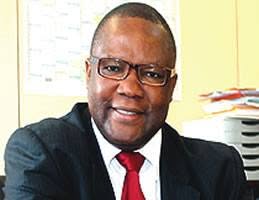
Just four days later, on Sunday, August 16, the DSS issued another invitation. Mailafia reported to the Jos Command Headquarters at noon on Monday, August 17. This time, the meeting lasted approximately 40 minutes, some reports said 45, before he was released. The brevity of this second summons suggests it was not about eliciting new information. It was about establishing a pattern of control: we can call you back whenever we choose.
August 21–24, 2020: The Police Enter the Fray: A Parallel Investigation
On August 21, while the DSS process was ongoing, the Nigeria Police Force, through the office of the Deputy Inspector-General of the Force Criminal Investigation Department (DIG-FCID) in Abuja, served another invitation on Mailafia at his residence, requiring him to appear on Monday, August 24.
His legal team, led by Yakubu Bawa (then chairman of the NBA Plateau State chapter), responded by filing an action at the Plateau State High Court for the enforcement of his fundamental rights to personal liberty and fair hearing, challenging the police invitation as duplicative and oppressive. Mailafia did not honour the police summons, and his lawyers argued that the invitation was “alien to Nigeria’s extant laws and procedures”. The human rights group HURIWA publicly condemned the police invitation as harassment, noting that the DSS, “a federal intelligence service”, was already investigating the same matter.
September 11–14, 2020: The Third Summons: “If I Perish, I Perish”
By early September, Mailafia was fighting on two fronts: the DSS and the police. On Friday, September 11, his lawyer appeared before a Jos High Court seeking a restraining order against the DIG-CID. That same day, word emerged that the DSS had issued a third invitation, ordering him to appear at its Jos headquarters on Monday, September 14, at 11:00 a.m..
Mailafia did not mince words. “I have once again (for the 3rd time) been ordered to appear before the DSS,” he told The Nation. “This is in addition to our battle in court… My life is in danger and some powerful political forces want to silence me forever for speaking the truth”.
His language had become that of a man preparing for martyrdom. “I am the voice of the holy martyrs,” he said. “If I perish, I perish”. He arrived at the DSS office around 11:00 a.m. on September 14 and did not emerge until about 2:50 p.m., nearly four hours later.
September 29, 2020 — The Court Rejects His Plea
Mailafia’s legal gambit failed. On September 29, 2020, Justice Arum Ashom of the Plateau State High Court dismissed his application to stop the police from investigating him, ruling that the DSS had the right to invite him over a matter touching on internal security. The court’s decision effectively legitimized the parallel investigations, leaving Mailafia with no legal shield against the state’s attrition.
The Fourth Summons and the Flight into Refuge
The public record on a formal “fourth” DSS summons is less precise, but the pattern is clear. Reports indicate that Mailafia was invited “at least three times” by the DSS in 2020, and by September 2021, a year after the third summons, he was living in fear, moving between safe houses. SOKAPU spokesman Luka Binniyat confirmed that Mailafia “took refuge in Makurdi, Benue State, following alleged persistent harassment by the Department of State Security Services (DSS)” and had been “taking refuge from place to place”.
He died on September 19, 2021, at the University of Abuja Teaching Hospital, after being rushed from Makurdi. He was 64.
THE MEDIA SILENCE — Coercion, Co-optation, and the Discipline of Omission
The DSS campaign against Mailafia was only half the architecture. The other half was the media environment that ensured his warnings would not be heard, or would be heard only as the ravings of a discredited man.
The NBC Fine: Punishing the Messenger’s Platform

The first act of media suppression came within days of Mailafia’s radio interview. On August 13, 2020, the National Broadcasting Commission (NBC) fined Nigeria Info 99.3 FM ₦5 million for what it called “unprofessional conduct” in airing the interview. The fine was imposed under the NBC’s reviewed broadcasting code, which had recently raised penalties for “hate speech” from ₦500,000 to ₦5 million.
The message to every radio station and television network in Nigeria was unmistakable: airing claims that embarrass the state, even claims made by a former Deputy Governor of the Central Bank, will cost you. The fine was not a regulatory action. It was a warning shot.
The “National Interest” Doctrine: Manufacturing Self-Censorship

Beyond direct coercion, the Nigerian media has been disciplined by a doctrine of “national interest” that equates reporting on insecurity with unpatriotism. In a 2025 lecture, Dr. Omoniyi Akinsiju, Chairman of the Independent Media and Policy Initiative (IMPI), argued that the media should be “more circumspect” because “more attention is paid to challenges in the war against banditry and terrorism than the gallant efforts being made by the security agencies and government to stem the tide”. National interest, he said, should be “uppermost,” and the media should adopt “subtle” approaches that “stand by the state.”
This is the intellectual scaffolding for self-censorship. It transforms silence into a virtue and reporting into betrayal.
The Military Directive: “Not Until After 2027”
The coercion has now become explicit. In May 2026, military sources told SaharaReporters that commanders had been instructed to suppress information about Boko Haram and ISWAP attacks until after the 2027 general elections. “We were told clearly that going forward, information about Boko Haram or ISWAP attacks should not be made public until after the 2027 elections,” one source said. “They said such reports are damaging the image of President Bola Tinubu’s government and the military. The instruction was that operational failures should be managed internally”.
Soldiers suspected of leaking operational failures were threatened with severe punishment. “Commanders warned that any soldier found communicating with the media would face severe punishment,” the source added. “The threat was serious. People are scared because they believe they can be framed or targeted at any time”.
This is not a media policy. It is a cover-up directive, issued from the highest levels of the security establishment, designed to ensure that the Nigerian public does not learn the true scale of the war being lost in the shadows.
The Disparity of Coverage: Some Lives Matter More
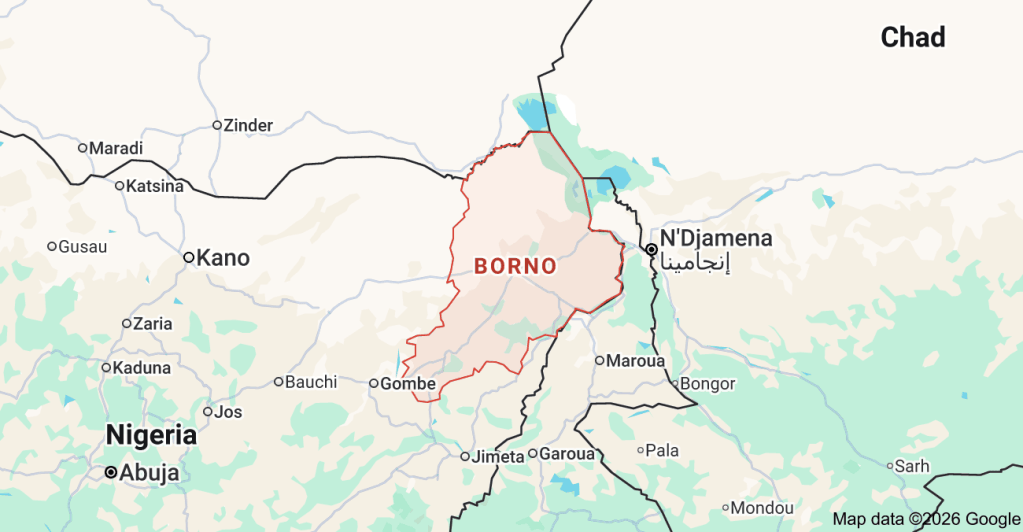
Even when the media does report on insecurity, the coverage is structured by a hierarchy of victimhood that mirrors the state’s own political calculations. When 42 pupils were abducted from a school in Askira-Uba, Borno State, in 2026, the story received scant national attention. A schoolteacher in Nigeria told an AllAfrica columnist she had never heard of the abduction, three weeks after it happened. Among the abductees were toddlers between the ages of two and four.
On the same day, children were abducted in Oyo State. That story trended nationally. The President’s Chief of Staff, the Defence Minister, and the National Security Adviser made an official visit. As the AllAfrica analysis concluded: “Surely, in Nigeria, some lives appear more important than others”.
The Middle Belt Forum has documented the same pattern. On the abduction of 15 Christian married women in southern Borno, the Forum condemned “the complete silence by the Nigerian media on such a grave crime” as “curious and deeply troubling”. On the mass abduction of 166 worshippers in Kaduna, the Forum noted the “total lack of any update or situation report”, a silence that extended to the Kaduna State Government and Police Command, which had initially denied the crime altogether.
In Kachia, Kaduna State, residents issued a desperate appeal in September 2025: “Kidnappings from farms and homes are happening daily, yet media coverage remains virtually absent. We are forced to ask: where are the correspondents or reporters of major media houses?”.
The Complicity of the Mainstream

It would be inaccurate to say that all Nigerian media has been silent. Outlets like SaharaReporters, Premium Times, The ICIR, and Daily Post have continued to report on insecurity, often at great risk. But the mainstream broadcast and print media, the outlets that shape the national conversation, have largely internalized the state’s preferred narrative. They report on insecurity as a series of unfortunate incidents rather than as a systemic failure. They amplify government press releases about “gallant troops” while downplaying the operational failures that make those troops’ heroism necessary. And they have, with notable exceptions, allowed the Mailafia story to fade into the background, a curiosity from the COVID era, not a warning that events have since validated.
CONCLUSION: The Unfinished Investigation
Obadiah Mailafia was summoned four times, interrogated for hours, fined through his platform, and ultimately forced into a life of hiding. He died not in his home, but in a hospital in Abuja, after being rushed from a safe house in Makurdi. The state never investigated the substance of his claims. It investigated him.
The media, for the most part, did not investigate them either. It reported the summonses, aired the denials, and moved on. The NBC fine ensured that the original interview would not be widely rebroadcast. The military’s suppression directive ensured that the atrocities he warned about would be managed as public relations problems rather than national emergencies. And the disparity in coverage ensured that the victims he spoke for, the farmers of southern Kaduna, the villagers of Borno, the travellers on Nigeria’s highways, would remain statistics rather than stories.
The question The Searchlight posed in our first investigation: What is the APC administration hiding?, now has a corollary: What has the Nigerian media allowed itself to become?
The answer is not comfortable. A media that cannot report on the abduction of 42 children because it fears a regulatory fine, a military reprisal, or the accusation of unpatriotism is not a free press. It is a press that has been disciplined into silence. And in that silence, the Mailafias of Nigeria will continue to be hounded, and the truth they speak will continue to be buried.
The Searchlight will not be silent. Neither should you.


Leave a Reply