By Matthews Otalike, The Searchlight Investigation Correspondent / October 21, 2026
A disturbing pattern has emerged in Nigeria’s security landscape: a serving senator, a National Security Adviser, a Minister of State for Defence, and a cleric are all dogged by credible allegations of complicity with bandits and terrorists. Yet none has faced a transparent, public investigation. Instead, the machinery of state appears to have erected a shield, one woven with political convenience, religious patronage, and a calculated pact with a powerful Islamic movement.
The question is no longer whether these allegations are true. It is why the Tinubu government has chosen silence over scrutiny, and what that silence reveals about the true architecture of Nigeria’s insecurity.
The Senator Who Chairs the Oversight Committee
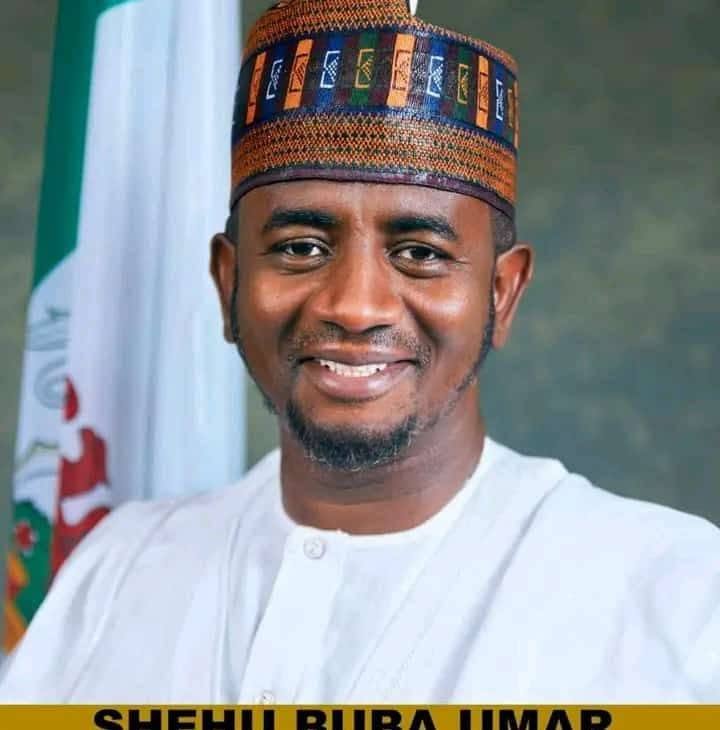
Senator Shehu Buba Umar’s case is the most documented, and the most damning in its implications. A governor’s petition, video evidence, whistleblower testimony, and a trail of alleged ransom payments all point to a man who, while chairing the Senate Committee on National Security and Intelligence, was allegedly facilitating the very terror he was meant to oversee.
When the allegations became untenable, Buba did not wait to be summoned. In September 2026, he “voluntarily submitted himself” to the DSS, the Defence Intelligence Agency, and the Police, declaring he had “nothing to hide”. This was not the act of a man being pursued by a zealous state. It was the act of a man confident that the state would not pursue him at all.
His confidence appears well-placed. Despite the gravity of the claims, sniper training, bandit kingpins in his residence, treatment of bandits wounded in military raids, ransom money distribution, no public update on any investigation has been issued. The whistleblower, Hassan, who had lived closely with Shehu Buba has reportedly fled to Niger Republic, while Buba’s lawyers petitioned Interpol. The oversight committee chair remains in place, unchallenged by the executive he is constitutionally mandated to check.
No public update on the investigation has been issued. Former Minister Solomon Dalung has publicly demanded that the DSS disclose the outcome of its probe, noting that “no one has said Senator Buba is guilty” but that the silence itself is untenable. Civil society activist Omoyele Sowore observed the obvious: Buba handed himself over, and the DSS simply did not come to take him.
The Shari’ah Council: Probe or Shield?
The role of the Supreme Council for Shari’ah in Nigeria (SCSN), is more layered than it first appears, and that is precisely what makes it troubling.
On one hand, the SCSN publicly called on the Office of the National Security Adviser and the DSS to conduct a “thorough and independent investigation” into the allegations against Buba. On the other, the Hausa Native Advancement and Development Initiative (HANADI) alleges that the SCSN simultaneously rejected the DSS’s attempt to investigate the senator, warning against “undue influence in matters that pertain strictly to national security” and questioning whether ethnic considerations were shaping the Council’s defence of a Fulani figure.
A fact-check by Dubawa found that the specific claim that the Sultan personally shielded Buba is false. But the broader allegation, that a religious body operating under his authority moved to obstruct a security probe, has not been refuted. The ambiguity itself is the point: a council that calls for a probe while allegedly obstructing one provides perfect deniability for the state. The DSS can point to the call for investigation; the senator can point to the absence of consequences. The shield holds.
The Security Chiefs with Their Own Files
Senator Buba is not an isolated case. He sits within a wider ecosystem of officials whose alleged ties to armed groups have been raised by credible voices, only to be met with institutional silence.
Nasir El-Rufai, a former governor and a key figure in the ruling party, publicly accused National Security Adviser Nuhu Ribadu of “feeding and paying bandits”. The allegation was echoed by Timi Frank, who called for a US visa ban and a full investigation into claims that Ribadu’s office armed Fulani bandits under the guise of “hybrid security operations”. El-Rufai claimed the NSA authorized a N1 billion payment to terrorists to secure the release of abducted students, alongside food supplies and salaries. Ribadu’s office dismissed the allegations as “false, baseless, and deeply insulting”. No independent probe has been constituted.
Senator Buba is not an isolated case. He sits within a wider ecosystem of officials whose alleged ties to armed groups have been raised by credible voices, only to be met with institutional silence.
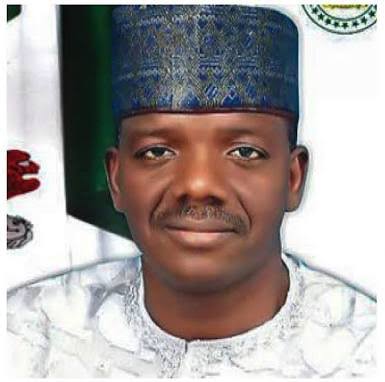
Meanwhile, Bello Mutawalle, the Minister of State for Defence, faces persistent allegations of harbouring bandit leaders and facilitating ransom payments during his tenure as Zamfara governor. In April 2026, US lawmaker Kimberly Daniels formally urged President Tinubu to remove or redeploy Mutawalle, citing “red flags” and demanding “a transparent investigation into allegations of high-level complicity with banditry”. A coalition of civil society organizations echoed the call but the minister remained in office.
Gumi: The Cleric Who Speaks for the Bandits
Sheikh Ahmad Gumi occupies a unique space: he is not accused of direct sponsorship, but of acting as an interlocutor who legitimizes armed groups. He has openly visited bandit enclaves, reportedly under state security escort, and has consistently advocated for negotiation rather than prosecution.
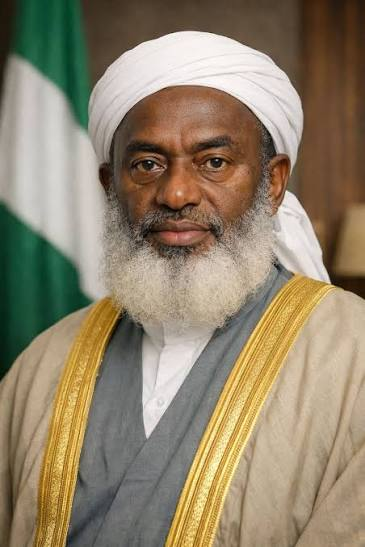
Gumi claims he acted with government knowledge and invitation. He also alleged on national television that the Tinubu government knows the names and locations of every terrorist in Nigeria but has failed to act. If his claim of government invitation is true, it suggests a policy of engagement with criminals that bypasses accountability. If it is false, he has admitted to unauthorized dealings with terrorists. Either way, the absence of any investigation into his activities is a glaring omission and calls for his arrest and prosecution have been ignored.
The Izala Pact: Budgets, Blessings, and a Muslim-Muslim Agenda
The common thread linking these disparate figures is not merely a shared immunity from scrutiny. It is the political and religious cover provided by the Izala movement, led by Sheikh Sani Yahaya Jingir, and the Tinubu administration’s apparent cultivation of that relationship.
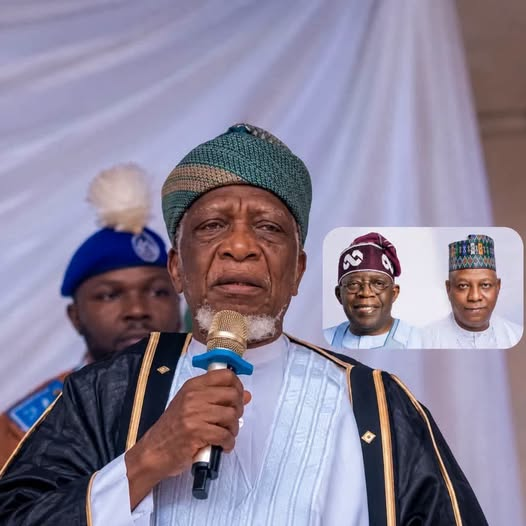
The evidence of this pact is both financial and rhetorical. In August 2026, President Tinubu’s Senior Special Adviser on Political Matters, Ibrahim Masari, donated N300 million to the JIBWIS (Izala) Fortune University project, with an additional N300 million pledged by Governor Mai Mala Buni. This was not an isolated act of charity. It followed a pattern of state patronage, including the payment of salaries for Izala school heads by at least one state government. The federal budget, while not explicitly line-itemed for “Izala institutions,” has consistently funneled resources into religious education and infrastructure in the North, from which Izala is a primary beneficiary.
The return on this investment became explicit in August 2026. Jingir, speaking at a Kano State Government mass wedding, called for the continuation of the Muslim-Muslim presidential ticket in 2027. He praised Tinubu for “raising the flag” of the arrangement in 2023, described Christians as “infidels,” and urged Muslims to use their voter cards to “show the infidels their limit”. He later declared he had “absolutely no regrets” and would never apologize.
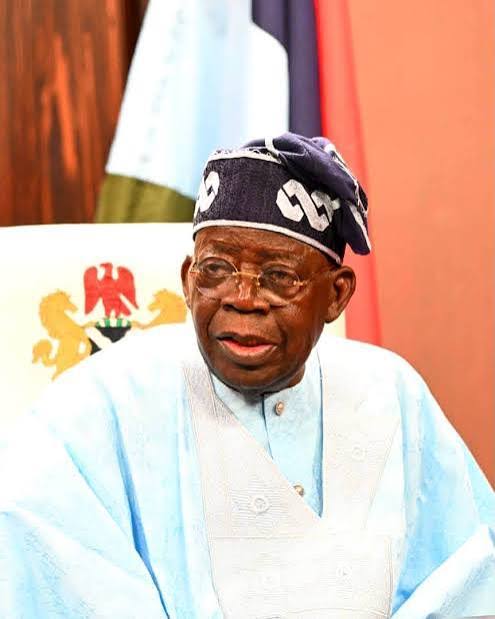
The Tinubu presidency, which has been quick to rebuke Catholic clerics who criticize its economic policies, remained silent. As one analysis noted, the government’s “vocal cords mysteriously retreat into quiescence when a prominent Muslim cleric transforms the country into a theological battlefield”. Jingir’s rhetoric was not a fringe outburst; it was a political endorsement wrapped in religious triumphalism. And it was met not with censure, but with a N600 million donation to his university.
The Jigsaw Assembled
The picture that emerges is not one of isolated failures, but of a coherent system of protection.
Senator Buba, the man who should be investigating banditry, is shielded. Nuhu Ribadu, the man who should be coordinating the fight against it, faces unanswered allegations of feeding its perpetrators. Bello Mutawalle, a defence minister, is accused of having harboured them. Ahmad Gumi, their interlocutor, operates with impunity. And Sheikh Jingir, their most vocal political ally, is rewarded with state largesse for delivering a religious voting bloc.
The Tinubu government’s refusal to investigate these figures is not a lapse in governance. It is a policy. The jigsaw on terrorism enablers has indeed fallen into place, and the picture it reveals is of a presidency that has calculated that the political cost of confronting its allies is higher than the human cost of the violence they are accused of enabling.
Nigerians are left to wonder: if the state will not investigate those who allegedly train snipers, distribute ransom money, and fraternize with bandit kingpins, then who, exactly, is the state protecting?


Leave a Reply