By Matthews Otalike, The Searchlight Investigative Correspondent / October 21, 2026
Nigeria’s Electoral Act Amendment 2026, signed in February, establishes a framework in which electronic transmission of results is optional and Form EC8A serves as the primary basis for collation. This effectively concentrates final authority over election outcomes in INEC’s collation centres rather than at polling units. Threats by the ruling party against media and opposition parties “announcing polling unit winners” are presented as defence of legal procedure, but fundamentally constitute resistance to transparency mechanisms.
The Searchlight analysis argues that public access to polling unit results is the first line of defence against collation-centre manipulation, and that the 2026 Act’s ambiguity and retreat on electronic transmission preserves space for fraud at the collation stage. If Nigeria is to rebuild electoral credibility before the 2027 general elections, it must legally mandate immediate disclosure of polling unit results and institutionally establish independent collation oversight.
The Problem: Who Has the Right to Say “Who Won”?

Nigeria’s 2027 general election timetable is set. Following the repeal of the 2022 Electoral Act and enactment of the 2026 Act, INEC revised the schedule: presidential and National Assembly elections will hold on 16 January 2027, with governorship and state assembly elections on 6 February 2027. Party primaries concluded between April and May 2026, and campaigns commenced in August 2026. The compressed timetable itself reflects the 2026 Act’s restructuring of statutory timelines.
More significant than the calendar, however, is the change in result-management rules. On 18 February 2026, President Tinubu signed the Electoral Act Amendment Bill 2026 into law. Clause 60, governing electronic transmission of results, became the flashpoint. The Senate’s final version deleted the House of Representatives’ earlier provision mandating immediate electronic transmission to the IReV portal, retaining instead the “optional” character of electronic transmission. The provision further specifies that in the event of network failure, the EC8A form used at polling units shall serve as the primary basis for collation.

The technical meaning of this clause is often misread. Form EC8A is the first official record completed by the presiding officer after counting at the polling unit, signed by party agents, and publicly displayed at the polling unit. From an evidentiary standpoint, EC8A is indeed the most reliable original document in election disputes. The problem is not EC8A’s legal status but who obtains and publishes its contents, when, and by what means. If disclosure of EC8A is limited to the few witnesses present at the polling unit, and digital dissemination of results is downgraded to “optional,” then the information vacuum between polling unit and collation centre becomes the safest operational space for manipulation.

The ruling party’s threats against media and opposition parties for “announcing polling unit winners” acquire a superficial “legal basis” precisely against this institutional backdrop: since the law vests final announcement authority in INEC, any prior public declaration is characterized as “disrupting order.” But this logic evades a key fact: polling unit results do not require “announcement” to take effect; they require public recording and immediate verifiability. When media and party agents publish images or data from EC8A forms, they are not “announcing winners” but exercising their right to know and verify the original record. Conflating the two is essentially stigmatizing transparency measures as unlawful acts.
The Black Box of Collation Centres: Why Polling Unit Disclosure Is the Only Effective Check
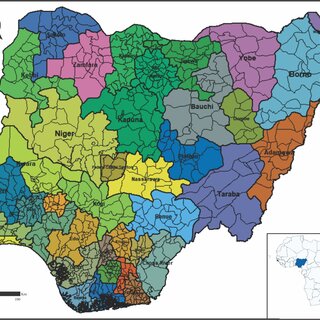
The historical pattern of electoral fraud in Nigeria is geographically concentrated. Voting and counting at polling units typically occur under the gaze of observers and agents, making large-scale fabrication at this stage high-risk. The genuine vulnerability lies in the chain from polling units to ward, local government, state, and national collation centres. Along this chain, ballot boxes transported, results aggregated, figures entered, every node is susceptible to substitution, alteration, or “arithmetic correction.” The 2026 Act’s downgrading of electronic transmission to optional status legalizes information asymmetry along this chain.

The argument supporting this provision emphasizes “infrastructure reality”: weak rural network coverage and unstable power would create compliance disparities under mandatory electronic transmission, paradoxically providing grounds to challenge results. This argument has an empirical basis, but its conclusion points in the wrong direction. The correct response to infrastructure deficits is to build redundant transparency mechanisms, not to retreat into information closure. Specifically, if electronic transmission is infeasible, the law should require immediate photographic archiving of EC8A forms, with party agents and independent observers each holding copies, alongside a publicly accessible results announcement platform (even if non-real-time). The 2026 Act is precisely silent on this point: it confirms EC8A’s status as the “primary basis” but does not mandate immediate disclosure obligations of EC8A contents to the public and competing parties.
The deeper problem is institutional incentives. The ruling party has reason to maintain the collation centre’s opacity because, in competitive constituencies, discretionary space at the collation stage can translate into seats. When a single party simultaneously controls federal executive power and a parliamentary majority, INEC’s independence is itself under pressure. Concentrating final announcement authority in a potentially politically influenced institution while weakening immediate polling-unit-level disclosure amounts to betting the certainty of election outcomes on the integrity of the collation process, precisely the least reliable link in history.
The Political Logic of Threatening Media and Opposition
The ruling party’s threats against media and opposition parties publishing polling unit results can be understood on three levels.
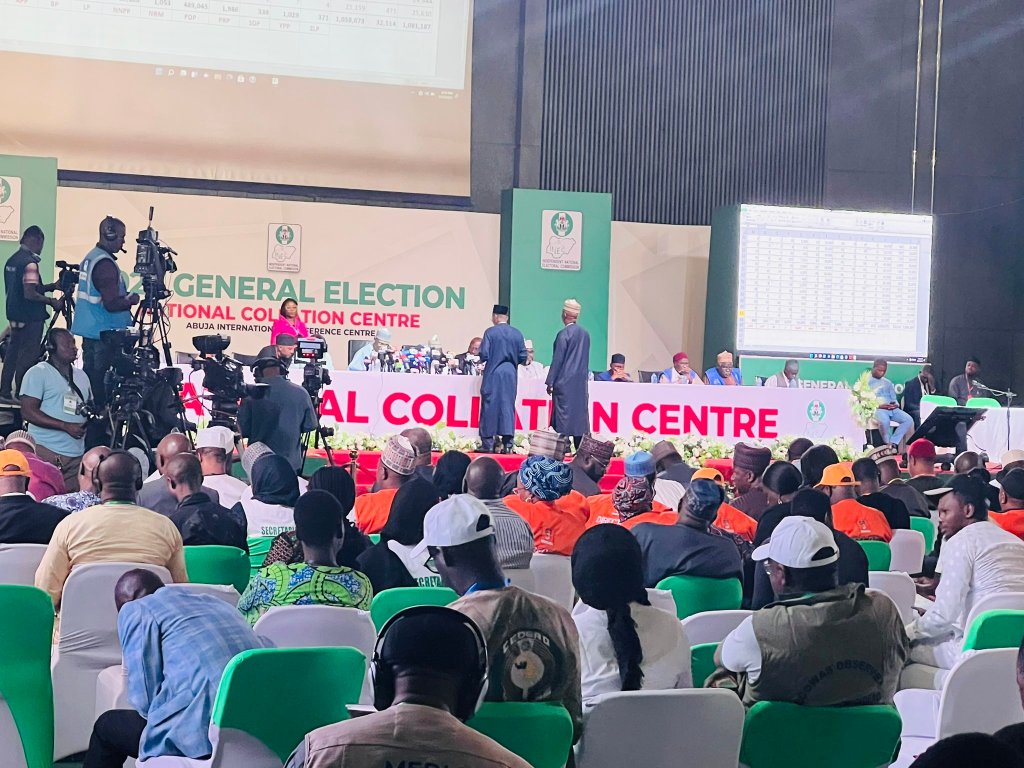
First, the weaponization of legal discourse. Reducing “only INEC has the power to announce results” to “no one may discuss polling unit data” is a classic formalist manipulation. The “announcement power” the law grants INEC concerns final confirmation of statutory results, not information over original records. Media reporting that “counting at a certain polling unit shows a certain candidate leading,” based on EC8A forms, is lawful factual reporting under press freedom principles, fundamentally different from “announcing an election winner.” Conflating the two aims to create a chilling effect, inducing self-censorship in reporting polling unit data.
Second, fear of “parallel counting.” In the 2023 elections, several civil society organizations and media coalitions attempted parallel vote tabulation based on polling unit results. Although they did not form a complete alternative counting system, they demonstrated technical feasibility. If, in 2027, opposition parties and media can systematically collect, verify, and publicly disseminate EC8A data from polling units, any anomalous figures at collation centres will face immediate comparative pressure. The ruling party’s threats are essentially a pre-emptive strike against this “distributed oversight” capacity.
Third, pre-setting the narrative for potential disputes. If election results are challenged in court, the ruling party needs a ready-made narrative to discredit polling unit evidence submitted by the opposition. By defining “publishing polling unit results” as unlawful before the fact, any legal challenge based on such data can be procedurally denigrated as “claims based on illegally obtained information.” This is a strategy of contaminating the evidentiary source before legal disputes even arise.
Feasible Paths Toward Transparent Election Management
Improving electoral transparency in Nigeria does not require waiting for perfect technical conditions. The following measures are feasible at both legal and operational levels and do not depend on comprehensive amendment of the 2026 Act.

First, establish a statutory minimum obligation of “immediate EC8A disclosure.” Current law confirms EC8A as the basis for collation but does not specify its disclosure method. INEC can, within its rule-making authority, require presiding officers at each polling unit to immediately photograph the completed EC8A clearly and submit it to a centralized archive system through a dedicated channel (even if uploaded after offline storage), while providing copies to party agents and observers present. This requirement does not depend on real-time networks, only on photographic devices (most officials have mobile phones), and does not alter EC8A’s legal status; it purely adds a disclosure dimension.

Second, establish independent verification mechanisms at collation centres. Collation centres should not be controlled unilaterally by a single party or by INEC alone. At the local government level, a “results verification panel” composed of party agents, civil society observers, and media representatives could be established to conduct source verification and numerical cross-checking of each EC8A delivered from polling units. Any discrepancy must be recorded on the spot and publicly explained. This does not deprive INEC of its announcement power but grounds announcement in observable procedure.
Third, strengthen legal protection for parallel vote tabulation. Parallel tabulation by civil society and media coalitions is not a challenge to INEC’s authority but a supplement to electoral transparency. The law should clearly protect independent statistical work and publication based on publicly available EC8A data, distinguishing it from “unauthorized announcement of results.” INEC could sign data-sharing agreements with credible civil society coalitions, providing real-time data streams from collation centres (where technology permits) in exchange for independent verification of polling unit data.
Fourth, reverse the burden of proof for anomalies at the collation stage. If an unexplained discrepancy exists between EC8A data from a polling unit and the final record at the collation centre, and that discrepancy affects constituency outcomes, the burden of proof should shift to INEC to demonstrate that every step of the collation process had verifiable records and multi-party witnesses. This mechanism does not require legislative amendment; election tribunals could establish it incrementally through precedent, but INEC’s proactive adoption of such standards in its regulations would substantially enhance credibility.
Conclusion

The 2026 Electoral Act’s retreat on electronic transmission is not mere technical conservatism but a legal expression of political contestation over who controls the narrative of election results. The ruling party’s threats against media and opposition attempt to transform “only INEC can announce results” from a procedural rule into an information blockade order. The root of Nigeria’s electoral credibility crisis lies not in who announces results, but in whether the journey from polling unit to announcement is visible, verifiable, and contestable. The EC8A forms at polling units already exist; agents have already signed; observers have already witnessed. The only question is whether this information can reach enough independent eyes before the collation centre door closes. The law need not be perfect, but it must make manipulation difficult and transparency possible.
Recommendations
1. INEC should issue regulations requiring immediate photographic archiving and multi-party distribution of EC8A forms.
2. Establish multi-stakeholder results verification panels at local government collation centres.
3. Legally distinguish protected parallel vote tabulation from unlawful result announcements.
4. Shift burden of proof to INEC when unexplained discrepancies arise between polling unit and collation records.
5. Consider relocating collation centres to neutral, accessible venues (such as police stations) where party agents’ access can be guaranteed.


Leave a Reply