By Matthews Otalike, The Searchlight Correspondent / October 20, 2026
The arithmetic of Nigeria’s kidnap economy is now beyond dispute, and it is devastating. Between July 2025 and June 2026, 7,825 Nigerians were abducted in 1,713 kidnap and kidnap-related incidents, a 66 per cent increase from the previous year. At least 1,142 people were killed, including 895 civilians. Victims and their families paid ₦7.78 billion in ransom, more than triple the ₦2.56 billion paid in the preceding period. Kidnappers demanded ₦22.86 billion; they collected 34 per cent of what they asked for, up from 5.35 per cent the year before.
This is not a security crisis. The Searchlight believes that this is an industry, with financing, bargaining systems, target selection, and an expectation of recurring revenue. As one analysis put it, “a human being in Nigeria today has almost become a mobile financial asset”.
And yet the official story remains one of rescues. The government announces that security forces have freed hostages. The President commends the agencies. The narrative is of a state in control. The reality, as the families of the freed victims tell it, is something else entirely: a state that facilitates ransom payments while claiming to have eliminated the need for them. This is not only disturbing; it is smells compromise and deceit.
The Imo Corps Members: “Do We Have Any Rescue, or a Release After Ransom?”
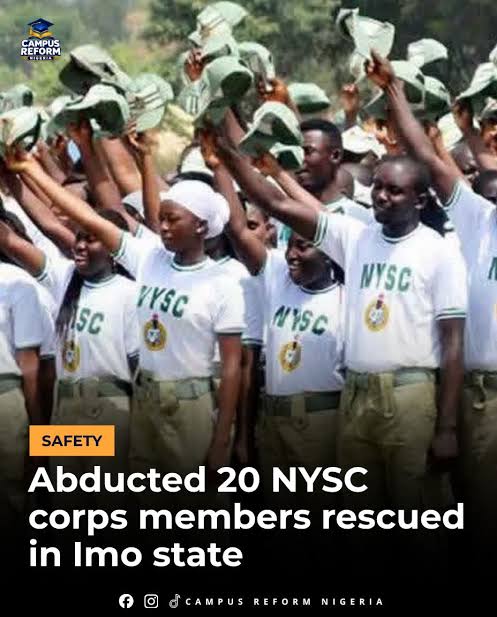
The case of the 20 prospective NYSC members abducted in Imo State on 1st October 2026 is the most documented example of the gap between official narrative and lived reality.
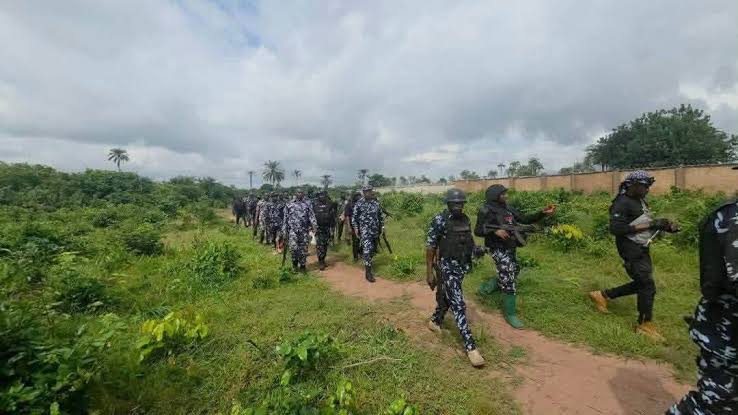
The police announced a rescue. The Imo State Commissioner of Police, Audu Bosso, credited “sustained pressure” from security agencies for the victims’ release and said he was “not aware” of any ransom payment. The Imo State Government maintained that no ransom was paid.
However, the families told a different story, as they say “he who feels it, knows it”. One mother, Alirat Wahab, described how the kidnappers initially demanded ₦50 million per victim, reduced it to ₦5 million, then raised it to ₦15 million, before eventually settling on ₦6 million. The family raised the money through loans and contributions from relatives and well-wishers, some giving ₦5,000, others ₦50,000. Representatives travelled to Imo State, converted the money to dollars, and delivered it in person. Another parent said some families paid ₦3 million, others up to ₦6 million; one father, a farmer, lamented: “How do I repay the ₦6 million I borrowed?”. Yet government agents keep repeating the lie that “no ransom was paid”.
Dr. Sam Amadi of the Abuja School of Social and Political Thoughts framed the question with precision: “Do we have any rescue, or do we have release after ransom? The ransom industry is such a big economy. The problem is when the government lies and tries to pass itself off as effective or efficient, when evidence shows otherwise. How will you challenge the testimony of families who paid ₦6 million or who paid in US dollars?”.
Amadi’s verdict on the state’s capacity was withering: “It is now clear that the Nigerian state lacks the capacity to deal with low-tech robbery and kidnapping. These guys are not using the most sophisticated equipment. They’re ragtag guys. And each time, the Nigerian state cannot defeat them; it can’t do the basics”. Or put the other way, the Nigerian state is unwilling to stamp them out for reasons best known to them.
Kwara State: The Helicopter That Wasn’t Supposed to Exist
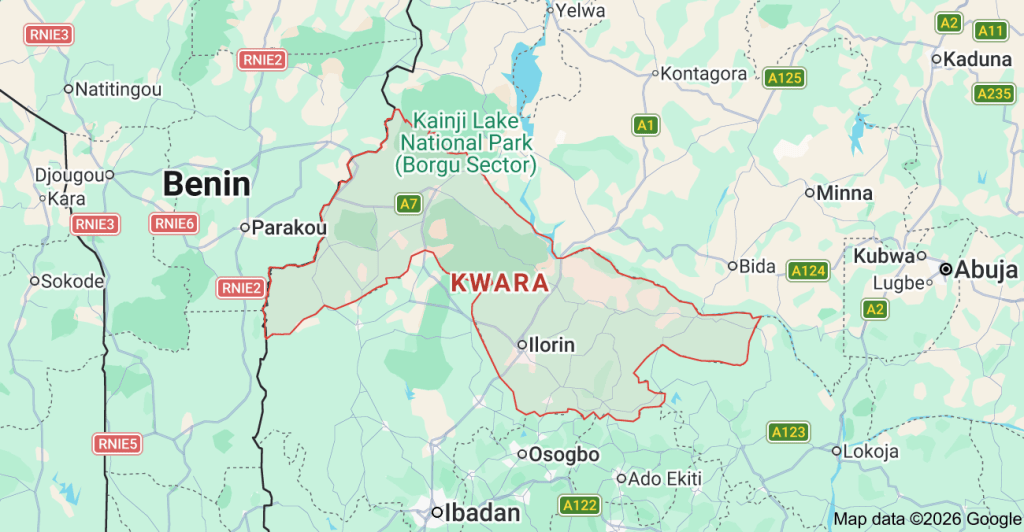
If Imo established the pattern, Kwara state confirmed its scale. In August 2026, the government announced the release of more than 300 abductees, 163 from Woro community in Kaiama Local Government Area, and 145 others from neighbouring Niger State, in what President Tinubu called “the country’s largest single-day hostage rescue”.
Survivors contradicted the rescue official narrative. Relatives told SaharaReporters that the abductees witnessed a helicopter arrive in the forest and deliver money to the kidnappers four to five days before their release. “They saw it, but they were not allowed to touch the money. The kidnappers prevented them from going near it,” a relative said. The victims were “shocked” when they heard government officials describe their release as a military rescue in which no ransom was paid.
The government’s response was denial. The Office of the National Security Adviser dismissed the helicopter account as “fiction”. But the families are not fiction. The survivors’ testimony is not fiction. And the pattern, repeated across states, across months, across different security agencies, is not fiction either.
The Contradiction at the Heart of the Law
The legal framework governing ransom is itself a study in contradiction. The Terrorism (Prevention and Prohibition) Act, 2022 expressly outlaws negotiations and ransom payments to kidnappers and terrorists. In September 2026, the Senate moved further, amending the Act to impose at least 15 years’ imprisonment on anyone paying a ransom, with the death penalty or life imprisonment for kidnapping.
Yet ransom payments continue at an industrial scale. The House of Representatives heard that Nigerians paid an estimated ₦2.23 trillion in ransom between January 2021 and June 2025, with point-of-sale operators and other financial channels used to facilitate payments and conceal trails. The very state that criminalizes ransom is accused, credibly, repeatedly, and specifically, of facilitating it by helicopter, by cash delivery, and by negotiated release dressed as rescue.
The contradiction is not accidental. It is structural. A state that cannot or will not defeat kidnapping has two options: admit failure, or manage the appearance of success while the ransom economy sustains itself. The theatre of rescue is the management strategy. The ransom is the price of the performance. And the families of the victims pay both the ransom and the epistemic cost, the insult of being told their lived experience is a lie.
The Economy of Homes
The macroeconomic figures tell one story. The micro-economic reality tells another, and it is arguably more damning.
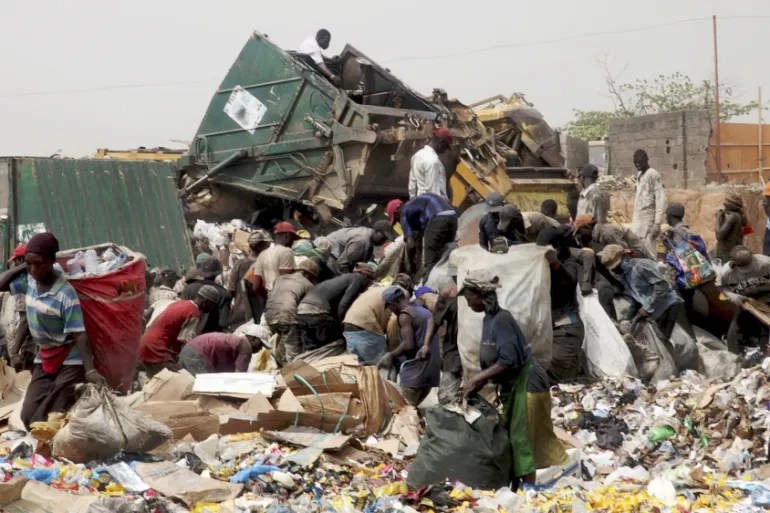
Amadi’s phrase bears repeating: “This industry of kidnapping is wrecking the economy of homes. People are borrowing massively”. The ₦6 million paid by a farmer’s family in Imo was not a statistic. It was loans, donations of ₦5,000 and ₦20,000, the conversion of naira to dollars at black-market rates, and a future of debt bondage for a family that had already been terrorized by the abduction of a child. The ransom economy does not end when the hostage is released. It continues in the household, in the repayment of loans, in the withdrawal of children from school, in the sale of land and livestock, in the quiet, grinding impoverishment of families that the state has already failed to protect.
The social contract is broken at both ends. The state fails to protect citizens from abduction. It then criminalizes the ransom payment that is the family’s only recourse. And when the family pays, the state claims credit for a rescue. What this means in effect is that the citizen is failed by the state, criminalized by the state, and then gaslit by the state.
The 2027 Dimension
The Searchlight does not need to allege a conspiracy to note a convergence of incentives. The Kawu Baraje confession established that armed non-state actors have been imported for electoral purposes. The Searchlight had reported on this in previous episodes. The government’s failure to investigate that confession established the impunity. The ransom economy establishes the financing, not necessarily of the state, but of the armed groups whose continued existence serves the political logic of insecurity as a permanent emergency. And the theatre of rescue establishes the cover: every “successful operation” that is actually a negotiated payment reinforces the narrative that the government is fighting, while the kidnap industry, which generated ₦7.78 billion in a single year, continues to flourish.
The question for 2027 is not whether the government will deploy kidnappers at the polls. The question is whether a state that has normalized the ransom-rescue cycle has any incentive to dismantle it. The answer, on the evidence, is no. A state that profits politically from insecurity, and that has learned to manage its appearance, has no reason to end it.
The Way Out
The way out begins with naming the theatre. Every official claim of rescue must be treated as a hypothesis to be tested, not a fact to be reported. The families’ testimony must be heard, documented, and litigated. The helicopter that delivered money to kidnappers in Kwara must be traced, its operators identified, and its chain of command established. The police commissioner who said he was “not aware” of ransom in Imo must be asked, under oath, what he was aware of.
Second, the anti-ransom law must be applied to the state as well as to families. If paying ransom is a crime, then facilitating it, by helicopter, by cash delivery, by negotiated release, is a graver crime, committed by those entrusted with the state’s coercive power. A public inquiry into the ransom-rescue nexus is not an academic exercise. It is a constitutional necessity.
Third, the reintegration programme for “repentant” terrorists must be halted, pending a transparent judicial process. The House of Representatives has already called for its termination, with one lawmaker warning that rehabilitated insurgents may be leaking information to criminal groups. Reintegration without disarmament and justice is not reconciliation. It is rearmament by other means.
Fourth, Nigerians must demand a candidate-level integrity pledge on insecurity, analogous to the integrity pledge on corruption. Every candidate in 2027, incumbent or opposition, should be asked: will you investigate the ransom-rescue nexus? Will you publish the operational logs of every “rescue”? Will you treat the political command of armed violence as a treasonable offence? The answers will tell voters what they need to know.
The Searchlight stays on. The families have spoken. The survivors have spoken. The question is whether the state will be permitted to bury their testimony beneath another press release.


Leave a Reply