By Matthews Otalike, The Searchlight Correspondent / October 20, 2026
Nigeria is an interesting country. Things happen. There is much noise. A kite is flown and people’s attention are diverted from what had happened. Any wonder that somebody was quoted as saying that Nigerians forget issues easily. Most Nigerians appear immune to the lingering insecurity. Even if a terrorist is identified as living among Nigerians, they feel comfortable with it. Sad.
There is a confession at the heart of Nigeria’s insecurity that the Nigerian government has never investigated, the media has largely buried, and the political class has silently metabolized into strategy.
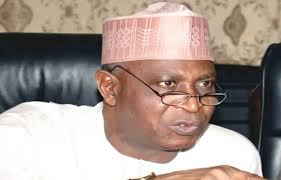
Alhaji Abubakar Kawu Baraje, a founding national secretary of the All Progressives Congress and former PDP national chairman, publicly admitted that the party imported foreign Fulani fighters from Mali, Sierra Leone, Senegal, Niger, and Chad ahead of the 2015 general election to secure victory. His account was not a rumour. It was a disclosure, delivered in Ilorin during his 70th birthday celebrations, by one of the party’s most strategic architects. The original plan, he said, was to exit the fighters after the election. “But the arrangement collapsed, leaving armed mercenaries stranded across the country”.
Baraje warned that the armed elements currently perpetrating violence, kidnappings, and rural terror are not aboriginal to Nigeria. “We are not asking the right question on how the same Fulani we have been living with suddenly turned out a menace,” he said. “We also must ask how they had access to their guns”.
That was years ago. No formal investigation has been opened. The DSS and the Nigeria Police Force have not questioned the key political actors involved. The confession has been swept under the carpet by the very institutions whose mandate is to protect the Nigerian state from this kind of existential compromise.
The question that now demands an answer is not whether Baraje spoke the truth. The question is whether the logic of 2015 has become the logic of 2027, and whether the government’s failure to defeat terrorism is not a failure at all, but a deliberate preservation of a strategic asset.
The Political Economy of Prolonged Insecurity
Martin Onovo, a former presidential candidate, put the charge bluntly: “The APC is the direct sponsor of insecurity and terrorism in Nigeria. It is naïve for any citizen to expect the APC to fight their own terrorists”. He described the government’s security efforts as “artificial and deceitful,” pointing to the Baraje confession as the foundation of the allegation.
This is not merely opposition rhetoric. It is a reading of incentives. If armed non-state actors were imported once to deliver an election, what prevents their preservation as a future instrument? The logic is chillingly simple: an incumbent facing a competitive election in 2027, with a festering security crisis that could be activated or deactivated at will, holds a form of leverage that no amount of FAAC allocation can purchase. The terrorists do not need to be deployed in 2027 in the same crude manner as 2015. They need only to remain undefeated, a standing threat that justifies emergency powers, suppresses turnout in opposition strongholds, and reminds voters that the alternative to the incumbent is chaos.
The Arewa Consultative Forum, has captured the consequence: “Elected officials and other politically exposed stakeholders seem more concerned and obsessed with the forthcoming 2027 elections. Delivering governance has become a far distant priority”. The ACF warned that armed non-state actors are allowed “free reign to daily wreck violence on citizens, disrupt livelihoods, displace populations and impose a state of anarchy”. In Zamfara, five separate attacks were recorded on a single day. The state, the ACF said, “has become a killing field”.
This is not a government that is losing a war on terror. It is a government that is managing the conditions of insecurity for political advantage.
The Theatre of Rescue
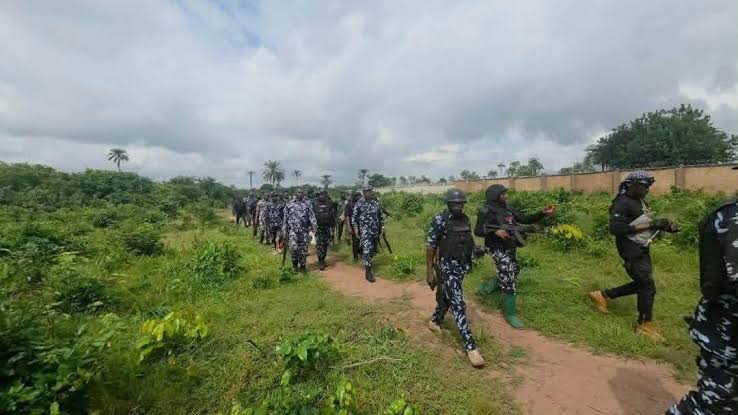
If the strategic logic of prolonged insecurity is the first scandal, the theatre of rescue is the second, and it is a theatre performed on the bodies of victims and the bank accounts of their families.
In October 2026, 20 prospective NYSC corps members were abducted in Imo State. The government announced a rescue. The families told a different story. Parents said some families paid ₦3 million, others as much as ₦6 million, after kidnappers threatened their children’s lives. Dr. Sam Amadi of the Abuja School of Social and Political Thoughts asked the question the government refuses to answer: “Do we have any rescue, or do we have a release after ransom?. The problem is when the government lies and tries to pass itself off as effective or efficient, when evidence shows otherwise. How will you challenge the testimony of families who paid ₦6 million or who paid in US dollars?”.
The pattern is repeated in Kwara State where over 300 abductees were freed in what President Tinubu described as the country’s “largest single-day hostage rescue”. But survivors told told a different story. They said a helicopter delivered money to the kidnappers. They saw it. The victims were “shocked” to hear government officials describe their release as a successful military rescue.
The ONSA, the DSS, and the National Assembly have all publicly refuted claims of ransom payment, dismissing the helicopter account as “fiction”. But the families are not fiction. The ₦6 million is not fiction. The survivors’ testimony is not fiction. And the government’s blanket denial, in the face of repeated, corroborated accounts from multiple states, is itself a form of epistemic violence, the assertion of state narrative over lived reality.
If the state cannot defeat “ragtag guys,” why should Nigerians believe it can defeat a transnational terror network it once imported? The answer is that it does not need to. It needs only to appear to try, while the ransom economy flourishes, the kidnap industry wrecks the finances of ordinary homes, and the political class consolidates its grip on 2027.
“Softness on Terror” as Strategy
The government’s approach to known terrorists has been equally revealing. The Tinubu administration is moving ahead with plans to reintegrate nearly 800 “repentant” terrorists into society. The African Democratic Congress has described this as “confusion dressed up as policy” and “a dangerous form of political appeasement”. “A government that treats terrorists as errant family members is a government that is dangerously soft on terror,” the ADC said.
But is it softness, or is it preservation? A reintegrated terrorist is a terrorist who remains available. He is not in prison. He is not dead. He is not disarmed in any verifiable sense. He is in the community, with a government-issued imprimatur of repentance, and with his networks intact. If the political calculus of 2027 requires the reactivation of insecurity in selected theatres, a reintegrated fighter is infinitely more useful than a neutralized one.
The Punch editorial board captured the official mindset with precision: “Instead of projecting resolve, they often speak the language of appeasement, resignation, or outright helplessness”. But this is not helplessness. It is strategy by other means. A government that can deploy the language of “brothers” and “prodigal sons” for terrorists while describing rescued victims as evidence of its effectiveness is a government that has made its peace with the permanent militarization of Nigerian political life.
The 2027 Question
The Searchlight does not allege that the government has already imported a new tranche of foreign fighters for 2027. That would require evidence which we do not possess. But the structural conditions for a repeat of 2015 are intact, and the incentives are stronger than ever.
Baraje’s confession established the method: import armed foreigners, deploy them for electoral advantage, and allow them to remain when the arrangement “collapses”. The government’s non-investigation of that confession, established the impunity: no one paid a price, no institution demanded accountability, and the media moved on. The ransom-rescue theatre establishes the cover: every “rescue” that is actually a ransom payment reinforces the narrative that the state is fighting, even as it subsidizes the criminals. And the reintegration programme establishes the reserve: hundreds of fighters returned to communities, available for reactivation.
The question is not whether the government is dragging its feet on terrorism. The question is whether it is dragging its feet on purpose. The ACF’s warning is the answer: while communities are “killing fields,” the political class is “obsessed with the forthcoming 2027 elections”. The insecurity is not an obstacle to that obsession. It is the instrument of it.
The Way Out
The way out begins with naming the strategy. Nigerians must reject the framing of insecurity as a failure of capacity and insist on interrogating it as a failure of will, and, worse, as a possible continuation of strategy by other means. The Baraje confession must be reopened, not as a historical curiosity but as a live investigation into the political command of armed violence in Nigeria.
Second, the ransom-rescue contradiction must be documented, litigated, and publicized. Every family that paid should be heard. Every helicopter that landed should be traced. Every official who claimed a rescue should be asked to produce the operational log. The state’s monopoly on the narrative of rescue is itself a weapon. It must be broken.
Third, the 2027 election must be fought on the explicit demand that no candidate, incumbent or opposition, will be permitted to benefit from armed non-state actors. An integrity pledge on insecurity, analogous to the integrity pledge on corruption, should be demanded of every candidate: a public commitment to investigate the Baraje confession, to end the ransom economy, and to treat the command of armed violence as a treasonable offence, regardless of party affiliation.
The Searchlight stays on. The confession is on the record. The pattern is on the record. The only remaining question is whether Nigerians will allow the record to be buried again.


Leave a Reply