By Matthews Otalike, The Searchlight Investigative Correspondent / October 18, 2026
STANDFIRST: In Kogi, the results were announced by midday for an election many voters never saw. In Enugu, the ruling party was the only name on the ballot. An opposition politician was hacked to death in his home days before the vote. A female councillor was pulled alone from a vehicle and executed in captivity. And the FCT Minister is already on television declaring 2027 won. This is not a warning about democratic backsliding. This is a post-mortem.
Kogi: A “Carnival” With No Voters
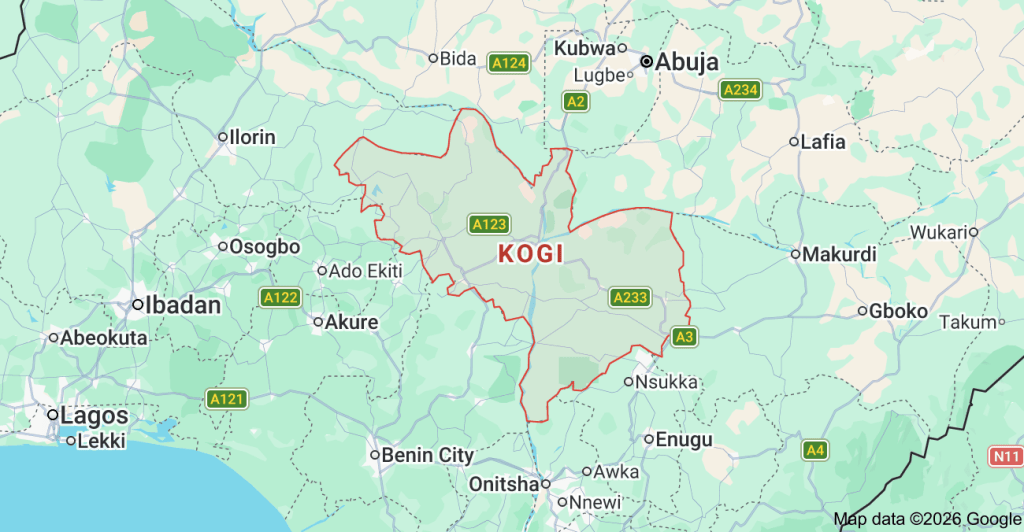
On Saturday, 17 October 2026, the Kogi State Independent Electoral Commission (KOSIEC) declared the All Progressives Congress winner of all 21 local government chairmanship seats and all 239 councillorship seats. KOSIEC Chairman Mamman Eri described the exercise as “peaceful, free, fair and credible”.
Governor Ahmed Usman Ododo, voting in his Upogoro ward, likened the process to a “carnival” and thanked President Tinubu for “giving us that confidence”.
But a carnival implies attendees. TVC News, covering the election across the state, reported that “voter turnout varied across locations”. Twelve parties were accredited to participate. Not one won a single ward. When a “competitive” election produces a 100% sweep across 239 wards and 3,508 polling units, the word “election” is doing no analytical work. What occurred was an administrative confirmation, ratified before most polling units had meaningful queues.
The Kogi State Government’s own press release, published the day of the election, featured Commissioner for Information Kingsley Fanwo praising the “free, fair and transparent” process and a police DPO commending “no reported incidents of electoral thuggery” in one LGA. The framing is instructive: peace is measured by the absence of resistance, not the presence of choice.
Enugu: The Ballot With One Name
Six days before Kogi went to the polls, Enugu held its own local government elections on 26 September. The result was identical in its uniformity: APC won all 17 chairmanship seats and all 260 councillorship positions.
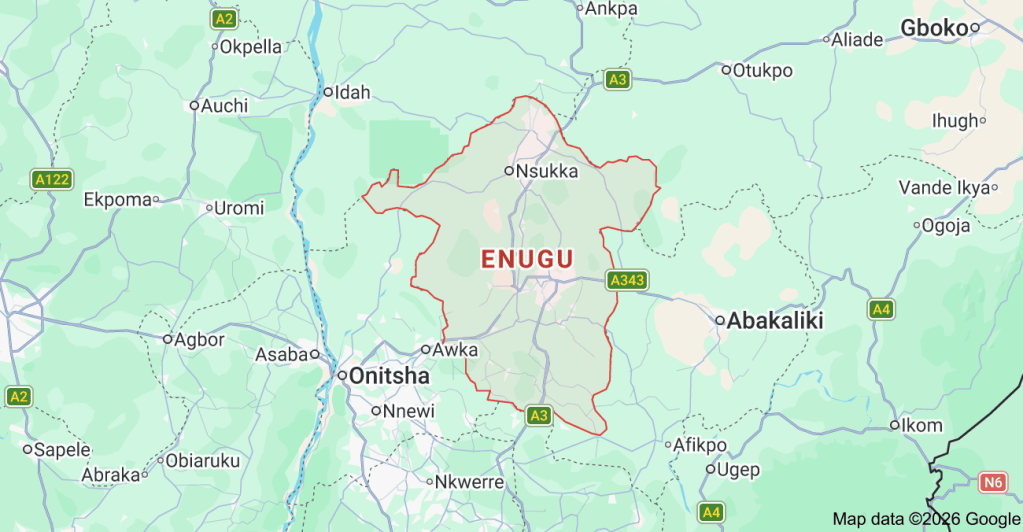
The difference is that in Enugu, the outcome was predetermined by design. As Sahara Reporters documented, only the ruling APC was contesting. The party had elected 17 candidates to fly its flag, and no other party appeared on the ballot. ENSIEC Chairman Christian Ngwu declared the APC winners and praised the exercise as “free and fair”.
This is not electoral manipulation in the traditional sense. Manipulation presumes a contest that could have gone another way. What Enugu presents is the abolition of contest itself—a one-party referendum dressed in the language of local democracy, with certificates of return issued to candidates who faced no opponents.
Blood Before the Ballot
The violence that preceded these exercises is not incidental. It is the enforcement mechanism.
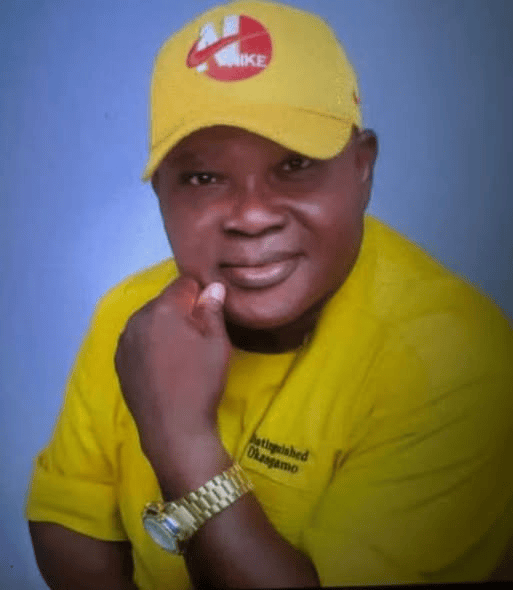
Prince Ikechukwu Oloto was a founding member of the Nigeria Democratic Congress (NDC) in Enugu State, a former State Youth Leader and State Secretary. On the evening of 17 September 2026, armed men invaded his residence at Odenigbo, Nsukka. Police spokesperson Daniel Ndukwe confirmed that Oloto was found “in a pool of blood” with “deep suspected machete cuts to his head and stomach.” He was rushed to a hospital and confirmed dead.
Oloto had defected from the APC earlier in the year after the party’s local government congress allegedly shortchanged “old APC” members in the sharing of leadership positions. Six days before his murder, NDC members holding a political gathering in Nkanu West were shot by thugs; eight were injured, including a ward councillor shot in the head, neck, leg and hand. The NDC petitioned the police and DSS, alleging the attack was led by a Senior Special Assistant to the Nkanu West Local Government Chairman. The APC denied involvement.

Then, in Kogi State: Rosemary Adukwu, councillor representing Ogugu Ward III in Olamaboro LGA. On 30 September, she boarded a commercial vehicle to Onitsha to restock her business. Near Oji River, at the Enugu-Anambra boundary, armed men stopped the vehicle. They dragged only her out. The other passengers continued their journey unharmed.
Her family waited for a ransom demand. None came. After nearly a week, security operatives tracked her phone. The voice on the other end said the owner was dead. Olamaboro LGA Chairman Ameh Williams confirmed her death in a statement that described her as “humble, dependable and compassionate”, and invited “All APC family” to her burial.
The Kogi State Police Command spokesperson did not respond to enquiries about her abduction and death .
Adukwu was an APC councillor. Oloto was an opposition defector. One was taken from a vehicle and killed without ransom; the other was butchered in his home. The message in both cases is the same: the state cannot, or will not, protect the lives of those who participate in politics outside the sanctioned script, and in Adukwu’s case, even those inside it are expendable when they become inconvenient.
Wike’s Confession
If local elections demonstrate the method, Nyesom Wike’s recent statements reveal the ambition.
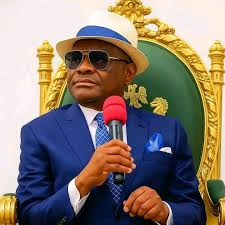
Speaking at a media parley in Abuja in October 2026, three months before the 2027 general election, the FCT Minister dismissed the constitutional 25% threshold as beneath him. “How do you look at me? Coordinator of FCT, and I am looking for 25 per cent? That must be a joke,” he said.
Wike did not say Tinubu would compete for the FCT. He said the result was already secured. He cited infrastructure projects, police stations, and consultations with traditional rulers as the basis for this confidence . In other words: governance outputs have been converted into electoral guarantees. The logic is not that voters will choose Tinubu because of performance. The logic is that the machinery of performance, controlled by the minister, funded by federal allocations, dispensed through patronage, is the election outcome.
Wike also threatened to resign if Tinubu loses the FCT, a statement that frames the territory’s votes as his personal property to deliver. The implication is unmistakable: in Wike’s FCT, the vote is not the people’s to give. It is his to produce.
What Type of Democracy Is This?
It is not a flawed democracy. It is not a hybrid regime. It is a system in which elections have been retained as ritual while emptied of their function as accountability mechanisms.
The components are consistent across states and levels:
Opposition is physically eliminated or legally excluded. In Enugu, it was kept off the ballot. In Nsukka, a prominent opposition figure was hacked to death. In Kogi, a councillor was abducted and killed in circumstances her family says involved no ransom demand.
Results precede votes. Kogi’s results were declared by midday. Enugu’s were predetermined by the absence of rivals. The electoral commissions, state bodies controlled by governors, certify outcomes as “free and fair” regardless of turnout, contest, or credibility.
The legislature does not check the executive; it is constituted by it. The Senate under Godswill Akpabio has functioned as a rubber stamp on loans, appointments, and presidential absences. When the body that is supposed to hold the president accountable is itself a product of his political machine, accountability becomes structurally impossible.
The 2027 election is being pre-announced. Wike’s “25% is a joke” is not a prediction. It is a statement of intent. The FCT Minister is telling Nigerians that the result in Abuja is already determined by administrative control, not voter choice. If this is true for the FCT, a territory with a history of opposition voting, what does it mean for the rest of the country?
CLOSING: The APC under Tinubu is not stealing elections in the conventional sense. It is doing something more thorough. It is replacing elections with administration, a system where the ruling party’s control of state institutions, security apparatus, and electoral commissions produces results that require no voters, tolerate no opponents, and punish no violence against those who dissent.
Kogi’s carnival had no crowd. Enugu’s ballot had one name. Nsukka’s blood soaked into the ground before the polls opened. Ogugu’s councillor was buried by the party that could not protect her. And in Abuja, the minister is already counting the votes that have not been cast.
This is not democracy under attack. This is democracy under new management, management that has learned that if you control the referee, the scoreboard, and the stadium, you do not need to win the game. You simply declare the result.


Leave a Reply