By Matthews Otalike, The Searchlight Correspondent / October 15, 2026
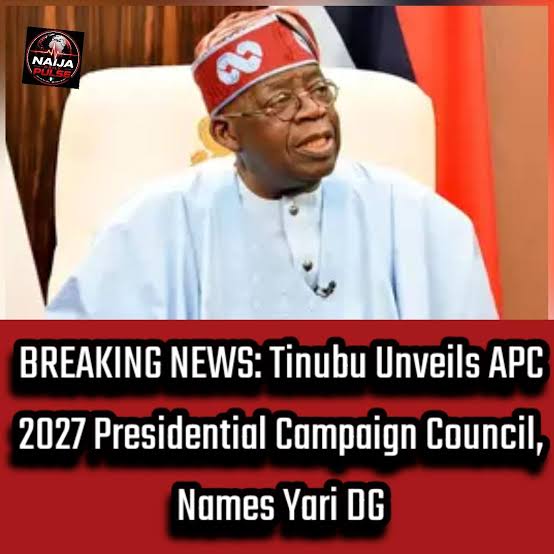
President Bola Ahmed Tinubu’s recent declaration that he will not join the All-Progressives Congress (APC) on a full nationwide campaign trail ahead of the January 16, 2027 presidential election is more than a logistical choice. It is a revealing statement about power, accountability, and the character of democracy in Nigeria.
On October 14, 2026, while inaugurating the APC Presidential Campaign Council in Abuja, Tinubu stated that governance must continue, Nigeria “needs more attention now than ever before,” and “the responsibility of this office does not pause.” He cited bills to pay (including to American creditors) and the need to attract long-term investors. The campaign council, he said, would handle mobilization across states and local government areas; he would make time to “speak directly with Nigerians” but would not accompany the trail everywhere.
This is framed as responsible prioritization. In a functioning democracy, however, seeking a fresh mandate from the people is not a distraction from the job; it is a core part of the job for an incumbent seeking re-election. Campaigning is the arena where a president accounts for his record, defends painful reforms, confronts criticism, and rebuilds or tests consent. Opting out of the physical, grassroots engagement that defined earlier Nigerian presidential contests signals a different understanding of the relationship between ruler and ruled.
The Optics of Distance
Tinubu has long faced criticism for limited direct interaction with ordinary Nigerians. Public appearances have often been carefully managed, foreign trips frequent, and unscripted engagement rare. Critics have noted periods of prolonged absence from the country and a reliance on proxies and media aides to communicate the administration’s message. His decision to largely stay off the 2027 trail intensifies this perception: the president appears more comfortable governing from a distance than subjecting himself to the messy, exhausting business of persuasion on the ground.
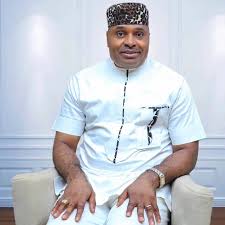
Opposition voices have been quick to link the decision to health concerns. Actor-turned-politician Kenneth Okonkwo argued that it exposed physical incapacity and called for Tinubu to resign so that “Nigeria will be governed by a fit and proper President.” The presidency and APC insist the president is healthy and focused on results. Regardless of the medical reality, which remains opaque, the political effect is the same: the candidate is not fully available for the traditional rituals of democratic solicitation.
What This Says About Nigerian Democracy
Nigeria’s democracy has long operated with a gap between formal institutions and substantive accountability. Elections occur, parties contest, and the constitution is invoked. Yet the lived practice often treats the electorate less as sovereign principals and more as an audience whose periodic votes are to be managed rather than continuously earned.
Tinubu’s stance fits a pattern in which power is exercised with a sense of entitlement rather than provisional trust. The language of “I am your errand man” to the party is offered even as the president signals, he need not personally canvass the people. The implication is that the office confers a certain autonomy: the work of fixing Nigeria is so urgent and specialized that the messy business of seeking consent can be delegated. This risks reinforcing the view that the presidency is a personal or elite project rather than a temporary trust held on behalf of citizens who retain the right to scrutinize, question, and withhold support.
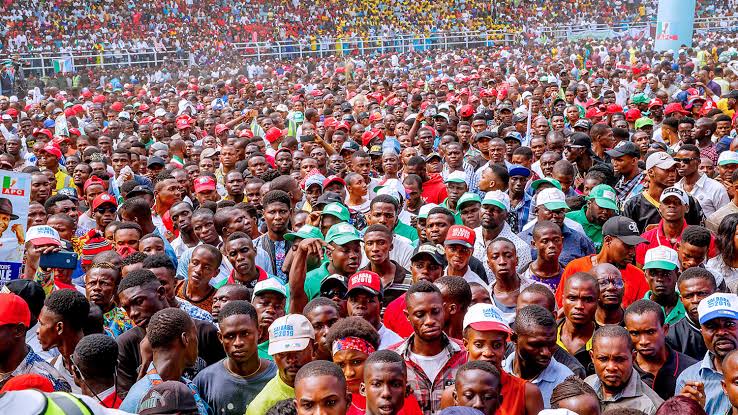
In healthier democracies, incumbents campaign vigorously precisely because their record is on the line. They face town halls, hostile questions, and the physical demands of connecting with voters who feel the consequences of policy. When an incumbent largely absents himself, it suggests either that the outcome is considered sufficiently secure through institutional and structural advantages, or that direct accountability is secondary. Both possibilities erode the idea that democracy requires ongoing persuasion and consent, not merely periodic ratification.
The economic context sharpens the point. Nigerians have endured the sharp pains of subsidy removal, exchange-rate unification, and inflation. A president who believes these reforms justify reduced personal campaigning risks conveying that the public’s hardship is a necessary sacrifice for which gratitude, rather than rigorous accounting, is the appropriate response. That posture, leadership as a favour rendered to the country, undermines the reciprocal nature of democratic legitimacy.
Broader Institutional Weakness
This episode also highlights structural features of Nigerian politics: the dominance of party machines and state resources in mobilization, the relative weakness of independent media scrutiny of presidential capacity, and a culture in which health and fitness for office remain poorly transparent. When a major candidate’s physical presence on the trail becomes optional, it normalizes a politics of remote command rather than embodied representation.
Democracy is not merely the holding of elections on a set date. It is a continuous claim by citizens on those who exercise power. Tinubu’s decision to prioritize “governance” over full campaign engagement may be defended as pragmatic. Critically examined, it reveals a democracy in which the distance between the palace and the people has grown comfortable for those who hold power, and increasingly alienating for those who are supposed to confer it. The January 2027 election will test whether Nigerian voters still insist on more than managed consent.


Leave a Reply