By Matthews Otalike, The Searchlight Correspondent / October 14, 2026
When 140 million Nigerians are struggling below the poverty line, the ruling party pours billions of naira into campaign vehicle purchases. When the President is alleged to be unable to campaign due to failing health, governors care only about his re-election, not whether voters live or die. When INEC’s key departments are allegedly headed by the President’s ethnic kinsmen, and when the President fawns over Britain, France, and the United States just months before an election he is contesting, this is not democracy. This is the funeral march of democracy. The Searchlight has a duty to record this political challenge in progress.
A Nation of Poverty, A Convoy of Luxury
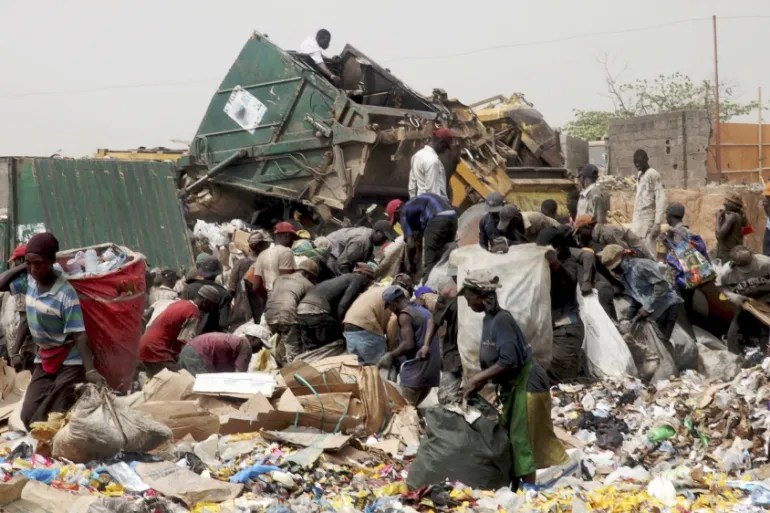
In April 2026, the World Bank released a report that should keep any Nigerian with a conscience awake at night. 63% of Nigerians, approximately 140 million people, lived below the national poverty line in 2025, up from 56% in 2023 and 61% in 2024. The World Bank was explicit: “Household incomes have not grown fast enough to offset still-elevated inflation, and poverty has yet to begin declining”. The disconnect between government’s claimed macroeconomic stabilization and household welfare has never been starker.
In the face of these numbers, what has the ruling All Progressives Congress done?
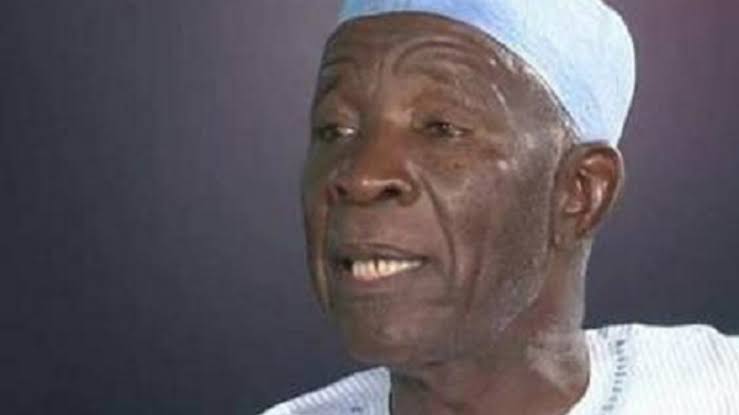
Buba Galadima, a chieftain of the Nigeria Democratic Congress, has alleged that the APC is offering N50 million to state House of Assembly candidates, N200 million and a car to House of Representatives candidates, N500 million and a Jeep to senatorial candidates, and N2 billion and a Jeep to governorship candidates, simply to step down and let APC candidates run unopposed in 2027.
The Ogun State case is even more brazen. The APC governorship candidate in Ogun, Senator Solomon Adeola, publicly acknowledged receiving donations from 22 individuals, companies, and groups. The list included 119 vehicles, buses, an ambulance, pickups, and other mobility support. Businessman Akintunde Armstrong alone donated 26 buses, valued at approximately N728 million. The entire fleet is estimated at approximately N3.33 billion. A petition has been filed with the Economic and Financial Crimes Commission asking whether these donations violate the N500 million individual donation limit under the 2026 electoral regulations.
A senator can “donate” a convoy. A businessman can “donate” 119 vehicles. In a political system where such “donations” flow freely, the question must be asked: who is actually paying for these vehicles? And when politicians pour billions of naira into campaign logistics while voters cannot afford a single meal, what are those voters in their eyes? They are raw material for votes.
The Absent Candidate, The Loyal Governors
The other protagonist in this farce is the President who should be at the center of the stage but is almost entirely absent.
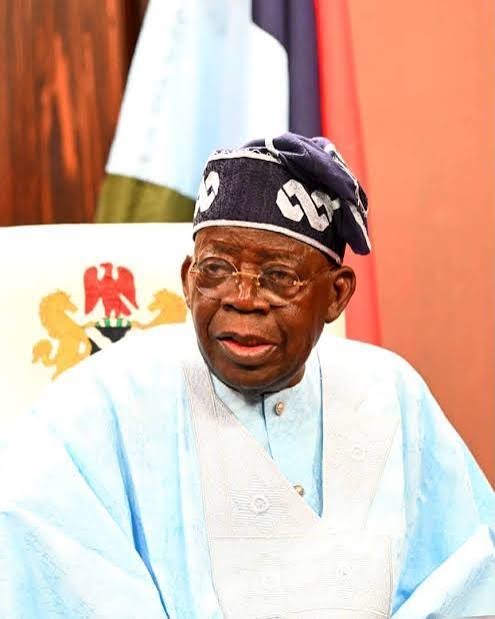
President Bola Tinubu’s health has long been an open secret. His frequent and prolonged overseas trips have raised questions that his spokespeople dismiss with assurances of “working vacations.” But a President who needs to spend extended periods abroad to “work” is a President whose capacity to govern, and to campaign, is severely compromised.
A President, who spends more time abroad than in the country he governs, cannot stand under the sun and wave to voters. He may not campaign at all.
But the governors do not care. The North-Central APC governors and leaders have adopted Tinubu as the sole presidential candidate for 2027. First-term APC governors have unanimously backed his re-election bid, acknowledging “economic hardship” but appealing to citizens to “remain patient”. The North-East political bloc has pledged to mobilize “massive grassroots support” for his second-term ambition. The South-East governors have reportedly resolved to work for Tinubu’s re-election.
Why? The answer is not conviction. It is interest. After the fuel subsidy removal, federal allocations surged, leaving state governments “unusually flush with cash.” Tinubu’s re-election means the continued flow of federal largesse. In this structure of incentives, governors are blind to voters’ suffering, silent on the President’s health, and complicit in whatever manipulation that may come. They are not representatives of the people. They are beneficiaries of the system.
The Hijacked Electoral Commission
If one thing can destroy any election’s credibility, it is electoral management bodies captured by the incumbent.
Nigeria’s Independent National Electoral Commission is facing precisely such allegations. Former Vice President Atiku Abubakar raised the alarm in October 2026: “President Tinubu appointed two Yoruba individuals to head INEC’s two most critical departments, Oluyemi Titilayo Adeyemi-Showunmi as head of Electoral Operations and Voter Registry, and Dr. Lawrence Bayode as head of Information and Communication Technology. These are the departments that manage voter registration and control result transmission, the very machinery that determines electoral outcomes.”
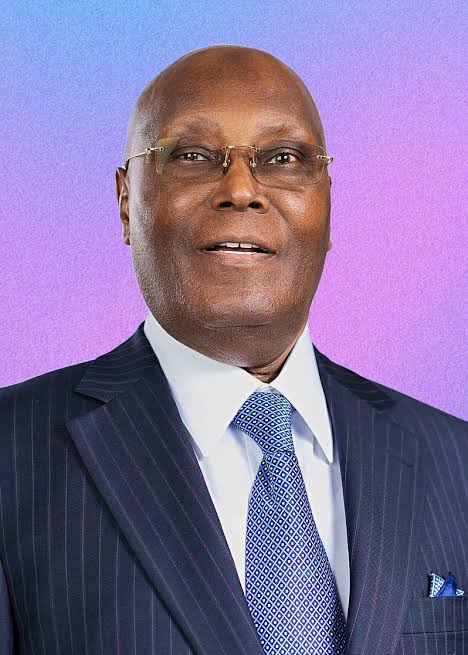
Atiku’s warning was unambiguous: Tinubu must “keep his hands off the country’s electoral body” ahead of the 2027 presidential election, and the polls “must be free and fair”. He demanded that the Tinubu administration publish the criteria used for Adeyemi-Showunmi’s appointment and demonstrate that every appointment followed due process, was based on merit, and was free from political interference.
This comes against the backdrop of the 2023 election’s technological failures. Analysis by Mundx Analytics found that 48.8% of result sheets, approximately 50,432 sheets, were uploaded to INEC’s IReV portal from non-BVAS devices, including personal phones. INEC had promised results would be uploaded directly from BVAS machines, a pledge that was the cornerstone of the Electoral Act 2022’s transparency provisions. The presence of over 50,000 result sheets from private devices raises profound questions about the chain of custody.
A former INEC National Commissioner, Festus Okoye, has warned that the 2027 election faces serious credibility threats from “sophisticated vote-buying,” manipulated party primaries, security gaps, and declining public confidence in the judiciary.
When the electoral commission’s key departments are headed by the President’s ethnic kinsmen, when the last election’s result uploads were compromised on an industrial scale, and when governors are openly declaring they will “deliver” entire regions to the President, “free and fair” is not a description. It is a delusion.
The Pre-Election Diplomatic Offensive
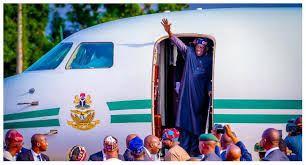
In the months leading up to an election he is contesting, President Tinubu’s diplomatic calendar has been unusually busy. He has met with French President Macron in Paris. He has engaged with British authorities in London. He has made overtures toward Washington. By early 2026, he had visited at least 22 countries, with travel logistics alone costing N37.64 billion by April 2026.
The question is not merely why a President travels so extensively. The question is why a candidate for re-election is courting foreign capitals just months before Nigerians vote.
The answer may lie in a parallel case. In May 2026, the presidential candidate of the Peoples Redemption Party, Donald Duke, traveled to the United States “seeking Washington’s support to counter potential election manipulation by Tinubu in the 2027 elections.” The irony is that Duke’s own nomination was itself accused of being secured through “ghost voting, post-election tampering with membership records, manipulation of accreditation and sorting”.
But the irony reveals a deeper truth: when domestic institutions cannot guarantee electoral integrity, political actors have no choice but to look abroad. Tinubu’s overtures to London, Paris, and Washington may be seeking tacit approval for his re-election, or international cover if the result is challenged. Opposition figures seeking foreign support do so because they know the domestic judiciary and electoral commission have been penetrated by power.
Either way, when a nation’s election results require foreign “certification” or “monitoring,” democracy has already been surrendered.
Conclusion: This Is Not Democracy. This Is Its Mockery.
Let us put the facts together:
140 million people below the poverty line, while the ruling party allegedly offers N2 billion and Jeeps to buy off opponents and a governorship candidate receives 119 vehicles in “donations”;
A President, who cannot campaign, whose re-election is being imposed by governors who care nothing for voters;
INEC’s key departments headed by the President’s ethnic kinsmen, and the Chairman appointed by the President himself;
A pre-election diplomatic offensive in London, Paris, and Washington, while the integrity of the vote at home is systematically dismantled.
This is not democracy. This is a carefully orchestrated election farce, designed not to let the people choose their leaders, but to let the incumbent retain power.
The Searchlight’s tradition is to speak truth to power. The truth is: Nigeria is witnessing the death of its democracy, and the death certificate is being signed, one luxury vehicle at a time, with billions of naira that should have fed the hungry.


Leave a Reply