By Matthews Otalike, The Searchlight Correspondent / October 13, 2026
Nigerians’ attachment to the phrase “dividends of democracy” exposes a profound misreading of what democracy is, the packaging of a government’s statutory obligations as favours. The real dividends of democracy are institutional, not infrastructural. And the Nigerian elite’s defence of a president who refuses to account to citizens is not conviction but complicity.
“Dividends of Democracy”:A Concept Misunderstood
In Nigerian political discourse, the phrase “dividends of democracy” is used constantly, yet its internal logic is rarely interrogated. The Federal Ministry of Information’s 2026 Democracy Day statement pledged to “deliver tangible dividends of democracy,” while the FCT Minister Wike declared Abuja a “living laboratory of the dividends of democratic governance.” Such formulations betray a fundamental confusion.
Citizens pay taxes; government provides public services by law. That is the basic bargain of the social contract, not a gift. Politicians campaign on policies for the people’s benefit; once elected, they should implement them. That is the minimum requirement of representative democracy, not a bonus. When a government builds a road, pays salaries, or disburses pensions and this is celebrated as a “dividend of democracy,” the obligation has been downgraded to a favour, and the right has been reduced to charity.
As the democracy advocacy group PAACA pointedly observed: if democracy were merely service delivery, then military regimes “also delivered their own dividends”; the generals built bridges, roads, and hospitals, many of which still form the backbone of Nigeria’s national infrastructure. Nigeria’s democratic vocabulary equates “showing projects” with democratic achievement, revealing a deeper misunderstanding: democracy is not about how many kilometres of road were paved, but about transparency, accountability, participation, and the institutions that sustain them.
The Real Dividends of Democracy: Institutions, Not Projects
If roads and bridges are not the dividends of democracy, what are? Academic research and democratic practice converge on one answer: the real dividends of democracy are the institutional arrangements and value systems that constrain power, protect citizens’ rights, and make public services sustainable. Democracy’s advantage is not that it lays roads faster than authoritarian regimes; in fact, autocracies often build infrastructure with greater “efficiency.” Its advantage is that it reduces corruption through institutional restraint, incentivizes responsiveness through electoral accountability, and promotes sustainable development through rights protection.
A comprehensive study by the International Institute for Democracy and Electoral Assistance (International IDEA) shows that democracies with stronger institutions and lower corruption outperform on poverty reduction, education, and health. Electoral competition creates accountability pressure through the threat of being voted out, pushing governments to respond to citizens’ needs, which in turn translates into more equitable public service delivery. Research from Oxford University similarly finds that democracy tends to produce better long-term outcomes in life expectancy, education, peace, and economic growth, precisely because of accountability, a free press, and institutional checks and balances.
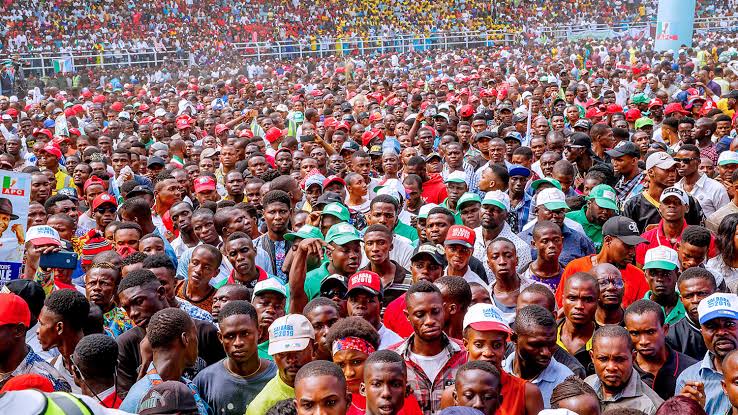
In other words, the real dividends of democracy are the ability to vote a government out when it fails, the institutional checks that constrain abuse of power, and the judicial remedies available when rights are violated. Nigeria’s problem is not that democracy “has failed to deliver dividends”; it is that Nigerian democratic practice has never truly established these institutional dividends. Elections are manipulated, the judiciary lacks independence, the legislature functions as a rubber stamp, and power is personalized rather than institutionalized.
The Complicity of Elites: Why They Defend an Unaccountable President
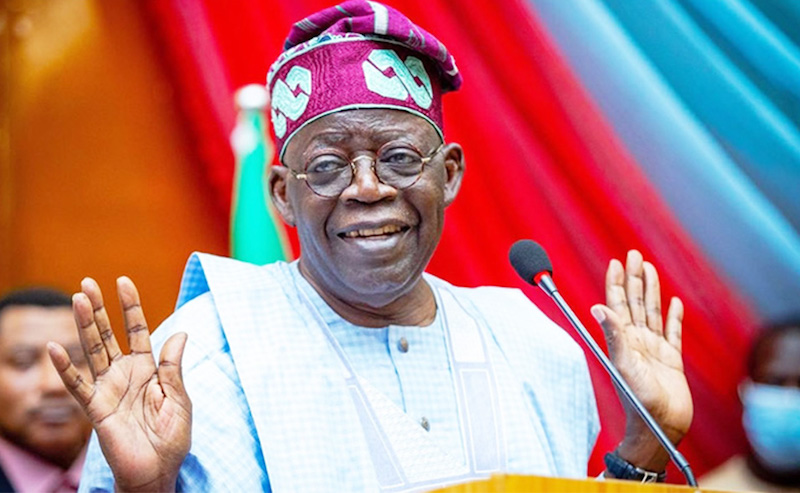
Since President Bola Tinubu took office in 2023, his governing style has been described by a growing number of critics as detached from the people. Former Minister Solomon Dalung, responding to the President’s 2026 Independence Day address, said the speech was “hollow and rhetorical”, three years on, still saying “I will, I will,” rather than reporting to the people what has been achieved. Hakeem Baba-Ahmed, former Special Adviser to the Vice President, criticized the President’s remark that “you need glasses to see progress,” noting that “living in this country, seeing the level of poverty and the lack of accountability, you cannot expect Nigerians to clap and cheer.”
Yet Nigeria’s elite class, traditional rulers, religious leaders, political grandees, continue to line up behind this administration. This phenomenon cannot be reduced to simple “bribery.” Its structural logic must be understood.
In a sharp analysis in Vanguard, Olu Fasan identifies a culture of “prebendal politics” in Nigeria: public office is distributed as a reward for party loyalty, personal fealty, and ethnic kinship, with personal loyalty taking precedence over integrity. When governors, pliant “religious leaders”, and traditional rulers flock to the Presidential Villa to praise “the great things Tinubu is doing,” they are not unaware that insecurity is worsening and poverty deepening; they are participating in a conspiracy of interests. Tinubu “understands the Nigerian psyche”: almost everyone has a “price point” at which they can be bought and co-opted.
More specifically, elite support stems from multiple calculations. The defence mounted by sections of the Yoruba elite is particularly striking, as one commentary observed, those who now extol Tinubu’s “transformative leadership” are often those who benefit from his policies or share his ethnic-partisan affinity. The same groups that were the fiercest critics of Goodluck Jonathan and Muhammadu Buhari are now the most vocal defenders. The truth behind this selective criticism is that the intensity of criticism depends not on how badly the country is governed, but on whether the ruler is “one of us.”
Governors, meanwhile, have extracted concrete benefits from Tinubu: federal allocations surged after the fuel subsidy removal, leaving state governments “unusually flush with cash.” When confronted with poverty, the standard defence is that “this is the governor’s responsibility, not the President’s”, even though the President has just shifted blame to the governors, who in turn shift it back to local government, until no one is accountable.
Conclusion
Nigeria’s democratic predicament is not that there are too few “dividends”; it is that the very meaning of democracy has been systematically distorted. When citizens mistake government obligations for gifts, when elites package private interests as conviction, and when a president responds to public suffering with the “you need glasses” defence, democracy degenerates from a tool of accountability into a cloak of legitimacy.
The real dividends of democracy were never about what the government “gives” the people, but about what the people “can demand” from the government. In this sense, Nigeria does not need more “project dividends.” It needs a cultural awakening around citizen rights, institutional accountability, and political responsibility. Without that awakening, no number of roads and bridges will be anything more than highways to a deeper crisis.


Leave a Reply