A Loan Transparency Tracker for the Tinubu Government
By Matthews Otalike, The Searchlight Correspondent / October 13, 2026
The Searchlight has been on the march, educating Nigerians on the state of the nation with focus on politics, the economy, democracy and governance. The piece is the timeline of loans since the Tinubu administration started.
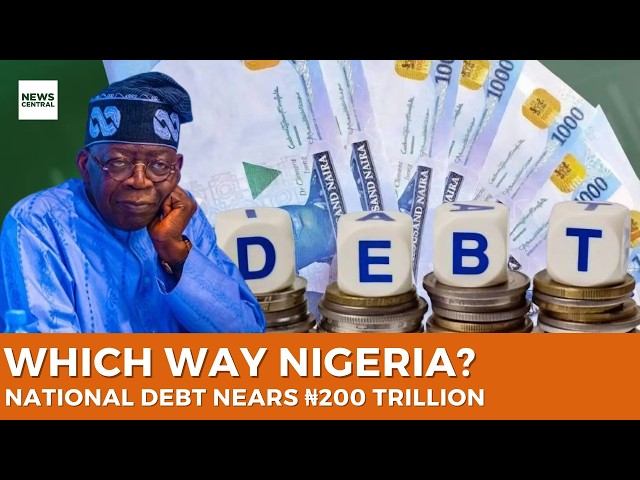
Since May 2023, the Tinubu administration has added over ₦70 trillion to Nigeria’s public debt, yet has never fully explained the terms, uses, or project timelines of most major loans. Below is a timeline of key moments.
2023
June 2023 (First Month in Office)
– Tinubu travelled to Paris for the “Summit for a New Global Financing Pact”, less than a month after inauguration.
– Presidential travel spending begins to be recorded, with single entries exceeding ₦150 million.
December 2023
– Nigeria’s public debt jumps from ₦46.25 trillion in 2022 to ₦97.34 trillion — more than doubling in one year.
2024
March 2024
– The Lagos-Calabar Coastal Highway breaks ground. Contract value estimated at $11 billion, awarded directly to Hitech Construction Company, owned by Lebanese businessmen Gilbert and Ronald Chagoury, widely reported as longtime Tinubu associates.
Full Year 2024
– Presidential travel spending reached ₦252.7 billion, the highest annual figure on record.
– Public debt climbs to ₦144.67 trillion.
2025
December 2025
– Public debt reached ₦159.28 trillion, an increase of ₦14.61 trillion in one year.
– Debt servicing for 2025 totals ₦15.81 trillion.
2026
March 2026
– The Senate approved a $6 billion external borrowing request, including a $5 billion derivative financing arrangement with First Abu Dhabi Bank.
– Nigeria draws the first $1.5 billion tranche. The finance minister describes it as “phased drawdown to reduce borrowing costs.”
April 2026
– The 2026 budget was signed: ₦68.32 trillion total, with ₦15.81 trillion for debt servicing and ₦29.20 trillion in new borrowing planned.
– The House of Representatives approves a $516 million loan for the Sokoto-Badagry Highway.
June 2026
– Public debt hit ₦166.79 trillion. Per-capita debt stood at roughly ₦702,000, about 10 months’ wages for a minimum-wage worker.
– The Federal Government planned to borrow ₦17.89 trillion in 2026, with 80% from domestic sources.
August 2026
– Cumulative presidential travel spending reached ₦37.6 billion (June 2023 – April 2026).
– Tinubu departed for a three-week European holiday, officially described as a “working vacation.”
September 2026
– Nigeria’s external debt has increased by $11.4 billion under Tinubu.
– Public debt rose another ₦14.39 trillion in the first half of the year, reaching ₦166.79 trillion.
The Transparency Gap: What We Know vs. What We Don’t
What we know:
– Borrowing increased: over ₦70 trillion added since 2023.
– Debt servicing also rose: ₦69 of every ₦100 in revenue goes to creditors in 2026.
– Travel spending is rising: 261 days abroad, ₦37.6 billion spent.
What we don’t know (and the government has never systematically explained):
– The full terms of each major loan: interest rates, tenors, collateral conditions.
– The specific project list tied to each loan, with delivery timelines.
– Why most projects remain unstarted two years after loan approval.
– A full financial audit of directly awarded projects like the coastal highway.
CLOSING
If borrowing requires no explanation, projects require no delivery, and the legislature requires no answers, then Nigeria is not practicing democratic finance; it is practicing extractive governance without accountability. The loan timeline keeps extending. The accountability timeline keeps disappearing.


Leave a Reply