By Matthews Otalike, The Searchlight Correspondent / October 12, 2026
In the lexicon of political science, democracy is defined not merely by the periodic act of casting ballots, but by the institutionalization of accountability, transparency, and the separation of powers. It is a system where the government derives its just powers from the consent of the governed and remains answerable to them through their elected representatives.
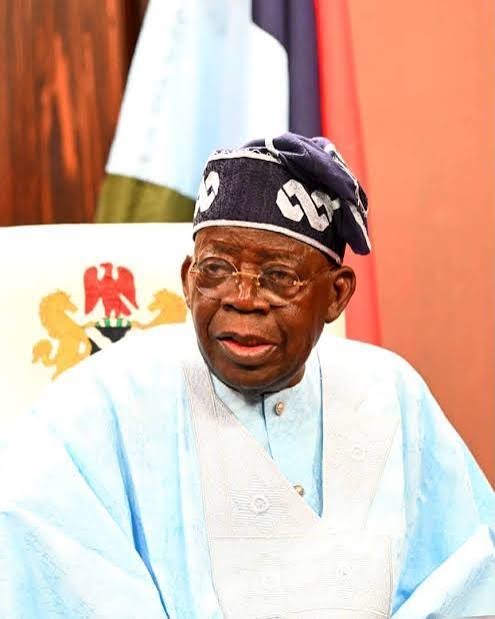
However, over three years into the administration of President Bola Ahmed Tinubu, a critical examination of his governance style raises a fundamental question: What type of democracy is Nigeria practicing? The emerging reality suggests a hybrid system, a façade of electoral democracy masking a pervasive culture of imperial presidency, executive recklessness, and legislative subservience. The symptoms of this democratic decay are glaring: opaque deal-making, unscrutinized expenditures, and a National Assembly that has seemingly abdicated its constitutional role as a check on executive power.
The Coastal Highway: A Monument to Cronyism and Opacity
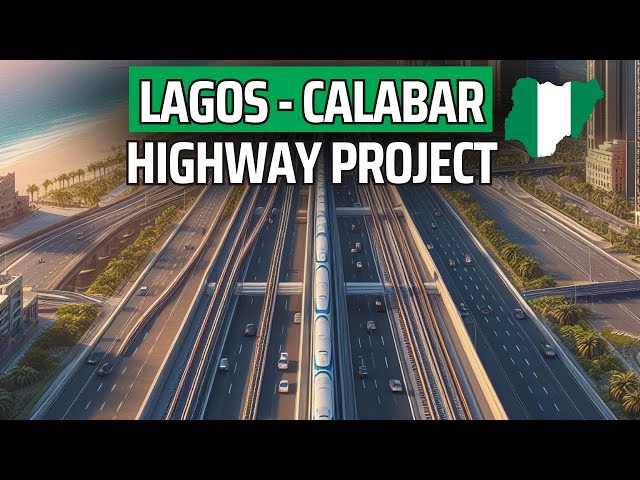
One of the most egregious examples of this democratic deficit is the award of the 700-kilometer Lagos-Calabar Coastal Highway. A project of such monumental fiscal and environmental significance should have undergone rigorous competitive bidding, transparent feasibility studies, and open scrutiny. Instead, it was shrouded in secrecy and awarded to Hitech Construction Company, a firm linked to Gilbert Chagoury, a longtime associate of President Tinubu.
The Nigerian procurement process is governed by the Public Procurement Act, which mandates competitive bidding to ensure value for money. By bypassing this process, the Tinubu administration signalled that loyalty to the president supersedes competence and national interest. This is not democracy; it is a return to the era of “settler politics,” where state resources are weaponized to reward political allies. A government that cannot transparently award its flagship infrastructure project cannot claim to be accountable to the people.
Executive Fiat: The Erosion of Legislative Oversight
The constitution of the Federal Republic of Nigeria provides for a clear separation of powers. However, under Tinubu, the executive has consistently acted as a law unto itself. The president has entered into international agreements and loan arrangements without seeking the constitutionally required recourse to the National Assembly.
The case of the $800 million World Bank loan, among others, is instructive. While the National Assembly has the constitutional mandate to approve external borrowing, the Tinubu administration has treated these obligations as mere executive formalities. The government has failed to provide Nigerians with a detailed breakdown of the loans acquired, the terms, and the specific projects they are meant to fund. Three years on, the promised projects, from infrastructure to education, remain ghosts, yet the debt burden continues to skyrocket. This is a government that governs by stealth, not by mandate.
The Vanishing President: Holidays and the Erosion of Transparency
In a functional democracy, the president is a public servant, not a monarch. However, President Tinubu’s frequent foreign trips and holidays have been characterized by a disturbing lack of transparency. Constitutionally, when the president is absent from the country, he is required to transmit a letter to the President of the Senate and the Speaker of the House of Representatives to formally transfer power to the Vice President.
Tinubu’s administration has repeatedly flouted this constitutional requirement. By failing to formally notify the National Assembly before his extended stays abroad, he is effectively governing from a vacuum, treating the presidency as a personal fiefdom where the rules of succession and transparency do not apply. This casual disregard for the constitution is not just a procedural oversight; it is a symptom of a leader who believes he is above the law.
The Akpabio Senate: A Rubber Stamp in a Democracy
The logical consequence of an imperial president is a compliant legislature. This is the tragic reality of the 10th National Assembly, led by Senate President Godswill Akpabio. Since his emergence, widely believed to be engineered by the Tinubu administration, the Senate has transformed from a chamber of sober reflection into a rubber stamp for executive whims.
The Senate’s refusal to push back against the president’s opaque loan requests, its silence on the coastal highway scandal, and its failure to hold the executive accountable for the absence of promised projects demonstrate a profound betrayal of the people. The Senate, under Akpabio, has become a partner in the culture of impunity. When the legislature is foisted on the people by the executive, it ceases to be a check and becomes an enabler. The doctrine of separation of powers is dead in Nigeria; what we have is a fusion of power, where the executive dictates and the legislature merely endorses.
What Type of Democracy is This?
It is neither a liberal democracy nor a social democracy. It is a “Neo-Patrimonial Democracy”, a system where formal democratic institutions exist, but real power is exercised through informal networks of patronage and cronyism. It is an “Oligarchic Democracy” where the state is run as a private enterprise, and the citizens are reduced to mere spectators in their own governance.
In this system, accountability is an inconvenience, transparency is a threat, and the constitution is a mere suggestion. The Tinubu administration is not accountable to the people because it does not believe it owes them an explanation. It governs as if the mandate of 2023 was a license for absolute power rather than a contract for service.
Conclusion
The Nigerian people did not vote for a king; they voted for a president. The constitution did not establish a monarchy; it established a republic. If the current trajectory continues, Nigeria risks sliding into a full-blown autocracy where elections become mere rituals and governance becomes a private affair of the ruling elite.
It is time for the civil society, the media, and the genuine representatives of the people to rise up. The National Assembly must reclaim its independence, or it risks becoming an accomplice to the destruction of Nigerian democracy. The Searchlight must continue to shine its beam on this dark chapter of executive impunity. President Tinubu must be reminded that in a true democracy, the people are the employers, and he is merely the employee. If he cannot account to the people, he has no business holding the highest office in the land.


Leave a Reply