The evidence points to a systemic breakdown in the relationship between borrowing, budgeting, and implementation. The loans are real, the World Bank has approved them, and Nigeria’s debt stock has grown. The budget allocations are real, they are published in the Appropriation Act. But the releases are not happening, the projects are not being executed, and the money is not reaching the intended beneficiaries.
Several explanations are possible, and they are not mutually exclusive:
First, the federal government’s cash management system, particularly the “bottom-up cash plan” policy of the Office of the Accountant General of the Federation, has been blamed by the Minister of Health for the delay in releasing capital allocations. Under this system, ministries must demonstrate cash backing before funds are released, a process that can take months and effectively starves capital projects while recurrent expenditures, salaries, overheads, debt service, continue to be paid.
Second, the securitization of Ways and Means advances and the sheer weight of debt servicing have crowded out capital expenditure. When 60 to 80 percent of revenue is consumed by debt service, there is simply nothing left to fund the capital budget, regardless of what the Appropriation Act says.
Third, there is the question of political economy. The CHRICED report warns that “as the 2027 general elections draw closer, political considerations may overshadow governance. There is a real risk that funds intended for capital projects could be diverted for political activities”. This is not a speculative concern. Nigeria has a long history of budget padding, phantom projects, and the diversion of public funds for political patronage. The fact that the Budget Office has failed to publish the 2025 Q3 and Q4 implementation reports, a statutory requirement, only deepens suspicions that the figures, if released, would reveal even more troubling patterns.
Fourth, there is the question of whether the loans are being used to finance the deficit rather than the projects for which they were approved. In the 2024 budget, ₦7.83 trillion in new borrowing was used to finance a ₦9.18 trillion deficit. If the borrowed funds are fungible, that is, if they flow into the Consolidated Revenue Fund rather than being ring-fenced for specific projects, then the government is effectively using loan proceeds to pay salaries and service debt, while the “project” allocations remain unfunded. This is the most plausible explanation for the Minister of Health’s admission that the ministry received nothing from the ₦57.39 billion in loan financing allocated to it.
A GOVERNANCE CRISIS, NOT A DEBT CRISIS
Nigeria’s problem is not that it is borrowing. In a developing economy with massive infrastructure deficits, borrowing is both necessary and appropriate. The problem is that the borrowing is not producing development outcomes. The loans are being absorbed into a fiscal system that prioritizes recurrent expenditure, debt service, and political patronage over capital investment. The result is a debt stock that grows inexorably while the hospitals remain without equipment, the roads remain unpaved, and the schools remain without classrooms.
The World Bank loans are real, and they are official. But the disbursement mechanisms, the conditions attached to them, and the Nigerian government’s own budget execution failures have combined to create a situation where the money is either stuck in the pipeline, diverted to other uses, or simply not reaching the ministries that need it. The Minister of Health’s testimony before the National Assembly, that the ministry received “not a dime” from multilateral loan financing, is a devastating indictment of the entire system.
Until Nigeria addresses the fundamental governance failures at the heart of its fiscal architecture, the lack of transparency in loan disbursement, the chronic under-release of capital allocations, the prioritization of recurrent over capital spending, and the absence of accountability for budget implementation, the borrowing will continue, the debt will grow, and the Nigerian people will see none of the benefits. The question is not whether Nigeria can afford to borrow. It is whether Nigeria can afford to continue borrowing without a system capable of spending the money wisely.
RECOMMENDATIONS: LEGAL AND POLICY REFORMS
The evidence presented in Parts One through Six establishes that Nigeria’s problem is not borrowing itself but a governance architecture that prevents borrowed funds from translating into development outcomes. The following reforms, legal, institutional, and policy, are proposed to close the gap between appropriation, release, and implementation.
A. LEGAL REFORMS
1. Amend the Fiscal Responsibility Act (FRA) 2007 to Strengthen Borrowing Conditions and Sanctions
The FRA currently provides that government at all levels “must borrow for only capital expenditure and human development at concessional terms with low interest rates and long amortization period”. However, the Act lacks enforceable sanctions for violations. Section 45(2) states that lending in contravention of the Act “shall be unlawful”, but no official has been prosecuted for breaching the borrowing conditions. The Act should be amended to:
· Impose personal liability on the Minister of Finance, the Director-General of the DMO, and the Accountant-General of the Federation for any borrowing that violates Sections 41 and 44.
· Mandate that loan proceeds be ring-fenced in a dedicated project account and disbursed only against verified project milestones, not into the Consolidated Revenue Fund.
· Require the Fiscal Responsibility Commission to publish quarterly compliance reports on every loan, including disbursement status and project implementation rate, with penalties for non-publication.
2. Enact a Public Debt Transparency and Accountability Act
Nigeria lacks a dedicated law governing debt transparency. The Investments and Securities Act 2025 touches on debt securities but does not address loan disbursement, project tracking, or parliamentary ratification. A new Act should:
· Establish a National Digital Debt Registry accessible to the public, tracking every loan from approval to disbursement to project completion.
· Require mandatory independent debt audits every three years, conducted by an independent auditor appointed by the National Assembly, not the executive.
· Mandate that all loan agreements be ratified by the National Assembly before signing, with full disclosure of terms, conditions, and project specifications. Parliament should retain authority to amend or reject loan agreements.
3. Strengthen the Budget Office’s Statutory Reporting Obligations
The Budget Office of the Federation has failed to publish Q3 and Q4 2025 implementation reports, in violation of the FRA. The FRA should be amended to:
· Impose automatic penalties on the Director-General of the Budget Office for failure to publish quarterly reports within 30 days of the quarter’s end.
· Require the Accountant-General of the Federation to publish monthly cash release data disaggregated by ministry, department, and agency, including capital vs. recurrent breakdown.
· Make budget implementation reports a precondition for the next quarter’s warrant releases — no report, no release.
B. BUDGET PROCESS REFORMS
4. Abolish the “Bottom-Up Cash Plan” and Adopt a First-Line Charge for Capital Projects
The Minister of Health identified the “bottom-up cash plan” as a key reason for delayed capital releases. Under this system, ministries must demonstrate cash backing before funds are released, a process that starves capital projects while recurrent expenditures continue to be paid. The reform should:
· Reverse the priority order: capital releases should be processed before recurrent overheads, not after.
· Introduce a statutory first-line charge for capital expenditure, similar to the first-line charge for debt service, ensuring that capital projects are funded before discretionary recurrent spending.
· Require the Accountant-General to publish weekly cash release schedules so that ministries can plan implementation.
5. Link Loan Disbursement to Project Readiness
The World Bank’s own implementation data shows that about six loans worth $2 billion approved in 2024 were undisbursed a year later. The government should:
· Establish a Project Preparation Facility within the Budget Office to ensure that all loan-funded projects have completed designs, environmental assessments, and procurement plans before loan signing.
· Require the DMO and the Ministry of Finance to publish a Loan Disbursement Dashboard showing, for each loan: approval date, signing date, disbursement rate, and implementation rate.
· Make loan negotiation contingent on ministry readiness, no loan should be signed for a ministry that has not demonstrated capacity to absorb the funds within 12 months.
6. Protect Health and Education Capital Budgets from Fiscal Crowding-Out
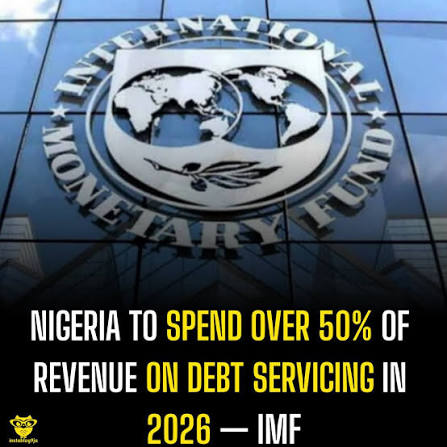
Debt service now consumes over 50% of federal revenue. The health ministry received only ₦36 million out of ₦218 billion in 2025. The reform should:
· Create a ring-fenced Health Capital Fund financed by a statutory percentage of consolidated revenue, immune to cash-plan rationing.
· Require the Minister of Finance to explain in writing to the National Assembly any quarter in which health or education capital releases fall below 50% of the pro-rata allocation.
· Establish a minimum capital release threshold of 25% per quarter for social sectors (health, education, water), below which the Budget Office must seek parliamentary approval to defer.
C. DEBT MANAGEMENT REFORMS
7. Adopt a National Debt Sustainability Ceiling
Nigeria’s debt-to-GDP ratio remains below 50%, but the debt-service-to-revenue ratio is the more critical indicator. The 2026 budget projects ₦15.9 trillion in debt service against ₦33.39 trillion in revenue, a ratio of 47.6%. The government should:
· Legislate a debt-service-to-revenue ceiling of 30%, consistent with the World Bank’s recommended ceiling of 22.5%.
· Require the DMO and Ministry of Finance to publish a Debt Sustainability Analysis (DSA) every six months, with stress tests for oil price shocks and exchange rate depreciation.
· Establish an independent Fiscal Council with authority to review and publicly comment on all new borrowing proposals before parliamentary approval.
8. Rebalance the Domestic-External Debt Mix
Domestic debt now accounts for 53.27% of total public debt, driven by CBN’s high-interest instruments and the securitization of Ways and Means advances. The government should:
· Gradually reduce domestic borrowing by deepening the tax base and improving revenue mobilization, as recommended by the CBN.
· Negotiate concessional external financing with longer tenors and lower interest rates, prioritizing IDA windows over IBRD.
· Restructure the Ways and Means securitization to extend maturities and reduce the interest burden on the federal budget.
D. INSTITUTIONAL REFORMS
9. Establish a Public Debt Integrity Mechanism
The Center for Fiscal Transparency and Public Integrity has called for a Public Debt Integrity Mechanism grounded in global best practices. This should include:
· A Public Debt Management Assessment Toolkit (PDMAT) review conducted by an independent body, with results published.
· A Whistleblower Protection Fund for officials who report loan diversion or phantom projects.
· Mandatory asset declaration for all officials involved in loan negotiation, approval, and disbursement, with periodic audits by the Code of Conduct Bureau.
10. Strengthen Parliamentary Oversight of Debt
The National Assembly has been largely silent on budget implementation failures. The reform should:
· Establish a Joint Committee on Public Debt with dedicated technical staff to scrutinize loan agreements, disbursement data, and project implementation.
· Require the Minister of Finance to appear before the Committee quarterly to present a loan disbursement and project implementation report.
· Grant the Committee subpoena power to compel production of loan agreements and disbursement records from the DMO, Ministry of Finance, and the Accountant-General’s Office.
11. Introduce Debt Productivity Plans
The World Federalist Movement has recommended that debt productivity plans be included in the Medium-Term Debt Strategy (MTDS), with estimates of outcomes of debt financing on economic growth and a performance report produced annually. This should be adopted, with each loan linked to measurable development indicators (e.g., kilometres of road constructed, hospital beds delivered, megawatts of electricity generated).
E. POLITICAL AND ELECTORAL ACCOUNTABILITY REFORMS
12. Make Budget Implementation a Condition for Electoral Eligibility
CHRICED has recommended that public officials seeking political office ahead of 2027 must comply with the President’s directive requiring them to resign to ensure governance is not compromised. This should be extended to require:
· Publication of a personal scorecard by every minister and governor seeking re-election, showing capital budget release and implementation rates for their tenure.
· Electoral Commission guidelines requiring candidates for executive office to disclose their budget implementation record as part of nomination forms.
13. Enforce the 2027 Election Diversion Risk Mitigation
CHRICED warns that “as the 2027 general elections draw closer, political considerations may overshadow governance” and that funds intended for capital projects could be diverted for political activities. The government should:
· Establish a Pre-Election Capital Project Protection Order requiring the Budget Office to publish monthly capital release data from January 2026 to December 2027, with real-time public access.
· Require the Economic and Financial Crimes Commission (EFCC) and the Independent Corrupt Practices Commission (ICPC) to establish a dedicated task force to investigate capital budget diversion during the election period.
· Mandate that any ministry that fails to achieve 50% capital release by June 2026 must submit a written explanation to the National Assembly, with consequences for the minister’s continuation in office.
F. COMPARATIVE LESSONS: WHAT NIGERIA CAN LEARN FROM MOZAMBIQUE AND THE PHILIPPINES
14. Avoid the Mozambican Trap of Debt Opacity
Mozambique’s 2016 crisis was triggered by $1.4 billion in undisclosed loans, leading to the suspension of World Bank and IMF support and a debt-to-GDP ratio of 86%. Nigeria’s debt is transparent by comparison, but the failure to publish budget implementation reports and the non-disbursement of loan funds to implementing ministries are early warning signs. The reform should include a “Mozambique Trigger”: if the DMO or Budget Office fails to publish required reports for two consecutive quarters, the National Assembly should automatically convene a public inquiry.
15. Emulate the Philippine Model of Disbursement Accountability
The Philippines achieved a 46% cumulative utilization rate against $37.22 billion in ODA commitments by end-2024, with program loans achieving 80.28% utilization. Nigeria should:
· Adopt a Philippine-style ODA Portfolio Review conducted annually by an independent body, with results published and submitted to the National Assembly.
· Establish a Project Management Office (PMO) in each ministry receiving loan funds, staffed by professionals with project management certification, and funded from the loan’s administrative budget.
· Require quarterly disbursement targets for each loan, with the DMO publishing a league table of ministries by disbursement performance.
CONCLUSION TO PART SEVEN
The reforms proposed here are not radical. They are drawn from Nigeria’s own Fiscal Responsibility Act, from the World Bank’s own disbursement principles, and from the documented experiences of Mozambique and the Philippines. What is required is not new money, but the political will to enforce existing laws and to make budget implementation transparent, accountable, and consequential.
The central finding of this investigation is that Nigeria does not have a debt crisis. It has a governance crisis that manifests as a debt crisis. The loans are real, the debt is real, but the development outcomes are not. Until the legal, institutional, and political reforms outlined above are implemented, Nigeria will continue to borrow, continue to service, and continue to under-develop. The Nigerian people deserve better. The law already provides the tools. What is missing is the will to use them.


Leave a Reply