By Matthews Otalike, The Searchlight Investigative Correspondent, October 11, 2026
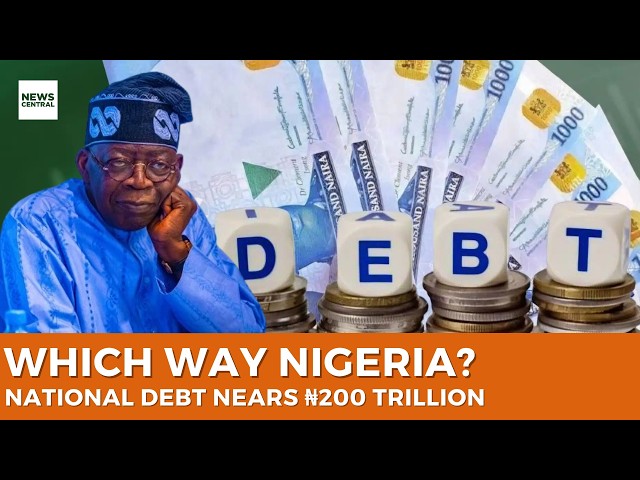
When President Bola Ahmed Tinubu assumed office on May 29, 2023, Nigeria’s total public debt stood at approximately ₦87.38 trillion. By December 2025, that figure had ballooned to ₦159.28 trillion, an increase of over ₦71 trillion in just two and a half years. This staggering accumulation of debt would be defensible if it were matched by visible infrastructure, functional hospitals, or a transformed economy. Instead, Nigerians are confronted with a paradox: the government is borrowing at an unprecedented pace, yet the projects these loans are meant to fund remain largely unimplemented, and the national budget, the primary vehicle for translating borrowing into development, is being executed at a fraction of its allocated capacity.
This investigation examines where the money is actually going, why the World Bank loans are not translating into tangible outcomes, and whether Nigeria is sliding toward a debt trap similar to the crises that engulfed Mozambique and, to a lesser extent, the Philippines.
THE SCALE OF BORROWING: A DEBT SURGE WITHOUT PRECEDENT
The Debt Management Office (DMO) data reveals that Nigeria’s public debt climbed from ₦87.38 trillion in June 2023 to ₦97.34 trillion by December 2023, then to ₦144.67 trillion by December 2024, and further to ₦159.28 trillion by December 2025. Part of this surge, approximately ₦22.7 trillion, reflected the formal securitization of Ways and Means advances from the Central Bank of Nigeria, a legacy obligation that had existed before Tinubu but was incorporated into the debt stock in 2023. Even accounting for this, the scale of fresh borrowing is striking.
External debt, the portion that must be repaid in foreign currency, rose from approximately $42.5 billion when Tinubu took office to about $51.9 billion by December 2025. The World Bank alone accounts for $18.04 billion of Nigeria’s outstanding external debt, making it the country’s largest single lender.
What is most concerning is not merely the volume of borrowing, but the purpose. In his 2024 budget presentation, President Tinubu stated that the ₦9.18 trillion deficit would be financed by ₦7.83 trillion in new borrowing. In the 2025 budget, the deficit was projected at ₦13.08 trillion, with debt servicing alone consuming ₦14.32 trillion — more than the entire deficit. The arithmetic is damning: Nigeria is borrowing not to invest, but to service existing obligations.
THE BUDGET THAT NEVER WAS: ALLOCATIONS VS. RELEASES
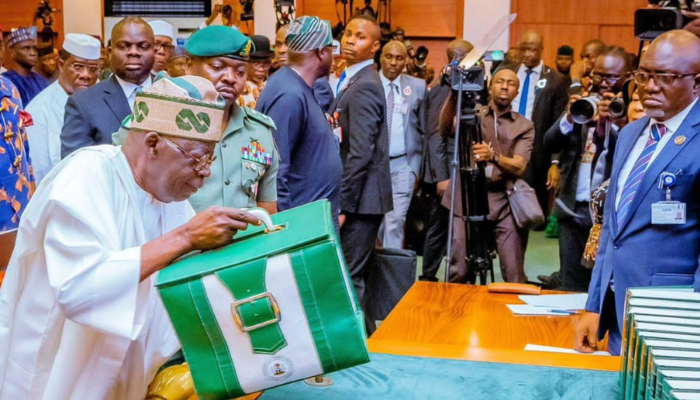
The most damning evidence of the disconnect between borrowing and implementation lies in the budget execution data. For the 2024 fiscal year, a total of ₦13.77 trillion was allocated to capital spending. Yet only ₦5.81 trillion was actually released, and of that, only ₦3.27 trillion was utilized. This means that less than a quarter of the capital budget, the portion meant for roads, bridges, hospitals, and schools, was actually spent.
The situation deteriorated further in 2025. Out of a projected ₦23.44 trillion in capital expenditure, only ₦34.32 billion was released in the first quarter and ₦393.86 billion in the second quarter, less than one percent of the total capital budget. By the end of the third quarter, total capital releases stood at approximately ₦1.208 trillion, a figure that, while an improvement, remains catastrophically low against a ₦23.44 trillion appropriation.
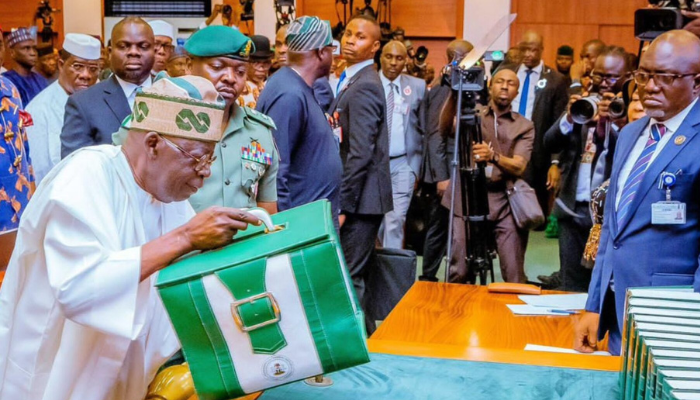
The health sector offers a particularly stark illustration. The Ministry of Health and Social Welfare was allocated ₦233.69 billion for capital projects in 2024. Of this, only ₦26.55 billion, a mere 15.06 percent, was released and utilized. The Minister of Health, Prof. Ali Pate, confirmed that the ministry received “not a dime” from the ₦57.39 billion captured under multilateral/bilateral loan financing for capital projects. This is a devastating admission: the loan funds that were supposedly secured for health infrastructure were not even passed through to the ministry responsible for implementing them.
The Resource Centre for Human Rights and Civic Education (CHRICED) has documented this pattern of chronic under-performance, noting that “recurrent expenditures, primarily sustaining the cost of governance, continue to receive full and timely funding,” while capital projects are systematically starved of cash. The Budget Office itself has failed to publish the third and fourth quarter implementation reports for 2025, in violation of statutory timelines.
WHERE DID THE LOANS GO? THE WORLD BANK QUESTION
The critical question that follows from this data is simple: if the loans were approved and the budget was passed, where is the money?
The World Bank’s own project data provides part of the answer. Between 2023 and 2025, the World Bank approved a series of loans for Nigeria: $750 million for the DARES renewable energy facility (December 2023), $700 million for the AGILE girls’ education programme (September 2023), $1.5 billion for RESET and $750 million for ARMOR (June 2024), $1.57 billion for health and irrigation projects (September 2024), and $1.08 billion for NG-CARES, nutrition, and basic education (March 2025). In October 2025, the World Bank approved another $500 million for the BRIDGE digital infrastructure project and $250 million for health security.
These are not abstract figures. They map directly into electricity access, social transfers, education, and healthcare. Yet the disbursement of these funds has been painfully slow. Reports indicate that about six World Bank loans worth approximately $2 billion, signed for Nigeria in 2024, were yet to be disbursed nearly a year after approval. The World Bank’s own implementation status report for the HOPE-GOVERNANCE programme, approved in September 2024, notes that as of April 2025, the programme was “yet to be disbursement effective due to some outstanding conditions”.
Even when funds are disbursed, they often bypass the very ministries that are supposed to implement the projects. The Minister of Health’s revelation that the ministry received nothing from the ₦57.39 billion in multilateral/bilateral loan financing is a case in point. This raises serious questions about the financial architecture through which loan funds flow. Are these funds being held at the federal level, utilized for debt servicing, or diverted through opaque channels?
It is important to note that World Bank loans are not simply cash transfers to governments. They are typically disbursed against verified expenditures or specific project milestones. However, when the Nigerian government fails to meet the conditions — or when it channels its own resources toward recurrent expenditure and debt servicing while awaiting World Bank reimbursements — the practical effect is that loan-funded projects stall while the debt continues to accrue.
BORROWING TO REPAY: THE DEBT SERVICE TRAP
The Independent Newspaper’s editorial board captured the essence of the problem with brutal clarity: “The 2025 budget appropriated N13.08 trillion as deficit, but had a N14.32 trillion for debt servicing, which suggests that Nigeria is simply taking loans to service loans!”.
The data supports this conclusion. Debt servicing consumed approximately 60 percent of federal revenue in 2024, rising to roughly 66 percent by late 2025. By the second quarter of 2025, the debt service-to-revenue ratio peaked at an alarming 83.62 percent. In the first nine months of 2025, the federal government spent ₦12.52 trillion on debt servicing, exceeding the ₦10.74 trillion allocated in the national budget by ₦1.78 trillion.
This is the anatomy of a debt trap. When a government borrows primarily to service existing debt, it forfeits the fiscal space needed to invest in productive capacity. The ₦14.32 trillion allocated to debt servicing in the 2025 budget is more than the combined capital allocations to health, education, and infrastructure. Every naira borrowed to “finance the deficit” is effectively a naira transferred to creditors, leaving nothing for the Nigerian people.
The securitization of ₦22.7 trillion in Ways and Means advances, a technical manoeuvre that converted short-term central bank overdrafts into long-term debt, has only deepened this trap. While the move reduced the interest rate and extended the tenor of the obligation, it also locked in a massive debt burden that will constrain future budgets for decades.
THE PHILIPPINES AND MOZAMBIQUE: CONTRASTING TRAJECTORIES
The user’s question about the Philippines and Mozambique is apt, because these two countries represent opposite poles of the World Bank lending experience.
In the Philippines, World Bank loans have generally been associated with relatively robust implementation capacity. Total disbursements from active official development assistance loans reached $7.01 billion in 2024, the highest since 2020. The World Bank’s International Bank for Reconstruction and Development had 54 active loans worth $15.52 billion as of April 2026, of which $9.13 billion had been disbursed. While the Philippines has not been immune to implementation challenges, the Cebu Bus Rapid Transit project, for instance, saw only 29 percent of its World Bank loan disbursed before cancellation proceedings began — the overall disbursement rate is substantially higher than Nigeria’s.
The key difference is institutional capacity. The Philippines has a more developed project management ecosystem, stronger coordination between national and local governments, and a track record of absorbing external financing. Nigeria’s federal system, by contrast, suffers from overlapping mandates, delayed cash backing, and a budgeting process that prioritizes recurrent expenditure over capital investment.
Mozambique offers a cautionary tale of a different kind. In 2016, the country was rocked by a “hidden debt” scandal involving $1.4 billion in undisclosed non-concessional borrowing, equivalent to 10 percent of GDP. The revelation led to the suspension of direct budget support from the World Bank and other development partners, triggering a severe economic crisis. Mozambique’s debt-to-GDP ratio soared to 104 percent by 2018, and the country has spent nearly a decade negotiating debt restructuring and seeking to restore its international credibility.
Nigeria is not Mozambique. Its debt-to-GDP ratio remains below 50 percent, and its obligations are largely transparent. But the Mozambican experience illustrates how quickly a debt crisis can spiral when borrowing is not matched by accountability. The Nigerian government’s failure to publish budget implementation reports, the opacity surrounding loan disbursements, and the diversion of loan funds away from implementing ministries are precisely the kinds of governance failures that preceded Mozambique’s crisis.


Leave a Reply