By Matthews Otalike, The Searchlight Investigative Correspondent / October 8, 2026
On May 29, 2023, President Bola Tinubu stood before Nigerians and declared an end to the fuel subsidy. The message was simple: Nigeria could no longer afford to spend billions subsidizing petrol. The savings, he promised, would be redirected to infrastructure, education, and the welfare of ordinary citizens. The implication was unmistakable: the era of reckless borrowing was over.
Two and a half years later, Nigeria’s total public debt stands at ₦159.28 trillion as of December 31, 2025, a staggering figure that has grown by ₦14.61 trillion in a single year, from ₦144.67 trillion in December 2024. Domestic borrowing in the first eight months of 2026 alone reached ₦24.7 trillion, a 90.5 per cent increase over the ₦12.98 trillion borrowed in the same period of 2025. External debt has risen by $11.4 billion since Tinubu took office, from approximately $43.1 billion to $54.5 billion by June 2026.
True, the subsidy is gone but the borrowing has not stopped. It has accelerated.
The World Bank ATM
The first World Bank loan under Tinubu was approved on June 9, 2023, just eleven days after he was sworn in. It was $750 million for power projects, the first tranche of what would become a relentless pipeline of multilateral financing. By September 2023, Nigeria had secured $1.95 billion from the World Bank in the first four months of the administration, covering education, power, and women’s empowerment. The pace never slackened.
In June 2024, the World Bank approved a $2.25 billion package: $1.5 billion under the RESET programme and $750 million under ARMOR, both framed as support for Tinubu’s economic reforms. Three months later, another $1.57 billion was approved for health, dam safety, and irrigation under the HOPE and SPIN programmes. In March 2025, $1.08 billion followed for education and resilience. In August 2025, $300 million for internally displaced persons under the SOLID project. In October 2025, another $750 million. In March 2026, $500 million. In June 2026, $1.25 billion under the NAIJA programme, approved despite what Nairametrics described as “widespread public criticism over the country’s rising debt profile”.
Nairametrics calculated that Nigeria’s debt to the World Bank rose from $15.4 billion to approximately $20.7 billion under Tinubu, an increase of over $5 billion to a single multilateral lender in under three years.
Eurobonds and the Return to Commercial Markets
Domestic borrowing alone could not finance the deficits. In December 2024, Nigeria returned to the Eurobond market for the first time since February 2022, raising $2.2 billion in a dual-tranche issuance that attracted $9 billion in investor interest. The bonds carried coupons of 9.625 per cent and 10.375 per cent, rates that would have been unthinkable a decade earlier.
Less than a year later, in November 2025, Nigeria issued another $2.35 billion in Eurobonds, comprising $1.25 billion at 8.63 per cent due in 2036 and $1.10 billion at 9.13 per cent due in 2046. The issuance was oversubscribed by over $13 billion. The government framed the over-subscription as a vote of confidence. Critics noted that Nigeria was paying double-digit yields to borrow money it was already struggling to service.
The Domestic Squeeze
The most damaging borrowing has been domestic. Between July and December 2023, the Federal Government raised approximately ₦3.66 trillion in new domestic borrowing. In the first quarter of 2024, another ₦2.81 trillion followed. By August 2026, the figure had exploded to ₦24.7 trillion in just eight months.
This is not abstract. Every naira the government borrows from the domestic market is a naira that does not go to a manufacturer seeking to expand, a farmer seeking to mechanize, or an entrepreneur seeking to hire. Former Vice President Atiku Abubakar, in a statement that cut through the government’s evasion, noted that credit to government grew by 43 per cent between 2025 and 2026, while credit to the private sector grew by just 9.6 per cent. Government borrowing was expanding 4.5 times faster than lending to businesses.
“This government is not merely borrowing money,” Atiku said. “It is borrowing away the future of Nigerian businesses”.
The Central Bank’s monetary policy rate, raised aggressively to combat inflation, has made domestic borrowing extraordinarily expensive. The Finance Minister’s own adviser, Taiwo Oyedele, admitted in July 2026 that borrowing rates had risen to as much as 24 per cent from around 8 per cent before the reforms. The government is borrowing at rates that would cripple any private enterprise, and it is crowding out the very businesses that must drive job creation if Nigeria’s crisis of unemployment is ever to be addressed.
Where Did the Subsidy Savings Go?
The central contradiction of Tinubu’s economic programme is now impossible to ignore. The subsidy was removed to save money. The savings were supposed to reduce borrowing. Instead, borrowing has reached historic levels, and the government’s own officials have offered an explanation that amounts to a confession.
Finance Minister Taiwo Oyedele said in July 2026 that savings from fuel subsidy removal and foreign exchange reforms had been “largely absorbed by higher debt-servicing costs and increased government spending”. He noted that the government’s wage bill nearly doubled after the minimum wage was raised to ₦70,000, and that spending on an education loan programme had increased substantially. These are not trivial expenditures. But they do not explain why a government enjoying higher oil prices, the 2026 budget was benchmarked at $64.85 per barrel while actual prices rose well above it, would need to borrow ₦24.7 trillion domestically in eight months.
Atiku Abubakar’s question is the one every Nigerian should be asking: “You cannot collect more, earn more and still borrow more, while asking hungry Nigerians to sacrifice more”.
The Debt Service Trap
The consequence of this borrowing is now consuming the federal budget. Between January and September 2025, debt service consumed 67.2 per cent of Federal Government revenue, for every ₦100 earned, ₦67 went to creditors. In the first seven months of 2025, the figure was 71.8 per cent. By the second quarter of 2025, it had peaked at 83.62 per cent, meaning over five-sixths of government revenue was being used to repay debt.
These are not statistics. They are a death sentence for public investment. When two-thirds of revenue goes to debt service, there is almost nothing left for roads, hospitals, schools, or security. The government borrows to fund the budget, and then borrows again to service the debt incurred by the previous borrowing. It is a treadmill that cannot be stopped by running faster.
The Accountability Void
SERAP, the Socio-Economic Rights and Accountability Project, called on Tinubu to reject the $1.08 billion World Bank loan approved in March 2025 and to instead recover missing public funds, including ₦233 billion in the Nigerian Bulk Electricity Trading Company. The call was ignored. The loan was accepted.
The pattern is consistent: loans are approved, announced with promises of reform and infrastructure, and then the public hears nothing more. The BusinessDay analysis of the 2023 World Bank loans captured the mood: “If it was judiciously utilized, why does the economy groan under epileptic electricity supply, with most Nigerians struggling to access constant power supply while industries run on generators?”
A Legacy of Debt
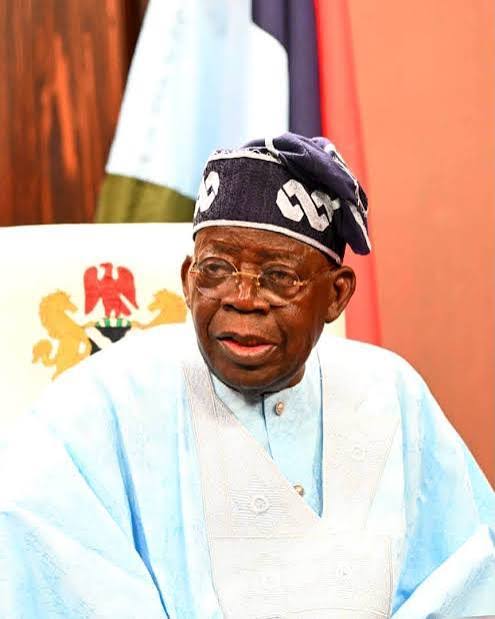
President Tinubu removed the fuel subsidy on his first day in office. The decision was framed as an act of fiscal courage, a willingness to take difficult decisions that previous administrations had avoided. It was, in some respects, exactly that. The subsidy was reportedly corrupt, regressive, and unsustainable.
But the courage of that decision has been squandered by the recklessness that followed. If the purpose of removing the subsidy was to reduce the need to borrow, then the borrowing should have fallen. It did not. It rose to levels unprecedented in Nigeria’s history. The savings were absorbed, not by infrastructure, not by education, not by healthcare, but by the escalating cost of servicing the debt that the borrowing itself created.
Nigeria is now trapped in a cycle where it borrows to survive and survives only to borrow more. The men and women who will pay for this, through higher taxes, reduced public services, and a currency that buys less every year, are not in the rooms where these loans are signed. They are the ones Atiku described as “hungry Nigerians” being asked to sacrifice more, while the borrowing continues unabated.
The Searchlight will keep asking the only question that matters: where is the money going?


Leave a comment