By Matthews Otalike, The Searchlight Investigative Correspondent / October 8, 2026
There is a number that should terrify every Nigerian, and it is not ₦159.28 trillion, the country’s total public debt as of December 2025. It is 53.7 per cent, the share of federal government revenue that the International Monetary Fund projects will be consumed by interest payments alone in 2026.
This is not a projection buried in an obscure technical annex. It is the IMF’s latest country assessment, and it lays bare the central contradiction of Nigeria’s fiscal strategy: the more the government borrows, the less it can afford to do anything else.
From 40.8% to 53.7%: The Trajectory
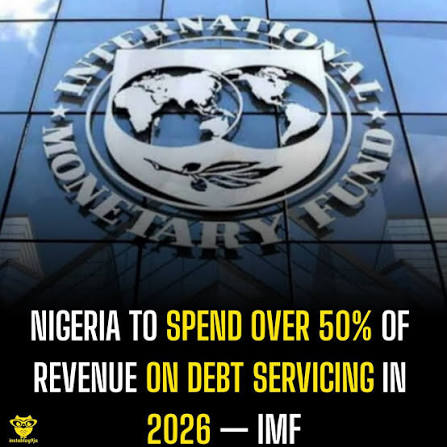
The debt-service-to-revenue ratio has climbed relentlessly under President Tinubu. In 2024, it stood at 40.8 per cent. By 2025, it had risen to 53.2 per cent. The IMF now projects 53.7 per cent for 2026, easing only marginally to 52.4 per cent in 2027. These are annual averages. The quarterly figures are worse.
According to the Nigerian Economic Summit Group (NESG), the debt-service-to-revenue ratio averaged approximately 113 per cent in Q1 2025, structurally far above the World Bank’s recommended ceiling of 22.5 per cent. In January 2025 alone, debt service hit ₦696 billion against ₦483 billion in retained revenue, translating to a 144% debt-service ratio. The government was borrowing simply to service the debt it had already incurred.
By Q1 2026, the Federal Government spent ₦3.14 trillion on domestic debt servicing alone, a 20.3 per cent increase from ₦2.61 trillion in the same period of 2025. The 2026 budget allocated ₦15.91 trillion to debt servicing against a projected ₦34.33 trillion in revenue, a ratio of approximately 46.3 per cent on paper. But the budget’s revenue targets have consistently been missed: in Q1 2026, the government recorded a ₦2.24 trillion tax revenue shortfall, generating only ₦7.44 trillion against a target of ₦9.68 trillion.
If actual 2026 revenue lands between ₦20–25 trillion instead of the optimistic ₦33.39 trillion, the debt-service ratio could climb back into the 90–120% range, meaning the government would likely need to borrow just to service existing debt.
The IMF’s Warning: “Little Room” for Anything Else
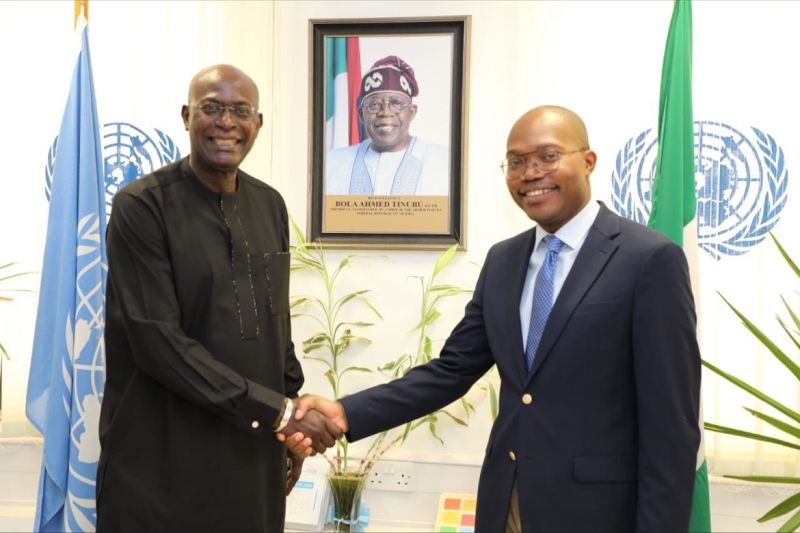
Christian Ebeke, the IMF’s resident representative for Nigeria, was blunt in his assessment on ARISE Television: “When you have more than 50 percent of your tax collection devoted to repaying interest on your federal government debt, it leaves you very little room to actually pay for health, education, cash transfer, including security”.
This is not an abstract concern. Every naira that goes to a bondholder is a naira that does not go to a doctor’s salary, a classroom, or a road. The IMF itself classifies Nigeria’s overall debt level as “statistically sustainable”, the debt-to-GDP ratio sits in the mid-30 percent range, well below the high-risk threshold. But sustainability on paper is meaningless when liquidity is the binding constraint. As the IMF’s Ebeke put it, “the real threat lies in the high interest-to-revenue ratio rather than the total debt stock”.
The Paradox of the Subsidy Savings
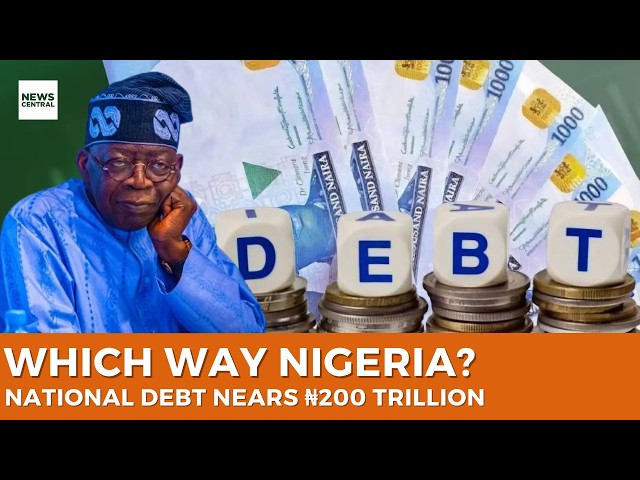
The most damning aspect of this crisis is that it was entirely predictable, and was predicted. When President Tinubu removed the fuel subsidy on his first day in office, the savings were supposed to reduce the need to borrow. Instead, as Finance Minister Taiwo Oyedele admitted in July 2026, those savings have been “largely absorbed by higher debt-servicing costs and increased government spending”.
The government removed the subsidy to save money. It is now spending more on debt service than it ever spent on the subsidy. The subsidy was corrupt and regressive, but at least it kept petrol affordable for ordinary Nigerians. The debt service does nothing for them.
The NESG projects that Nigeria’s debt-to-revenue ratio for 2025 could range from 90% to 130%. This is not fiscal management. It is a debt trap in slow motion, a cycle where borrowing to fund the budget increases the debt stock, which increases debt service, which consumes more revenue, which necessitates more borrowing.
What Is Being Sacrificed
The 2026 budget stands at ₦58.47 trillion, with debt servicing (₦15.91tn) consuming more than recurrent non-debt spending (₦15.25tn) and capital expenditure (₦23.21tn). The budget deficit is projected at ₦23.85 trillion, approximately 4.28% of GDP. Even under the government’s own optimistic revenue assumptions, nearly half of all revenue goes to creditors before a single teacher is paid or a single clinic is stocked.
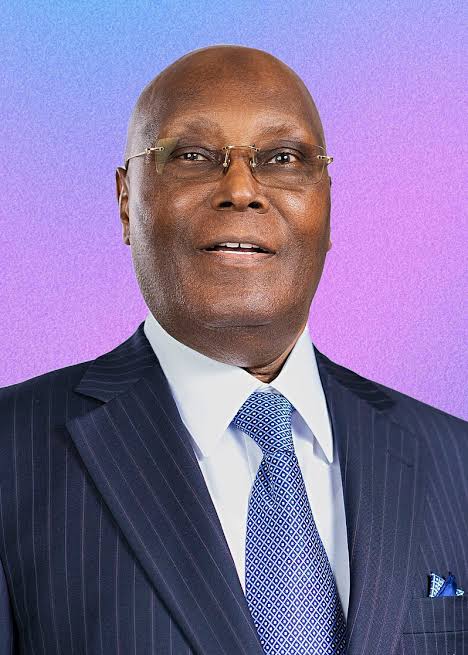
Atiku Abubakar, in a September 2026 statement, captured the absurdity: “You cannot collect more, earn more and still borrow more—while asking hungry Nigerians to sacrifice more”. He noted that credit to government grew by 43 per cent between 2025 and 2026, while credit to the private sector grew by just 9.6 per cent—government borrowing expanding 4.5 times faster than lending to businesses. The government is crowding out the very private sector that must create jobs if Nigeria’s unemployment crisis is ever to be addressed.
A Structural Problem, Not a Cyclical One
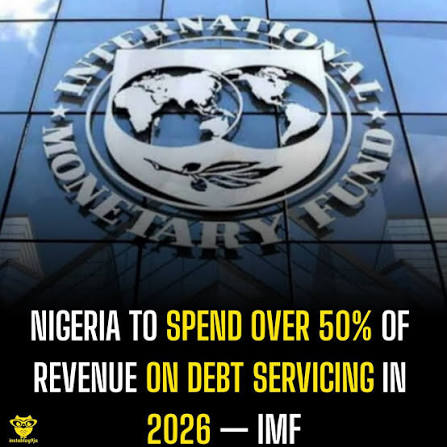
The IMF has emphasized that Nigeria’s tax reforms, if successfully implemented, are critical to boosting revenue and reducing the debt-service burden. This is true but insufficient. Even with improved revenue, the debt stock continues to grow: it rose from ₦152.4 trillion in June 2025 to ₦166.79 trillion in June 2026, a ₦14.39 trillion increase in a single year, driven largely by domestic borrowing.
Nigeria is borrowing at domestic rates that have risen to as high as 24 per cent, according to the Finance Minister’s own adviser. The government is paying double-digit interest to borrow money it cannot afford, and then using a majority of its revenue to service that debt. This is not a strategy. It is a spiral.
The Question That Demands an Answer
President Tinubu removed the fuel subsidy and was praised for taking a difficult decision. That decision created a windfall of savings. Where did the savings go? The Finance Minister’s own answer, that they were “absorbed by higher debt-servicing costs and increased government spending”, is an admission that the fiscal promise of subsidy removal has been broken.
The debt-service-to-revenue ratio is not a technical indicator. It is a measure of how much of Nigeria’s future has already been mortgaged. At 53.7 per cent, more than half of every naira the government collects goes to creditors. At the Q1 2025 average of 113 per cent, the government was borrowing more than it earned just to stay current on its obligations.


Leave a comment