By Matthews Otalike, The Searchlight Correspondent / October 7, 2026
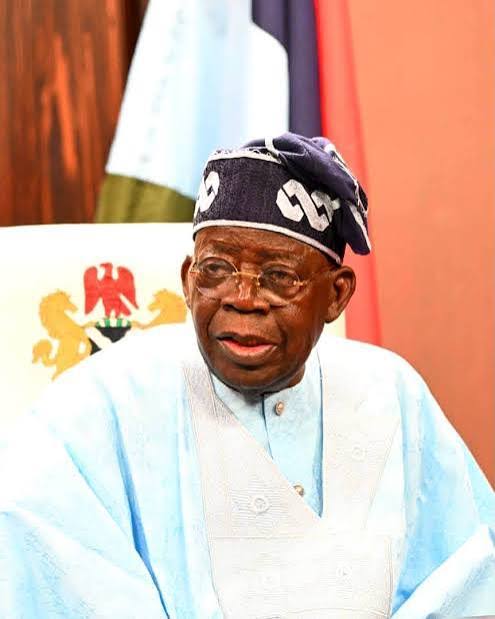
The January 2027 presidential election will not be a routine contest between parties. It will be a referendum on whether prebendalism can be interrupted, or whether it has become so entrenched that no electoral outcome can dislodge it. The Economist has projected that President Tinubu may win despite public discontent, citing “complicated electoral dynamics,” incumbency advantage, a divided opposition, religion, and historically low voter turnout. The magazine’s analysis is not a prediction of what Nigerians want; it is a description of the structural advantages that prebendalism confers on incumbents. The question for Nigerians is whether those advantages can be overcome.
The Structural Advantages of Incumbency
The Economist identifies several factors that work in Tinubu’s favour. First, “incumbents, with access to the ruling-party machinery and plentiful cash to dole out goodies, have tended to have an advantage in recent Nigerian elections”. Second, the opposition is fragmented: Atiku Abubakar and Peter Obi are running as flag-bearers of the African Democratic Congress (ADC) and the Nigeria Democratic Congress (NDC) respectively, and their failure to form a joint ticket “could prevent opposition votes from being consolidated behind a single candidate”. Third, religion may play a role: Tinubu and Vice-President Kashim Shettima, both Muslims, resonate with the electorate in northern Nigeria, which are alleged to hold the most votes. Fourth, voter turnout is historically low, and many voters may not translate their dissatisfaction into votes against the incumbent.
These are not merely academic observations. They describe a political environment in which the incumbent can win without winning popular support, a scenario that is entirely consistent with prebendal logic. In a prebendal system, elections are not mechanisms for expressing popular will; they are mechanisms for legitimizing the capture of state resources. The incumbent’s advantage is not a function of popularity but of control over the apparatus that distributes those resources.
The Fragmentation of Opposition

The fragmentation of the opposition is the single most significant obstacle to defeating prebendalism at the polls. The Economist notes that Atiku and Obi “had previously been allies under the PDP” and that their failure to unite “means the anti-APC vote is not coalesced into a single vote”. TheCable Index has shown that a unification of opposition votes in the 2023 elections could have defeated Tinubu. Yet as of October 2026, no alliance or joint ticket has been reached.
The reasons for this fragmentation are complex, personal ambition, ideological differences, regional and ethnic calculations, but the consequence is clear: the prebendal system thrives on division. As Dr. Usman Bugaje has warned, “If this election of 2027 fails, we don’t know what’s going to happen to this country… It is like crossing a very difficult bridge that is tangled. If that bridge does not become stable and you cross it, that can be the end of this country”. Bugaje, a leading northern politician, has urged citizens to mobilize ahead of 2027 and has warned that blocking the popular will “is basically destroying sovereignty” and the nation-state itself.
The Electoral Infrastructure Problem

The structural obstacles to a free and fair election are formidable. SERAP has sued INEC over the alleged diversion of ₦800 billion in FAAC funds for campaign activities, funds allegedly deducted monthly from APC governors’ allocations into a dedicated fund “purportedly meant to support President Bola Tinubu’s re-election bid”. The suit argues that “the allegations of diversion or opaque use of public funds pose a grave risk to the integrity of the 2027 general elections”.
Beyond campaign finance, there is the broader problem of INEC’s capacity and independence. The commission has failed to regulate political finance and ensure that illicit funds stay out of the electoral process. The Senate’s rejection of electronic transmission of results in the Electoral Act Amendment Bill 2026, described by activists as “a calculated move to facilitate” electoral manipulation, is another warning sign. Where prebendal incentives are powerful, ambiguity becomes valuable; verifiable and auditable transmission of results narrows the discretionary space within which electoral outcomes may be negotiated.
The Agency Chiefs Problem
A new and particularly disturbing development is the reported involvement of serving heads of federal government agencies and parastatals in political mobilization for Tinubu’s re-election. CISLAC and HURIWA have called for action against agency chiefs allegedly involved in the “Forum of Chief Executive Officers of Federal Government Agencies and Parastatals,” which reportedly pledged to mobilize 10 million votes for Tinubu. CISLAC’s executive director, Auwal Musa Rafsanjani, has argued that “the abuse of entrusted public authority, government programmes, institutional influence and official resources for partisan advantage” constitutes political corruption. The organization has cited Section 99(2) of the Electoral Act 2026, which prohibits the use of state apparatus to advantage or disadvantage a political party or candidate.
This is prebendalism in its purest form: the conversion of public institutions into instruments of partisan political advantage. If agency chiefs can be mobilized to campaign for the incumbent, using government resources, staff time, and institutional networks, then the line between the state and the ruling party has effectively disappeared.
The Path to a Referendum
For the 2027 election to function as a referendum on prebendalism, several conditions must be met. First, the opposition must find a way to unite, not necessarily behind a single candidate, but behind a common platform of electoral reform and accountability. Second, civil society must move beyond documentation to mobilization, building the kind of sustained pressure that can deter electoral manipulation. Third, the international community must be engaged, not to intervene, but to monitor and to make clear that the legitimacy of the outcome will be judged by its credibility.
None of these conditions is guaranteed. The prebendal system has every incentive to prevent them from being met. But the alternative, another election that legitimizes the capture of state resources, another four years of governance as prebendal appropriation, is not acceptable. As Bugaje has said, “We’re not here because we want to contest elections. No. We’re here because we want to salvage, want to salvage our country”.
Conclusion: Crossing the Bridge
The 2027 election is not just another electoral cycle. It is the bridge that Bugaje describes as tangled, difficult, and potentially the end of the country if it collapses. Nigerians must cross it. But they must cross it with their eyes open, understanding that the prebendal system will use every tool at its disposal, money, religion, ethnicity, incumbency, and institutional capture, to ensure that the bridge leads where it has always led. The searchlight must remain fixed on the election itself, on the forces that seek to distort it, and on the possibility that this time, the people might refuse to be divided, refuse to be bought, and refuse to be governed by a system that treats their country as a prebend to be exploited.


Leave a comment