By Matthews Otalike, The Searchlight Correspondent / October 6, 2026
As Nigeria inches toward the January 2027 presidential election, President Bola Ahmed Tinubu has embarked on a flurry of diplomatic engagements with Western capitals, culminating in a series of bilateral agreements with the United Kingdom, France, and the United States.
These deals, ranging from port infrastructure financing to military cooperation and mineral extraction, come at a moment of profound domestic disenchantment. A majority of Nigerians report dissatisfaction with Tinubu’s leadership amid a cost-of-living crisis, rising insecurity, and a perception of governance disconnected from the people. The timing invites a critical question: are these agreements genuine instruments of development, or are they strategic concessions designed to secure foreign backing for Tinubu’s re-election as a safeguard for the deals themselves?
The Deals: A Snapshot
United Kingdom. During a state visit in March 2026, Tinubu and UK Prime Minister Keir Starmer presided over the signing of a £746 million export finance agreement to refurbish two major ports in Lagos. The centre-piece was a record-breaking £70 million contract for British Steel to supply 120,000 tonnes of steel, described as the company’s largest ever export backed by UK Export Finance. A separate agreement was also struck to ease the removal of migrants with no right to remain in the UK.
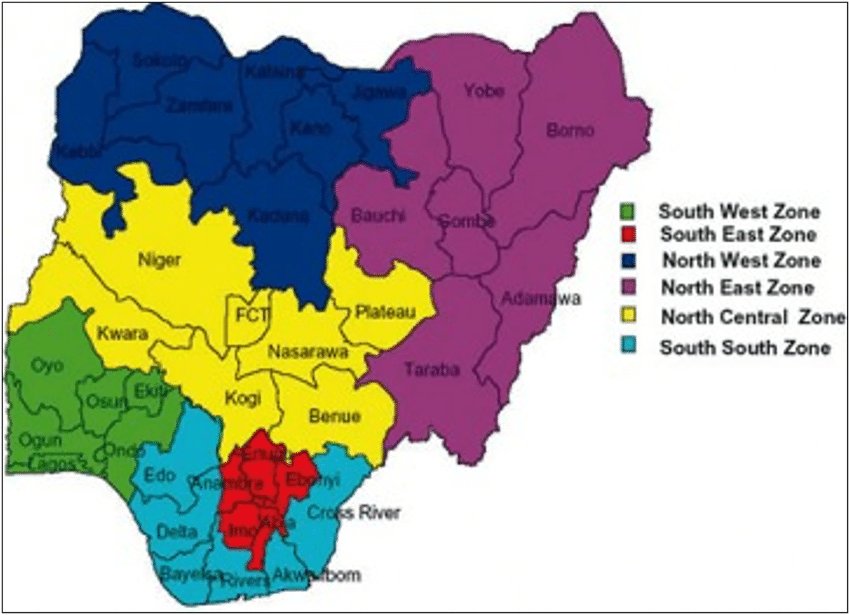
France. In September 2026, Macron hosted Tinubu for a private dinner at the Élysée Palace during Tinubu’s extended European leave. This followed a 2024 state visit that produced letters of intent worth over €300 million for infrastructure, healthcare, transport, and renewable energy across Nigeria’s six geopolitical zones. In March 2026, Tinubu announced that France had agreed to collaborate on military equipment and training to support Nigeria’s fight against terrorism. In October 2026, two further agreements were signed in France, with claims that they would create 50,000 jobs and unlock $7 billion in investment.
United States. The US engagement is the most contentious. A $700 million minerals deal was signed in September 2026, with Tinubu welcoming it as a boost to American investment in Nigeria’s mining sector. However, a US-based firm alleged that Tinubu’s administration offered the mining cooperation deal as part of efforts to secure a meeting with President Donald Trump. The signing at the UN was reportedly cancelled, and questions remain about whether the deal Tinubu signed is the same one Ghana rejected over certain concerns. Atiku Abubakar, the ADC presidential candidate, has demanded full publication of the deal’s details, arguing that “Nigerians should not have to guess”.
The Quid Pro Quo Question
The pattern is unmistakable. Tinubu’s diplomatic overtures are concentrated in the run-up to an election he is expected to contest, and they involve the very Western powers whose political and economic interests are embedded in the agreements. The suggestion that these deals are designed to secure foreign support for his re-election is not conspiracy theorizing; it is a rational inference from the evidence.
First, the timing is telling. The UK state visit, the Macron dinner, and the US minerals deal all occurred within the 18-month window before the January 2027 election. Tinubu’s three-week European leave in August-September 2026, during which he met Macron privately and reportedly sought a Trump meeting, was framed by his aides as a “working vacation,” but its proximity to the election cycle cannot be ignored.
Second, the nature of the deals invites reciprocity. The £746 million ports deal is structured through UK Export Finance, meaning British taxpayers are underwriting Nigerian infrastructure. The £70 million steel contract is British Steel’s largest ever export, a direct boost to a strategically important UK industry. The migrant returns agreement addresses a domestic political priority for the UK government. In France, the military cooperation deal positions Nigeria as a partner in the Gulf of Guinea, a region where France’s influence has been shrinking. In the US, the minerals deal, reportedly offered in exchange for a Trump meeting, suggests a transactional logic that prioritizes access over substance.
Third, the discourse surrounding these deals is saturated with re-election framing. A pro-Tinubu media group described the UK visit as reflecting “Nigeria’s new global top rating” under Tinubu, while a US firm accused European allies of mounting an operation to support his continued stay in office ahead of the 2027 election. The Economist published an article titled “Nigerians Dislike Their President, But May Re-elect Him Anyway,” which was allegedly used as part of a European operation to promote his re-election. Whether or not one accepts the allegation in full, the perception that foreign capitals have a stake in Tinubu’s continuity is now part of Nigeria’s political discourse.
The “Presidency” Speaks: Communication as Bunker
Compounding the democratic deficit is Tinubu’s communication style. Peter Obi, the NDC presidential candidate, has observed that Tinubu “no longer talks directly to Nigerians” and has “gone into Aso Rock and turned it into a bunker”. Statements are issued by “the Presidency” or delegated to aides; the President himself rarely addresses the nation directly on matters of urgent public concern. This is not merely a stylistic preference. It is a governance choice with profound implications.
When a leader does not speak directly to citizens, accountability is diluted. The “Presidency” becomes an abstraction, a shield behind which the individual officeholder can retreat. Nigerians cannot question a statement attributed to “the Presidency” in the same way they can question a president who stands before them and answers for his decisions. The bunker mentality that Obi describes is the logical endpoint of prebendal governance: the leader is insulated from the people, accountable only to the networks of patronage that sustain him.
This communication style also undermines the democratic legitimacy of the foreign deals. When Tinubu signs a £746 million agreement or a $700 million minerals deal, Nigerians deserve to hear from him directly: What are the terms? What are the safeguards? What does Nigeria give up? Instead, they receive press releases from aides and carefully curated statements from “the Presidency.” The opacity breeds suspicion—and in the context of prebendal politics, that suspicion is well-founded.
Foreign Support as Safeguard: The Prebendal Logic
The question of whether the deals are a strategy to secure foreign support for re-election must be understood within the prebendal logic that has long characterized Nigerian governance. In a prebendal system, political office is a gateway to resources; the incumbent’s primary imperative is to retain access to those resources. Foreign deals serve a dual purpose: they provide tangible benefits that can be presented as evidence of competence, and they create relationships with external actors who have a stake in the incumbent’s continuity.
If Tinubu loses the 2027 election, what happens to the £746 million ports deal? The $700 million minerals agreement? The French military cooperation? The incoming administration could review, renegotiate, or cancel them. The foreign partners, British Steel, French defence contractors, American mining firms, have an interest in seeing the deals through. This creates a structural incentive for those partners to prefer continuity, to view a Tinubu victory as the safest outcome for their investments.
This is not to suggest that foreign governments openly interfere in Nigerian elections, though the Defence Minister’s accusation that Atiku attempted to “internationalize” the contest by engaging a US lobbying firm shows that the stakes are understood on all sides. Rather, it is to observe that the deals create a web of mutual dependency in which the incumbent’s re-election becomes aligned with external economic interests. That alignment may not be explicit, but it is real.
The Developmental Question: Deals or Distractions?
The critical question is whether these deals serve Nigeria’s development or merely serve the incumbent’s political survival. The evidence is mixed. On one hand, the ports deal addresses genuine infrastructure deficits; the military cooperation responds to a real security crisis; the minerals deal could unlock investment in a neglected sector. On the other hand, the terms of these deals are opaque, the benefits are deferred, and the political timing is suspect.
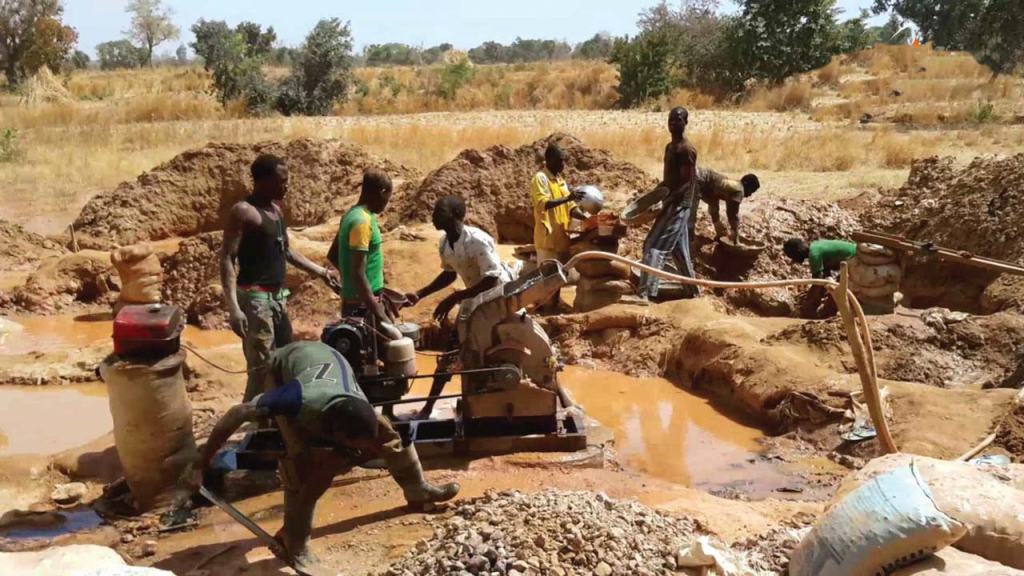
The US minerals deal is instructive. Atiku has asked whether it is the same deal Ghana rejected over certain concerns, a question that has not been answered. The $700 million figure sounds impressive, but without public disclosure of the terms, Nigerians cannot assess whether they are getting a fair deal or surrendering strategic resources for short-term political gain. Similarly, the migrant returns agreement with the UK raises human rights concerns that have not been publicly debated.
Conclusion: The Searchlight Must Stay On
The deals with the UK, France, and the US are not inherently illegitimate. Nations sign agreements; leaders travel; interests converge. But in a prebendal system, where public office is a prebend to be exploited and where the incumbent’s survival depends on retaining access to resources, the line between governance and self-preservation blurs. The timing of these deals, the reciprocity they invite, and the opacity surrounding their terms demand scrutiny.
Nigerians must ask: Are these deals for Nigeria, or for Tinubu’s re-election? Are the terms fair, or are they concessions dressed up as diplomacy? And why does the President not speak directly to the people whose resources are being committed?
The searchlight must remain fixed on the deals themselves, on the foreign partners who stand to benefit from continuity, and on the communication bunker that shields the President from accountability. In a democracy, the people have a right to know what their government is signing in their name, and why it is signing it now.


Leave a comment