By Matthews Otalike, The Searchlight Correspondent/ October 5, 2026
The Deal That Shook Abuja and Washington
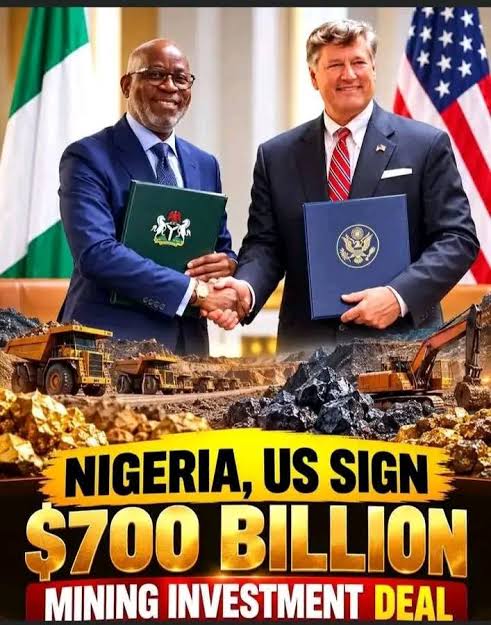
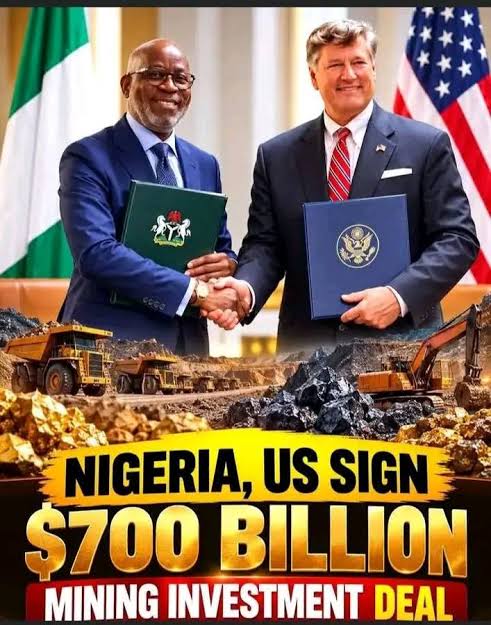
On September 23, 2026, on the sidelines of the 81st United Nations General Assembly in New York, Nigeria’s Minister of Solid Minerals Development, Dele Alake, and US Deputy Secretary of State, Christopher Landau, signed and exchanged a “Critical Minerals Framework Agreement”.
The deal was immediately projected in Nigerian media as a “$700 billion” pact, a figure that has since become the subject of intense controversy, misinformation, and legitimate concern. The Searchlight can confirm that the $700 billion figure is not a US investment commitment. It is the Nigerian government’s own estimate of the total value of the country’s mineral resources. The actual agreement is a non-legally binding Memorandum of Understanding (MoU) that commits no money, transfers no ownership, and has no specific projects attached.
Yet beneath the headline number lies a framework with profound long-term implications for Nigeria’s economy, sovereignty, and resource governance. This article dissects what is known, what is hidden, and what Nigerians must demand before the ink dries on implementation.
What the Framework Actually Contains
According to multiple official statements and reports, the framework covers five broad areas of cooperation:
1. Geological data and exploration: Sharing of geospatial and mineral data to identify commercially viable deposits.
2. Mineral development and processing: Joint efforts to move beyond raw export towards domestic value addition.
3. Infrastructure: Development of roads, power, and logistics to support mining operations.
4. Technical capacity: Training, skills transfer, and institutional strengthening.
5. Business-to-business transactions: Using government-to-government ties as a foundation for US private investment across Nigeria’s mineral value chain.
Solid Minerals Minister Alake framed the agreement as a shift “from Nigeria’s traditional role as an exporter of raw minerals towards greater domestic value addition”. US Deputy Secretary Landau called it a signal that “the United States and Nigeria are partners”.
Critically, however, the full text of the framework has not been published. The Minister of Industry, Trade and Investment, Dr Jumoke Oduwole, confirmed that it is an MoU that is “not legally binding” and that “it’s not a specifically detailed provision at this time”. This means the agreement is a statement of intent, not an enforceable contract. Its real impact will depend entirely on subsequent implementation agreements, none of which have been disclosed.
The Minerals in Question: What Is at Stake
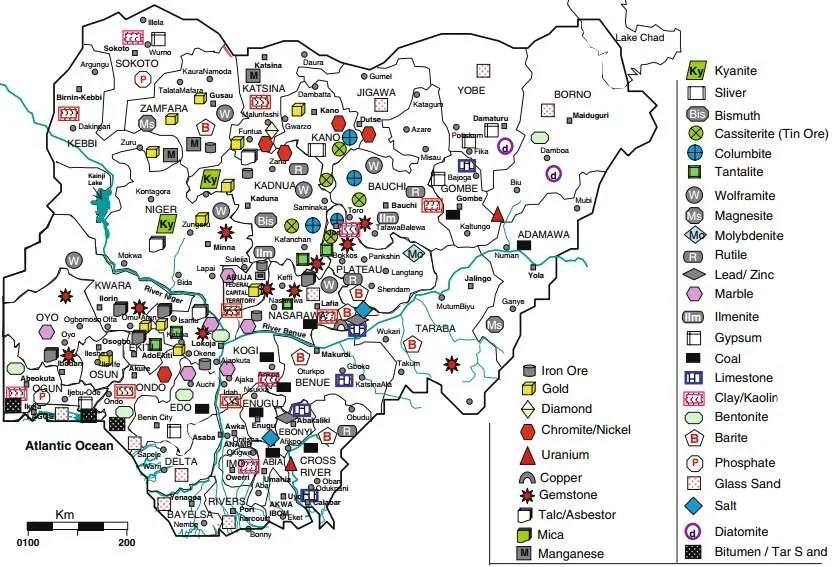
Nigeria is estimated to hold commercially viable deposits of at least 26 of the 60 critical minerals the United States is actively seeking to secure globally. The framework explicitly targets what the US considers “critical minerals” for its defence, technology, and energy transition industries.
The specific minerals identified in reporting and government statements include:
· Lithium – Essential for electric vehicle batteries and grid storage.
· Tin and Tantalum – Used in electronics and capacitors.
· Niobium – Critical for high-strength steel alloys and superconductors.
· Gold – A traditional store of value and export earner.
· Rare earth elements – Vital for magnets, lasers, and defence systems.
· Uranium – For nuclear energy and weapons.
· Cobalt – For battery cathodes and superalloys.
Nigeria’s lithium, tin, tantalum, and niobium resources are increasingly important to global supply chains for batteries, electronics, renewable energy, and defence. The US is “proactively attempting to diversify its access” to these minerals, which are indispensable for electric vehicles, defence technology, and green energy infrastructure.
In short, Nigeria is being courted not out of altruism, but because it holds the raw materials that underpin American industrial and military supremacy.
Duration: The Missing Clause
The Searchlight can report that the duration of the framework is not publicly specified. This is not an oversight; it is a deliberate omission. The International Trade Union Confederation, (ITUC-Africa), in a stinging statement, noted that “public information on the deal is scanty, with shrouds over specific projects, financing commitments, mineral volumes, pricing, offtake provisions, duration, governance or enforceable domestic beneficiation obligations”.
An agreement of this magnitude, affecting the destiny of a nation’s non-renewable resources, must have a defined lifespan. The absence of a disclosed duration raises a fundamental question: is this a short-term technical cooperation arrangement, or a de facto long-term concession regime? Nigerians have a right to know.
The Advantages: Potential, Not Guarantee
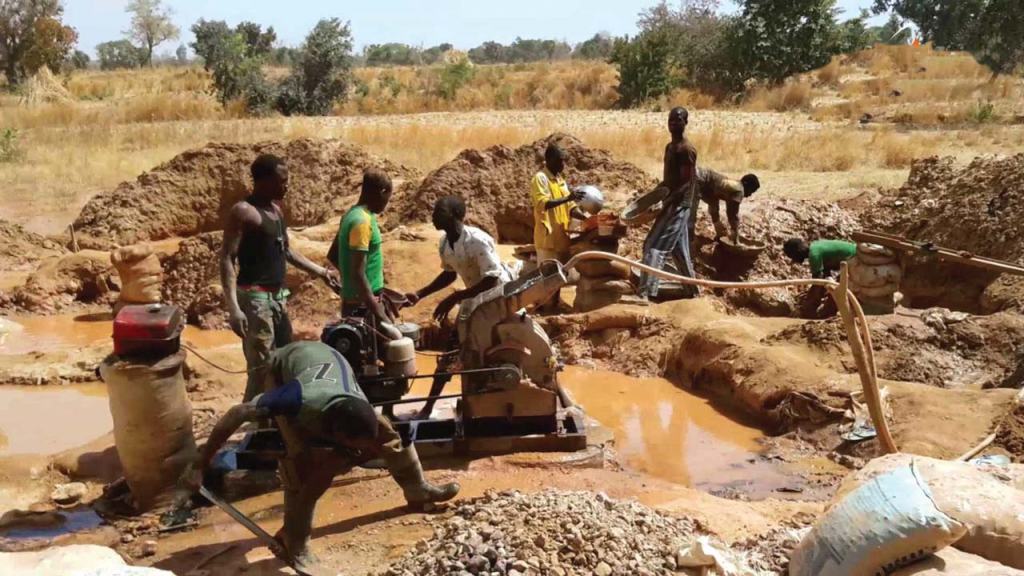
The Nigerian government has touted several benefits. These are potential advantages, contingent on implementation:
· Economic diversification – Reducing dependence on crude oil, which has been the mainstay of Nigeria’s foreign exchange earnings for decades.
· Local processing and jobs – Minister Alake repeatedly stated that Nigeria “cannot remain a source of raw materials while others capture most of the value” and wants “more local processing, quality jobs, stronger skills and greater opportunities for Nigerian businesses”.
· Infrastructure and skills – The framework promises cooperation on infrastructure and technical capacity building.
· Access to US capital and expertise – US investors could bring financing, technology, and market access that Nigeria’s underdeveloped mining sector currently lacks.
· Youth employment – The government argues that formal mining operations could provide jobs for youths in communities affected by insecurity, reducing restiveness.
These are worthy objectives. But they are aspirations, not obligations. The framework is non-binding. There are no enforceable commitments on local content, technology transfer, or job creation. Without binding provisions, these “advantages” may evaporate once US companies gain access to the minerals.
The Critical Concerns: What Is Being Hidden
The Searchlight has identified several serious red flags that must be addressed before any implementation proceeds.
1. The $700bn Figure Is a Propaganda Tool
The persistent use of “$700bn” in headlines has created a false impression that the US is investing $700 billion in Nigeria. It is not. The figure is the Nigerian government’s own estimate of mineral wealth. As ITUC-Africa stated unequivocally, “The widely reported US$700 billion is an estimate of Nigeria’s mineral resources, not a US$700 billion investment commitment by the United States”. Atiku Abubakar’s spokesman, Paul Ibe, echoed this, demanding that the government “publish the agreement and explain the specific obligations and benefits”. The government’s own trade minister has confirmed there is no $700bn on the table. This misleading framing undermines public trust and suggests a deliberate attempt to manufacture consent.
2. No Parliamentary Scrutiny

The ITUC-Africa questioned “what prior discussion and scrutiny has taken place in the National Assembly, including the Senate, before advancement of this framework”. Section 12 of Nigeria’s Constitution provides that a treaty between Nigeria and another country cannot have the force of law unless enacted by the National Assembly. While an MoU may not require ratification, any subsequent implementation agreements involving fiscal concessions, guarantees, or changes to Nigerian law would. The National Assembly is “not a spectator”. Senator Shehu Sani has called for parliamentary scrutiny, noting that the deal has “long-term implications”.
3. Risk of Replacing Oil Dependence with Mineral Dependence
ITUC-Africa warned that “Nigeria cannot replace dependence on crude oil exports with dependence on exports of lithium, rare earths or other unprocessed minerals. Changing the commodity without changing the structure of extraction is not economic transformation”. This is the core structural risk. If the framework facilitates the export of raw minerals under the guise of “cooperation,” Nigeria will simply swap one extractive dependency for another, with the same consequences: revenue leakage, environmental degradation, and limited industrial spillover.
4. Missing Safeguards on Beneficiation, Local Content, and Taxation

The ITUC-Africa called for “enforceable safeguards covering domestic beneficiation, local content, technology transfer, decent work, taxation, public revenues, environmental protection and community benefits”. None of these are known to be in the current framework. Paul Ibe demanded clarification on “whether minerals extracted under the agreement would be processed in Nigeria or exported as raw materials” and “what binding provisions had been included to guarantee Nigerian jobs, local content, technology transfer and value addition”. These questions remain unanswered.
5. Geological Data and Preferential Access
Ibe asked whether “American companies would receive preferential access to Nigeria’s mineral resources and what arrangements had been made concerning geological data generated from exploration”. Geological data is a strategic national asset. If US companies gain exclusive or preferential access to data generated under the framework, Nigeria could lose its ability to negotiate future deals from a position of strength. The framework’s silence on data ownership is troubling.
6. Security and Community Impact
Senator Sani urged the government to give “adequate consideration to the security challenges in communities hosting strategic minerals, including lithium, gold, rare earth minerals and uranium”. Mining in Nigeria’s volatile regions, particularly the North-West and North-Central, could exacerbate local conflicts over land, water, and revenue. The framework makes no mention of community consent, compensation, or environmental rehabilitation. Without these safeguards, the deal risks replicating the social and ecological harms of the oil industry in the Niger Delta.
7. Fiscal Secrecy
Ibe demanded “details of any tax concessions, guarantees or preferential fiscal arrangements contained in the deal”. In resource-rich countries, fiscal terms are often negotiated in secret and later become the source of bitter disputes. Nigeria’s experience with production-sharing contracts in the oil sector should be a cautionary tale. The public has a right to know what tax regime will apply to US mining companies operating under this framework.
The Way Forward: What Nigerians Must Demand
The Searchlight calls on the Federal Government to immediately:
1. Publish the full framework – including all annexes, side letters, and implementation agreements.
2. Disclose the duration – and any renewal or termination clauses.
3. Submit the framework to the National Assembly for scrutiny and, where necessary, ratification under Section 12.
4. Establish enforceable domestic beneficiation obligations – with penalties for non-compliance.
5. Guarantee local content and technology transfer – with binding targets and timelines.
6. Protect geological data sovereignty – ensuring Nigeria retains ownership and control.
7. Conduct public hearings – in mining communities and civil society, before any implementation begins.
8. Clarify the fiscal regime – including taxes, royalties, and any concessions.
9. Commit to environmental and community safeguards – aligned with the African Union’s Africa Mining Vision.
Conclusion: A Deal for Nigerians, or a Deal for Washington?
The Nigeria-US Critical Minerals Framework is not inherently good or bad. It is a document of intent—vague, non-binding, and shrouded in secrecy. Its value will be determined entirely by the terms of implementation. If it leads to genuine local processing, skills transfer, and transparent revenue sharing, it could be a catalyst for industrialization. If it becomes a vehicle for raw mineral extraction under preferential terms, it will be another chapter in Africa’s long history of resource plunder.
The $700 billion figure is a distraction. The real question is not how much Nigeria’s minerals are worth in the ground, but who will control them, who will benefit from them, and who will bear the costs. Nigerians deserve answers. The Searchlight will continue to demand them.


Leave a comment