By Matthews Otalike, The Searchlight Correspondent | October 4, 2026
Nigeria plans to spend $11.6 billion servicing debt in 2026, approximately half of projected revenue. Meanwhile, the 2025-2027 Medium-Term Expenditure Framework shows that three-year debt servicing (₦50.39 trillion) will exceed capital expenditure (₦48.93 trillion) . By this, one can right posit that debt service is eating development.
The 2026 Debt Service
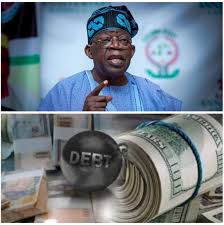
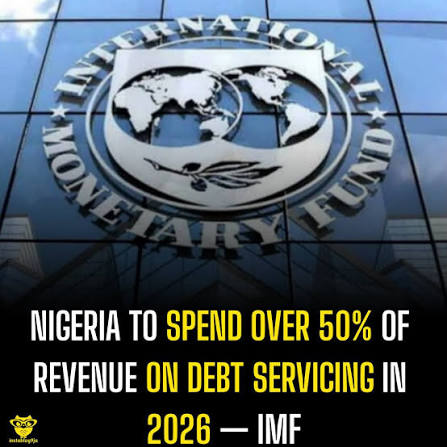
President Tinubu disclosed in May 2026 that Nigeria will spend approximately $11.6 billion on debt servicing in 2026, representing about half of projected revenue. In Q2 2026, Nigeria’s external debt service was $870.73 million, with interest payments accounting for 56.5 percent:
– Principal repayment: $339.75 million
– Interest payment: $491.73 million
– Other charges: $39.25 million
Interest payments exceeded principal repayment by approximately $151.98 million.
Multilateral creditors received $404.22 million (the largest share), with the IDA receiving $204.86 million. Commercial creditors received $325.7 million, with Eurobond interest alone accounting for $217.44 million. Bilateral creditors received $140.81 million, with the Export-Import Bank of China accounting for $70.94 million of that.
The Three-Year Fiscal Framework
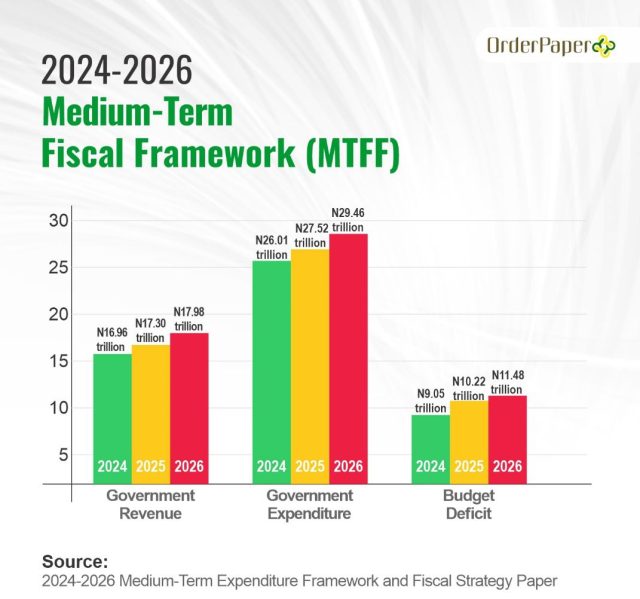
According to the 2025-2027 Medium-Term Expenditure Framework and Fiscal Strategy Paper:
– Total debt service 2025-2027: ₦50.39 trillion
– Total capital expenditure 2025-2027: ₦48.93 trillion
– Debt service exceeds capital expenditure by: ₦1.46 trillion
Annual comparison:
Year | Debt Service (₦tn) | Capital Expenditure (₦tn) | Debt as % of Budget |
2025 15.38 16.48 32.11%
2026 15.52 15.94 —
2027 19.49 16.51 37.2%
In 2027, debt service will consume 37.2 percent of total federal expenditure, while capital expenditure will account for just 31.51 percent.
From ₦8.56 trillion in 2023 to a projected ₦19.49 trillion in 2027, debt service will have grown by 127.7 percent in four years, while capital expenditure has grown slowly.
The New Borrowing Cycle
To bridge the fiscal gap, the Federal Government plans to borrow ₦31.24 trillion in 2025-2027:
– Domestic borrowing: ₦24.98 trillion
– Foreign borrowing: approximately ₦6.26 trillion
Projected budget deficits: ₦13.08 trillion (2025), ₦12.14 trillion (2026), ₦13.76 trillion (2027).
The MTEF/FSP document admits: “Fiscal space is constrained by rising debt service costs, crowding out critical investments in infrastructure, health, and education.”
The Subsidy Savings Contrast
The Finance Minister disclosed that between June 2023 and December 2025, the Federal Government spent ₦9.37 trillion on increased debt servicing costs, almost exactly what it spent on wage adjustments (₦9.39 trillion).
The Federal Government’s “savings” from subsidy removal (₦5.4 trillion) were less than 58 percent of its incremental debt servicing costs (₦9.37 trillion).
Nigeria is not reducing its debt. It is borrowing to service old debt, while interest costs devour the development budget. When the Federal Government spends ₦50.39 trillion on debt service and ₦48.93 trillion on capital expenditure over three years, the implication is that the state has chosen creditors over citizens.
A critical question has remained unanswered: What is the long-term fiscal impact of borrowing at 24 percent to replace subsidy savings? If the government borrows at 24 percent while the economy grows at 4 percent, the equation is mathematically unsustainable. Nigeria is trading its future sovereignty for today’s book-balancing.
On our part, The Searchlight demands:
1. Publication of the actual interest cost of incremental borrowing.
2. A debt sustainability stress test for 2027 and beyond.
3. A debt restructuring strategy, not more borrowing to pay old loans.
4. An honest national conversation about whether debt service or citizens’ welfare should come first.
The Searchlight is committed to investigative journalism, public accountability, and the relentless pursuit of truth. We hold power to account, without fear or favor.


Leave a comment