By Matthews Otalike, The Searchlight Correspondent | October 3, 2026
The Searchlight thought it appropriate to take a cursory look at Nigeria’s economy, 66 years since independence in the light of the claim by President Bola Tinubu in his independence day broadcast that Nigeria’s economy has turned the corner. Our analysis began on October 1st and the outcome of our study is still being presented.
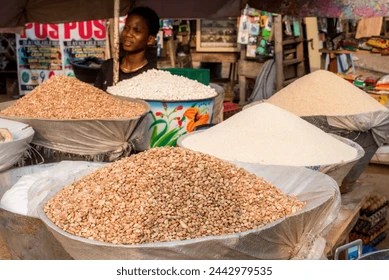
In July 2026, Nigeria’s food inflation rate rose to 20.31 percent, a 10-month high. In the same month, the headline inflation rate “fell” to 15.43 percent. The gap between these two numbers is the truth that Nigerian families are living: their food costs are rising far faster than the official inflation rate suggests. When the World Bank says 62 percent of Nigerians are poor, this is not a statistic. It is the daily arithmetic of millions of households.
The Food Inflation Trajectory
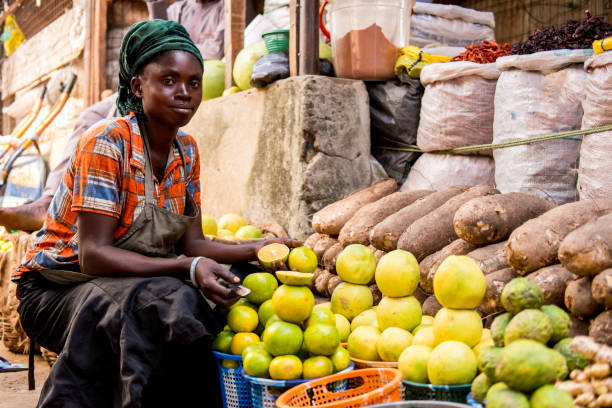
The following is the National Bureau of Statistics’ July 2026 CPI report:
– Headline inflation: 15.43 percent (down from 15.91 percent in June)
– Food inflation: 20.31 percent (up sharply from 17.52 percent in June)
– Month-on-month food inflation: 5.56 percent (up from 3.75 percent in June)
This is the highest food inflation rate since September 2025 (20.16 percent). The 2026 trajectory shows clear acceleration:
Month | Food Inflation (YoY)
January | 8.89%
February | 12.21%
March | 14.31%
April | 16.06%
May | 16.96%
June | 17.52%
July | 20.31%
Regional Disparities
Statistics show that food inflation is not evenly distributed. In July 2026, the states with the highest year-on-year food inflation were:
– Adamawa: 51.36%
– Katsina: 30.84%
– Zamfara: 30.65%
States with the lowest are:
– Borno: -0.31% (negative inflation)
– Nassarawa: 6.88%
– Kebbi: 12.50%
Month-on-month food inflation was highest in Adamawa (17.02%), Lagos (13.48%), and Borno (13.26%).
The items driving the increase, according to NBS are rice, onions, tomatoes, peppers, garri, plantains, beef, and eggs.
The Scale of Poverty
The World Bank 2026-2032 Country Partnership Framework data shows that:
– Approximately 139 million Nigerians live below the national poverty line.
– 79 million are poor or vulnerable to poverty.
– Over 86 million people have no access to electricity.
On its part, IMF reporting indicates that by the end of 2025, approximately 63 percent of Nigerians were living in poverty, up from roughly 40 percent in 2019. The World Bank’s estimate is 61 percent.
A 62 percent poverty rate means approximately 141 million Nigerians and that means nearly two out of every three Nigerians are poor.
The Arithmetic of Survival
The minimum wage was raised from ₦30,000 to ₦70,000. But as BusinessDay reported: “Many households can no longer afford three square meals a day, while some children have been forced to drop out of school because their parents can no longer afford school fees.”
Food inflation of 20.31 percent means that if a family spent ₦50,000 per month on food in July 2025, the same food basket cost ₦60,155 in July 2026. The minimum wage increased by ₦40,000 (from ₦30,000 to ₦70,000), but for a family with a higher food budget, say ₦80,000 per month, the increase in food costs alone was ₦16,248, consuming 41 percent of the wage increase before any other expense. Therefore, the equation does not balance.
The Searchlight’s Observation
When the president says the economy has “crossed the Red Sea,” he should visit a market in Adamawa, where food inflation is 51.36 percent. He should ask a mother how she feeds the same number of children with the same amount of money. He should look at the children who have dropped out of school because their parents can no longer pay their fees.
The president’s “Shared prosperity” is not a speech theme. It is an arithmetic problem. And right now, the arithmetic is: wage increase of ₦40,000, food inflation of 20.31 percent, and the poverty rate of 62 percent. The equation does not work.
The Searchlight demands that:
1. A food security emergency plan with price stabilization measures for staples.
2. A monthly poverty and cost-of-living dashboard published by NBS, disaggregated by state and household type.
3. An honest acknowledgment that minimum wage increases without inflation control are cosmetic.


Leave a comment