By Matthews Otalike, The Searchlight Correspondent | October 2, 2026
The Federal Government has published a detailed accounting of its ₦5.4 trillion share of subsidy savings. Two-thirds of the total ₦15.8 trillion in subsidy-related resources, which amounts to ₦10.4 trillion, flowed to the 36 states and 774 local governments, with no equivalent public audit. The Nigeria Employers’ Consultative Association (NECA) has publicly demanded that states account for the money. As at the time of this writing, no comprehensive disclosure has been made.
The Money Trail
On August 19, 2026, the Minister of Finance and Coordinating Minister of the Economy, Taiwo Oyedele, presented the government’s “Reform Scorecard” covering June 2023 to December 2025. He listed the breakdown:
– Total subsidy savings mobilized: ₦15.8 trillion
– Federal Government share: ₦5.4 trillion
– States and local governments share: ₦10.4 trillion (66 percent)
The Federal Government also disclosed the expenditure breakdown of its ₦20.4 trillion in “incremental resources” as:
– Wage adjustments: ₦9.39 trillion
– Increased debt servicing costs: ₦9.37 trillion
– Strategic infrastructure: ₦6.5 trillion
Wages and debt service together consumed ₦18.76 trillion, which is 92 percent of the Federal Government’s incremental resources, leaving just N6.5 trillion to Infrastructure.
The State-Level Unknown
The NECA Director-General Adewale-Smatt Oyerinde, speaking on Channels Television’s Sunrise Daily, made the demand directly: “States and local governments must account for the ₦10.4 trillion they received from subsidy removal.”
BudgIT’s “Nigeria Economic Reform” report provides partial clues:
– Total state revenues rose from ₦4.84 trillion in 2022 to ₦15.53 trillion in 2025, showing an increase of 220.76 percent.
– State internally generated revenue rose from ₦1.57 trillion to ₦4.15 trillion.
– Education spending as a share of total expenditure fell from 14.85 percent to 12.35 percent.
– Health spending as a share fell from 7.8 percent to 6.65 percent.
– Meanwhile, state borrowing rose from ₦1.24 trillion to ₦2.05 trillion, an increase of 65 percent.
The analysis shows that revenue tripled, education and health shares declined, yet borrowing increased by 65 percent.
What Some States Claim
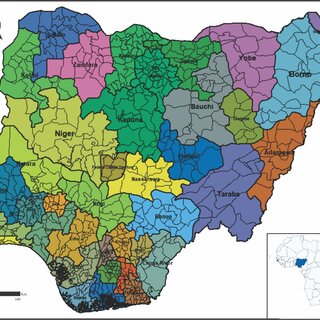
Punch’s reporting shows that some governors have linked higher FAAC allocations to road, bridge, health, education, and worker welfare projects.
– Lagos received ₦365.78 billion in FAAC allocations in H1 2026, the highest among states.
– Rivers received ₦295.99 billion.
– Delta, Akwa Ibom, and Bayelsa ranked high due to VAT, internally generated revenue, and oil derivative revenue.
– Adamawa, Gombe, Ekiti, and Ebonyi received the least.
But Punch also noted: “Residents in some states say the increased revenue has not translated into improved public services or relief from economic hardship.”
The Legal Challenge
In December 2025, the Socio-Economic Rights and Accountability Project (SERAP) sued the 36 state governors and FCT Minister Nyesom Wike for failing to account for ₦14 trillion in fuel subsidy savings received through FAAC allocations. SERAP argues that despite increased revenues following subsidy removal, the funds have not translated into adequate improvements in healthcare, education, and other basic services.
The Searchlight’s Demands
The Federal Government can claim “every naira is accounted for”, but two-thirds of the money is not on the Federal Government’s books. It flowed to a tier of government that no federal agency has the legal power to audit. States can claim funds went to “roads, bridges, health, education” but without project lists, contract sums, and independent verification, that is not accountability. It is an IOU written on the back of a napkin.
The Searchlight demands that:
1. All 36 states and the FCT must publish line-by-line expenditure details of their ₦10.4 trillion share.
2. Independent audits, not self-audits by state governments.
3. The Federation Account Allocation Committee (FAAC) must establish a binding state-level fiscal transparency framework as a condition for future disbursements.


Leave a comment