By The Searchlight Editorial Team / October 1, 2026
Sixty-six years after independence, Nigeria stands at a crossroads that its founders could scarcely have imagined. The promise of 1960, self-determination, dignity, and development, has been systematically betrayed by a ruling class that treats the state as a private estate. In 2026, official narratives speak of economic recovery, rising reserves, and a president who declares the nation has “crossed the Red Sea.” Meanwhile, the World Bank reports that 79% of Nigerians are either poor or vulnerable to poverty, and 62% are projected to fall below the poverty line this year. This is not a paradox. It is the logical outcome of a system designed to extract, not to develop.
The Searchlight in this article, pulls no punches.
I. The Promise and the Betrayal: 1960 to 2026
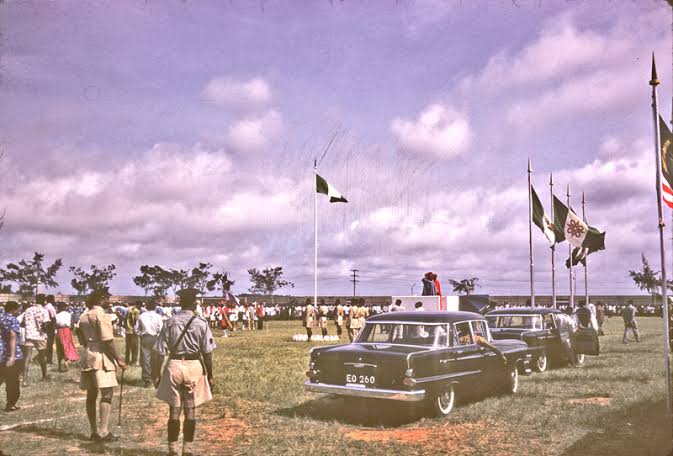
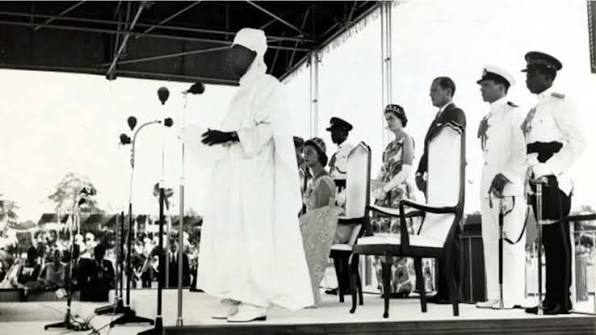
On October 1, 1960, Nigeria became independent. The moment was charged with pan-Africanist hope. Here was Africa’s most populous nation, rich in oil, human capital, and cultural dynamism, poised to lead the continent. That hope did not survive its first decade.
The First Republic collapsed into military coups, a brutal civil war, and decades of alternating military and civilian rule, each iteration more corrupt than the last. The Second Republic (1979–1983) ended in a military putsch amid accusations of monumental graft. The abortive Third Republic gave way to General Sani Abacha’s famed kleptocracy. The Fourth Republic, which began in 1999, restored elections but not accountability. Twenty-seven years of democratic rule have produced a political class that has mastered the art of electoral legitimacy without governance legitimacy.
The founders’ dream was not merely independence from Britain. It was independence from poverty, from disease, from ignorance. Sixty-six years later, that dream remains unfulfilled for the vast majority of Nigerians. The question The Searchlight asks is simple: Who benefits from this failure? The answer: a narrow elite that has captured the state and turned it into an instrument of self-enrichment.
II. Corruption: Not a Bug, But the Operating System
In February 2026, Transparency International released its Corruption Perceptions Index. Nigeria ranked 142nd out of 182 countries, scoring 26 out of 100, placing it among the world’s 36 most corrupt nations. The Chartered Institute of Directors of Nigeria (CIoD) declared in July 2026 that public sector governance had reached “a Grade A national emergency” and warned that the corruption ranking was directly deterring foreign investment.
But the numbers only hint at the reality. Corruption in Nigeria is not a series of isolated scandals. Truth be told; it is a systemic resource-extraction mechanism. The World Bank’s 2026–2032 Country Partnership Framework diagnosed the problem with clinical precision: Nigeria’s “abnormally low tax-to-GDP ratio” limits spending on education, health, infrastructure, and social protection, while “the propensity for budget and contract fraud, and expensive white elephant projects that do little to improve the lives of ordinary Nigerians” compounds the crisis.
The issue is not a lack of money. The issue is where the money goes.
Between June 2023 and December 2025, subsidy reforms freed approximately ₦15.8 trillion for the federation account, with ₦10.4 trillion allocated to states and local governments. Where did it go? Into a corrupt, inefficient, elite-captured spending system. Meanwhile, World Bank data shows that in 2021, Nigeria’s social protection spending was just 0.14% of GDP, and only 8.5% of poor Nigerians were covered by any form of social safety net.
When resources are systematically transferred to elites, poverty is not a governance failure. It is a governance design.
III. Two Nigerias: The Official Story and the Lived Reality
On October 1, 2026, President Bola Tinubu addressed the nation on its 66th independence anniversary. He declared that the economy had “crossed the Red Sea,” that the reform phase was over, and that Nigeria was entering an era of “shared prosperity.” He cited growth above 4%, non-oil exports hitting a record $6 billion, rebuilt reserves, and a stabilized exchange rate.
These data points are not fabricated. PwC’s August 2026 economic outlook confirmed macroeconomic improvements: GDP growth of 3.89%, foreign reserves of $51.46 billion, and improving exchange rate conditions.
But there is another Nigeria. And it is the Nigeria where most people live.
The World Bank’s 2026–2032 Country Partnership Framework reveals:
– Approximately 139 million Nigerians live below the national poverty line, with poverty concentrated in the north.
– Over 86 million people have no access to electricity.
– 3 to 4 million young people enter the labour market each year, with extremely limited job opportunities.
– 33% of the population is extremely poor (measured by age-weighted caloric intake, indicating food insecurity), 61% are below the poverty line, and 79% are poor or vulnerable to poverty.
By September 2026, the poverty rate was projected to reach 62%, affecting approximately 141 million people. That means nearly two out of every three Nigerians are poor.
The World Bank stated explicitly that while reforms “helped Nigeria turn the corner,” “these gains have not yet translated into improved living standards for most Nigerians,” with inflation continuing to erode household incomes, especially for low-income families. PwC put it even more bluntly: “Nigeria’s macroeconomic stability has created the conditions for growth, but structural constraints limit the transmission of its benefits across the economy. “
This is the truth of “Two Nigerias.” One exists in presidential speeches, GDP figures, and reserve reports: growth, stability, optimism. The other exists in the ledgers of market traders, the résumés of unemployed youth, the darkness of unelectrified villages, and the dinner tables of poor families: stagnation, dispossession, despair.
IV. The Structural Trap: Why Growth Does Not Eliminate Poverty
Nigeria’s poverty is not a problem of insufficient economic growth. GDP grew 4.1% in 2024 and is projected at 4.2% in 2026. The problem is that growth has almost no employment elasticity.
The World Bank data exposes the structural rupture: only about 14% of employed Nigerians hold formal wage jobs. The vast majority are trapped in “low-productivity, low-pay informal employment.” One in four Nigerian youths is not in employment, education, or training (NEET). Over the next decade, approximately 60 million young people will enter the labour market, and job creation is nowhere near the required pace.
Agriculture, the sector on which most poor Nigerians depend, lags behind services and industry, weakening the transmission chain between growth and poverty reduction. The industrial sector grew 3.96% in Q2 2026, down sharply from 7.46% in the same period of 2025. An economy that cannot provide productive employment for its youth, regardless of GDP growth rate, cannot produce “shared prosperity.”
More troubling is the behaviour of capital. Between January and July 2026, foreign portfolio investment recorded a net outflow of ₦266.07 billion, an increase of over 1,073% compared to the same period in 2023. Investors enter Nigeria for profit but leave when confidence evaporates. When a nation’s policy predictability is eroded by corruption and institutional weakness, capital votes with its feet. Those who cannot flee are those with no choice, those born into poverty, living in poverty, and likely to die in poverty.
V. The Absence of Accountability: Who Pays for 66 Years?
Sixty-six years of independence. Nigeria has cycled through colonial autonomy, military rule, brief democratic interludes, and long stretches of corruption. Every phase has had its “explanation”: civil war, oil boom and bust, structural adjustment, military “correction,” democratic “consolidation,” reform “pain.” But no phase has ever seen power truly held accountable for its consequences.
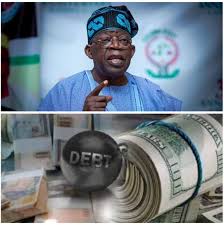
When the president says, “We cannot undo in four years what has been accumulated over generations,” that is true. But the question is: Which generations? Who created these problems? Who benefited? Who was never held to account?
Transparency International’s score of 26 is a number, but it represents every patient who died because of corruption in the health system, every child who dropped out because education funds were diverted, every road that was never built because of contract fraud, every job that was never created because elites looted the treasury. The Searchlight of the view that the word “perception” in the Corruption Perceptions Index is misleading in Nigeria’s case because, here corruption is not “perceived.” It is experienced.
The absence of accountability is the core obstacle to Nigeria’s development. There is no effective prosecution of corruption, no institutional constraint on abuse of power, no transparent tracking of public fund flows, no credible mechanism to hold elected officials to their campaign promises. The president can paint a picture of a “promised land,” but Nigerians live in the present, in rising food prices, in unpaid medical bills, in the reality of unemployment.
VI. The Searchlight’s Position
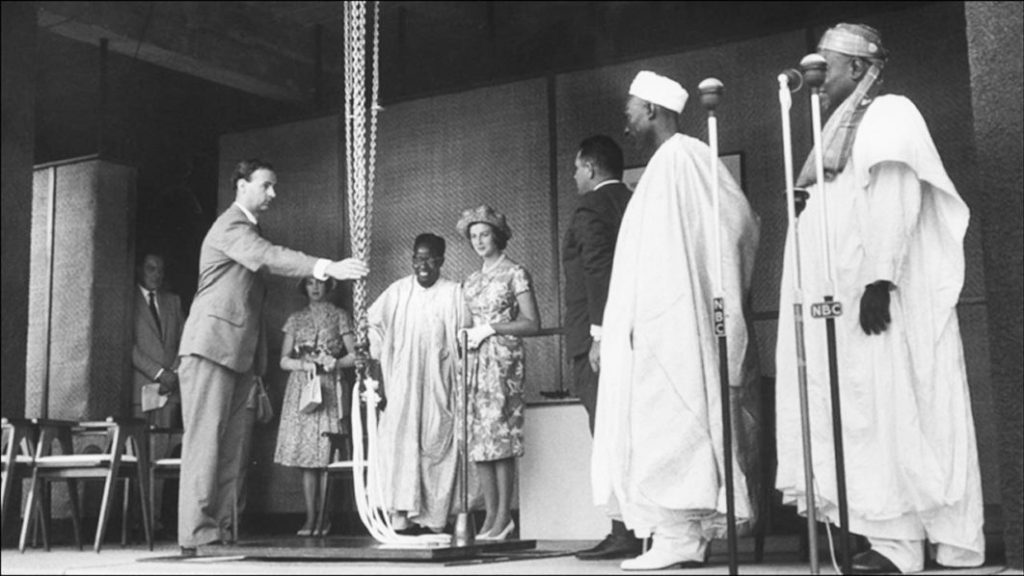
Nigeria’s problem is not “underdevelopment.” It is development captured. Sixty-six years of independence have proven one uncomfortable conclusion: when corruption becomes the operating system rather than the exception, when elite wealth accumulation is predicated on mass poverty, when power is accountable only to itself and never bears consequences, independence brings not freedom but a different form of dependency.
Dependency on a predatory elite, on a system that privatizes public resources, on a narrative that uses “growth” as a fig leaf to conceal extreme distributive injustice.
The Searchlight therefore, demands:
1. Full disclosure of public fund flows. Every naira allocated, every contract awarded, every payment made, published, auditable, accessible.
2. Prosecution of corruption, regardless of rank. No sacred cows. No plea bargains for the powerful. No “political solutions” to criminal conduct.
3. Truly independent anti-corruption institutions. Agencies that answer to the law, not to the presidency.
4. Budget transparency as a legal requirement, not a political talking point. Open contracting. Public participation. Independent oversight.
5. An end to using “reform pain” as a justification for systemic looting. The poor have bled enough. The elite must pay their share.
Sixty-six years is long enough. Nigerians do not need more “promised land” speeches. They need accountability. Now.
Conclusion: The Reckoning
Nigeria at 66 is a nation of immense potential held hostage by a parasitic ruling class. The oil wealth that should have built schools, hospitals, roads, and industries has instead built mansions, private jets, and offshore accounts. The democracy that should have empowered citizens has instead empowered a political cartel that rotates power among itself while the majority remains locked out.
The Searchlight does not write to comfort power. We write to hold it accountable. The numbers are damning. The history is damning. The present is damning. And unless the structural foundations of elite capture are dismantled, unless corruption is treated as the existential threat it is, the next 66 years will look no different from the last.
Nigeria does not lack resources. It lacks justice. It does not lack potential. It lacks accountability. It does not lack citizens who care. It lacks leaders who answer to them.
The Searchlight will continue to shine. The question is whether those in power can survive the light.
The Searchlight is committed to investigative journalism, public accountability, and the relentless pursuit of truth. We hold power to account, without fear or favor.


Leave a comment