By Matthews Otalike, The Searchlight Correspondent / September 29, 2026
The debate over state police in Nigeria has reached a decisive moment. With the National Assembly having passed a constitutional alteration bill and the matter now before state houses of assembly, the question is no longer whether Nigeria should decentralize policing, but whether doing so will deepen democracy or entrench a new architecture of oppression. This article examines the case for and against state police, assesses the structural failures of the current federal policing model, and interrogates the central paradox: in a political system where governors already behave as untouchables, will state police become instruments of liberation or new tools of tyranny?
The Case for State Police: A Broken Monopoly
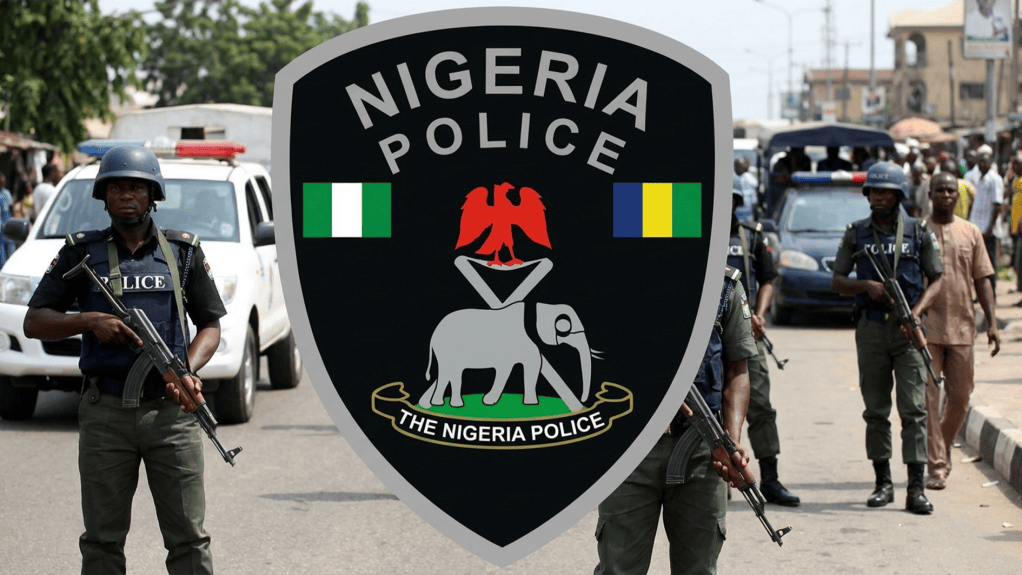
Nigeria’s current policing architecture is among the most centralized in the world. Operational decisions, recruitment, deployment, promotions, discipline, and strategic priorities are controlled from Abuja, with Commissioners of Police accountable primarily to the Inspector-General rather than to state governments. This structure has proven woefully inadequate for a federation of over 230 million people, with fewer than 400,000 police officers serving a vast and diverse territory.
The consequences are visible in the daily reality of Nigerian life. Vast rural areas remain effectively unpoliced. Response times are painfully slow due to distance, manpower shortages, and the absence of local intelligence. Communities facing banditry, kidnapping, and communal violence wait for directives from distant Abuja while their attackers operate with impunity. The June 2025 massacre in Benue State, where approximately 200 lives were lost to armed herdsmen, exposed with brutal clarity the limits of a system that lacks the local intelligence, swift deployment capacity, and community integration needed to prevent or quickly contain such atrocities.

Advocates for state police argue that personnel who know the terrain, speak the language, and are familiar with the residents are naturally better positioned to detect and combat criminal activity . Decentralized policing is widely practiced in federal systems such as the United States, India, South Africa, and Switzerland. The logic of federalism, these advocates contend, requires devolution of policing powers; the absence of state police structures in Nigeria is therefore an obvious contradiction.

The Nigerian Bar Association, which historically opposed state police, has shifted its position in response to the worsening security crisis. NBA President Afam Osigwe has declared that Nigeria can no longer rely solely on a centralized system, emphasizing that “there is an urgent need for state policing”. This shift reflects a growing consensus that the federal monopoly on policing has failed.
The Structural Rot of the Nigeria Police Force
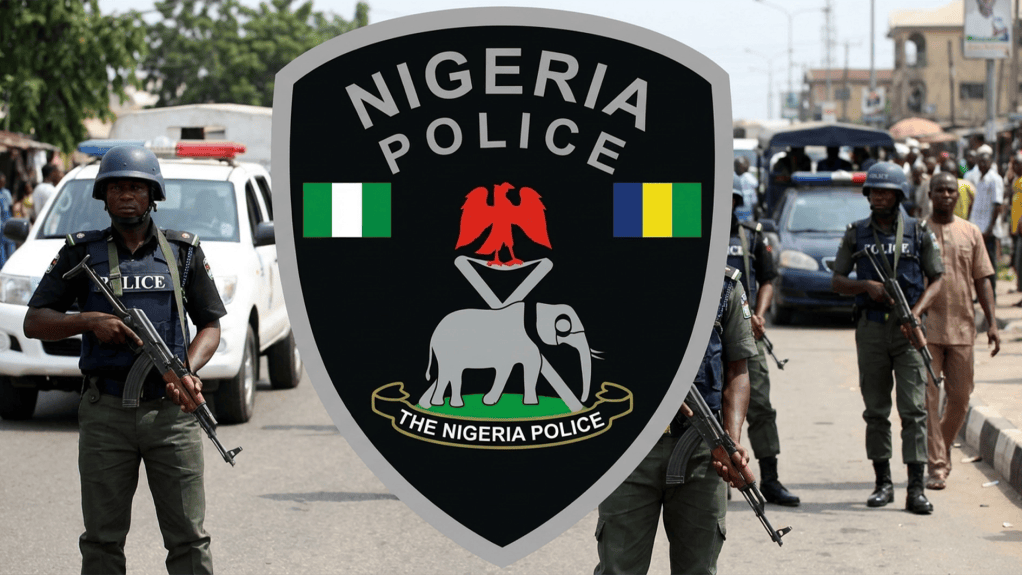
The case for state police gains additional force when one examines the entrenched pathologies of the current Nigeria Police Force. The NPF is not merely inefficient; it is structurally corrupt and fundamentally misaligned with the interests of ordinary Nigerians. A 2025 report by Sahara Reporters described a police force “hampered by corruption and the total absence of statutory allocations” . The News Chronicle observed that “celebrities flaunt armed escorts while markets are raided by bandits. The force is drained of capacity, not by crime, but by corruption wearing perfume. Officers aren’t policing Nigeria, they’re policing VIPs”.
This assessment is not hyperbole. The House of Representatives has called for investigation into “systemic corruption, abuse of office, and illegal sale of national security assets” within the NPF . The Centre for Democracy and Development has documented how “many inmates are locked up for years without seeing a judge, simply because they cannot afford legal representation or bail,” revealing “a deep structural failure in Nigeria’s justice system, where slow judicial processes, police brutality, and corruption continue to deny citizens their right to fair treatment under the law”. The International Society for Civil Liberties and the Rule of Law estimated that police corruption proceeds from roadblock extortion and barracks shakedowns total approximately N15 billion.
This corruption is not incidental; it is systemic and operates with impunity. Officers fabricate charges to extort money and frame innocent people. The disbanded SARS unit became emblematic of this reality: framing innocent people with serious crimes, demanding huge bribes for bail, and using torture to coerce false confessions. The #EndSARS protests of October 2020 were a direct response to this culture of impunity—a culture that persists because accountability mechanisms remain weak, inefficient, and uncoordinated.
The Political Instrumentation of Federal Police
The most damning indictment of the current system is not merely its inefficiency or corruption, but its instrumentation by political elites. Nigeria’s electoral history demonstrates that control of security agencies can significantly influence electoral outcomes. The deployment of police personnel during campaigns, voting, collation, and post-election periods has frequently generated controversy and, in many cases, outright fraud.
The 2024 Edo State governorship election provides a recent and well-documented example. An investigation by the Foundation for Investigative Journalism (FIJ) accused the Independent National Electoral Commission and the Nigeria Police of colluding with the All-Progressives Congress to ensure the victory of its candidate. The report detailed voter suppression, falsification of results, and violence, with armed thugs reportedly disrupting voting “with the tacit approval of security agencies”. The PDP candidate described the election as “the worst in the history of this country,” accusing INEC and the police of actively aiding the ruling party.
This pattern is not new. International observers have long noted that Nigerian security services have “largely turned blind eyes to, and in some cases helped in, the brazen falsification of results”. A study of the 2011 and 2015 elections documented how political elites strategized to use state machinery, including security agencies, to influence electoral outcomes. The “security vote” system, whereby funds are allocated for election security, has been identified as a mechanism that breeds corruption and irresponsibility among security agencies.
The result is a police force that can arrest anyone at the behest of a powerful person but cannot rein in the powerful when they break the law. It protects the rich and politically connected while preying on the poor. It is, in effect, a private security force for the ruling elite, funded by public money but serving private interests.
The Governor Problem: Why State Police Is Not the Answer
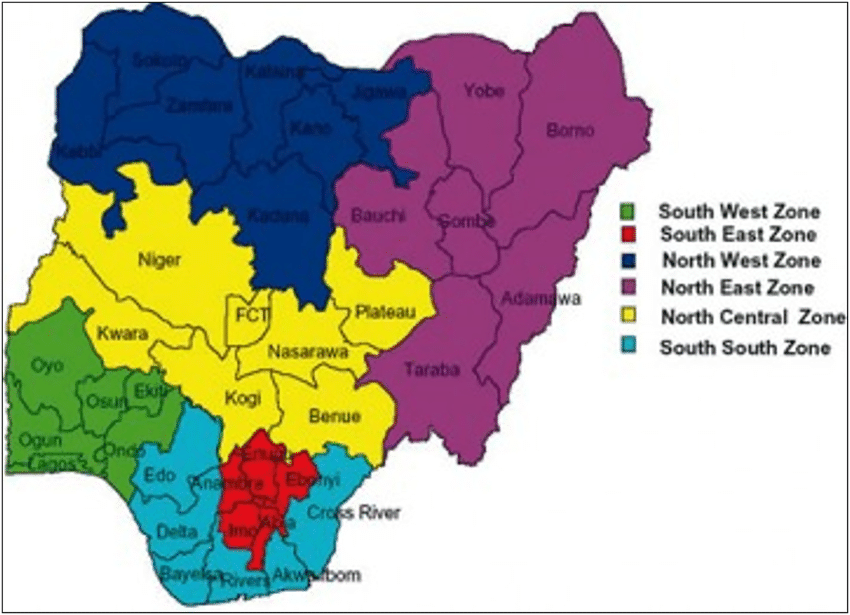
If the federal police are instruments of federal oppression, the logical response might seem to be to create state police accountable to state governments. But this logic collapses when one examines the character of Nigerian governors and the political culture of the states.
Governors in Nigeria already behave as untouchables. They control state electoral commissions, which have been systematically manipulated to ensure that ruling parties never lose local government elections. As one analyst pointedly asked: “Tell me which state where a governor has allowed the opposition to win a local government election”. Governors have consistently refused to comply with Supreme Court judgments on local government financial autonomy—a clear signal that they regard themselves as above the law.
In this context, handing police powers to governors is not decentralization of power; it is multiplication of impunity. The National Democratic Congress chieftain Buba Galadima, who supported state police for decades, now warns that “those who have a hand in this will pay dearly in the hands of state police,” predicting that “some of the members of the National Assembly, when this law is passed, will never have the chance to visit their states”.
Galadima’s warning is grounded in historical experience. He recalls the era of the Native Authority Police, when “three months to election, the Native Authority Police would gather all the opposition elements in their territorial jurisdiction and lock them up.” The pretexts were absurd: “You have abused the Emir,” “You have abused the chief,” or “you were wearing shoes when your village head was seated on a chair”. This system of political detention contributed to migration from parts of Northern Nigeria as people fled persecution.
The fear is that state police would reproduce this model on a larger scale. Governors would deploy state police to restrict opposition rallies, intimidate political opponents, influence local electoral processes, manipulate voter mobilization, interfere with election monitoring, and create unequal security conditions for competing political parties. Without strong constitutional safeguards, state police could undermine electoral competitiveness and weaken democratic accountability.
The risk is particularly acute for minority communities. State police could be captured by dominant ethnic, religious, or political interests within particular states and used to marginalize minorities. Former Rivers State Governor Celestine Omehia has warned that state police could “trigger ethnic domination, with majority ethnic groups using security agencies to oppress and intimidate minorities,” and could ultimately lead to “tribal wars”.
The Financial Capacity Question
Even if the political risks could be mitigated, a fundamental question remains: can Nigerian states afford professional police forces? Several states already struggle to meet basic obligations such as salary payments. Security specialists question how these states will finance functional police forces, including training, equipment, welfare, and logistics.
A poorly funded state police system would be vulnerable to corruption, political capture, and criminal infiltration. Rather than improving security, it could create 36 new arenas of predation, each accountable to a governor with no meaningful oversight.
The Safeguards Question: Can Law Restrain Political Power?
The Senate leadership has assured the public that “robust constitutional safeguards” have been embedded into the proposed State Police Bill to prevent political abuse. These include:
– Checks on leadership appointments: State Police Service Commission appointments based on recommendations from the National Police Council, comprising the President, the 36 governors, the Inspector-General of Police, and seasoned professionals.
– National operational standards: An Act of the National Assembly establishing minimum standards all state police must maintain.
– Federal intervention mechanism: The Federal Government retains authority to intervene and temporarily suspend state police operations if they threaten national security or violate the Constitution.
– Clear operational jurisdiction: Federal police retain jurisdiction over national security, interstate offenses, cybercrime, terrorism, and organized crime; state police focus on local crime prevention.
These safeguards are meaningful on paper. But the critical question is whether they can withstand the realities of Nigerian political practice. Governors have repeatedly demonstrated their capacity to circumvent constitutional constraints. The Supreme Court’s judgment on local government autonomy has been ignored. Constitutional provisions on state electoral commissions have been rendered meaningless through political manipulation. There is little reason to believe that statutory safeguards on state police would fare any better.
The NBA has acknowledged this tension. President Osigwe has stated that the association joined the Presidential Working Group “to help develop legal safeguards that will prevent the abuse of the proposed state police system,” recognizing that “there is initially an aversion to the creation of state police, the fear being that it will be abused by state governors” . The NBA’s willingness to engage constructively is commendable, but it cannot substitute for the political will that is conspicuously absent.
Toward a More Nuanced Framework
The debate over state police should not be framed as a simple binary between federal centralization and state decentralization. Both models, in the Nigerian context, carry profound risks. The federal police have proven to be instruments of elite impunity and electoral manipulation. State police, in the hands of governors who already behave as autocrats, could become instruments of local tyranny.
A more productive approach would focus on accountability mechanisms that transcend the federal-state dichotomy. The core problem is not which level of government controls the police; it is that no level of government is effectively accountable to the people. Addressing this requires:
1. Independent oversight bodies with real investigative and disciplinary powers, insulated from both federal and state executive control.
2. Judicial reform to end the culture of impunity, including special courts for police misconduct and corruption.
3. Community-based accountability structures that give citizens meaningful voice in policing priorities and practices.
4. Transparent funding mechanisms that prevent “security votes” from becoming slush funds for political manipulation.
The Policy and Legal Advocacy Centre has warned that “state police is not inherently a solution or a danger—it depends on governance, safeguards, and accountability. Without strong protection, it risks becoming a local leviathan that worsens injustice” . This assessment captures the essential truth: the problem is not structural design alone, but the political culture within which any structure must operate.
Conclusion: The Question of Political Will
Nigeria’s policing crisis is, at its root, a crisis of political will and democratic accountability. The current federal police serve the interests of the rich, the powerful, and political leaders because those leaders have the will and the capacity to make them do so. Creating state police without first addressing this fundamental reality would simply transfer the instruments of oppression from one set of unaccountable elites to another.
The choice before Nigeria is not between federal and state police. It is between a policing system that serves the people and one that serves the powerful. Without a fundamental transformation of Nigeria’s political culture—without accountability mechanisms that can restrain governors, punish corruption, and protect citizens regardless of their political connections—neither federal nor state police will deliver justice for the ordinary Nigerian.
The Searchlight calls for a pause. Before Nigeria rushes to create 36 new police forces, it must first answer a more fundamental question: who will police the police? In the absence of a credible answer, state police will not be a solution; it will be a new chapter in the same story of oppression.


Leave a comment