By Matthews Otalike, The Searchlight Correspondent / September 23, 2026
Since Richard Joseph introduced the concept of prebendalism in his seminal 1987 study of Nigeria’s Second Republic, it has become the most powerful analytical lens for understanding the country’s political pathology. Prebendalism describes a system in which state offices are treated as “prebends”, rewards to be captured and exploited for the personal enrichment of officeholders and their ethnic, religious, and political client networks. More than three decades after Joseph’s original diagnosis, the prognosis remains grim. Prebendal politics has not only persisted but metastasized, permeating every level of governance and systematically undermining Nigeria’s developmental trajectory. The Searchlight critically examines the mechanisms through which prebendalism operates, its devastating impact on development, and the urgent imperative for Nigerian citizens to mobilize against it.
Prebendalism: From Concept to Practice

Joseph’s original formulation identified access to public office as the dominant political imperative in Nigeria, with ethnic and regional identities becoming entrenched as a direct consequence of the quest for state resources. The state is viewed not as an instrument of collective service but as “an array of prebends, the appropriation of which provides access to the state treasury and to control over remunerative licenses and contracts”. This is not mere corruption in the conventional sense; it is a systemic expectation that public office exists for private and communal enrichment.
The concept draws from the medieval notion of a prebend, an office that provided income or privileges to its holder. Under prebendal arrangements, officeholders are expected to use public resources not only for personal benefit but also for the benefit of their ethnic, regional, religious, and political constituencies. Political authority becomes inseparable from the distribution of patronage and material rewards, creating a governance environment in which public resources are treated as instruments of political patronage rather than tools for national development.
The Mechanisms of Prebendal Governance
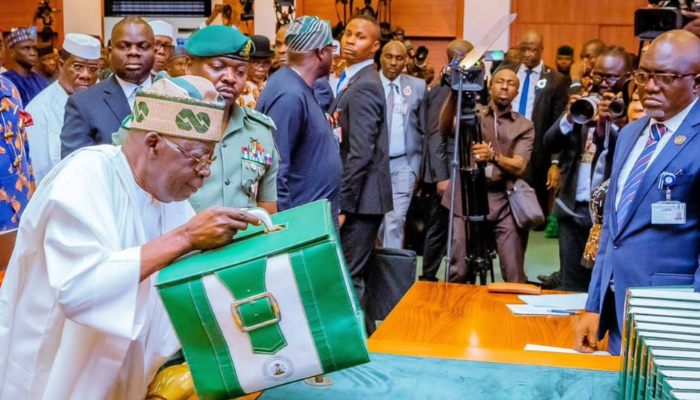
Prebendalism in Nigeria operates through several interconnected mechanisms that have become institutionalized over decades. First, electoral competition is characterized by intense struggles for access to state resources because political office is perceived as a gateway to economic opportunities. The high cost of political campaigns reinforces this dynamic: candidates who invest substantial resources in elections view public office as an opportunity to recover their expenditures, transforming political office into an economic investment rather than a platform for public service.
Second, political appointments are allocated based on loyalty rather than competence. As Olu Fasan observes of the current Tinubu administration, the president “has perfected the prebendal practice of doling out public offices as rewards and patronages to party loyalists, cronies, political jobbers, ethnic affiliates and other clients, always prioritizing personal fealty over integrity”. This pattern is not unique to any single administration; it has become the defining characteristic of Nigerian governance across regimes, both military and civilian.

Third, the electoral infrastructure itself enables prebendalism. The Independent National Electoral Commission (INEC) “stands at the very heart of Nigeria’s enduring system of corruption,” failing to regulate political finance and ensuring that “illicit funds, largely looted from the public treasury, stay out of the electoral process”. The commission’s budget has ballooned from ₦240 billion in 2018 to a request of ₦873 billion in 2026, a 260 per cent increase with no evidence of efficiency improvements or technological modernization. This opacity ensures that only candidates backed by wealthy godfathers and financiers can compete, effectively rolling out the red carpet for illicit wealth to enter the political arena.
The Developmental Toll
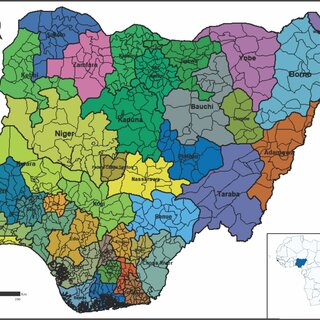
The consequences of prebendalism for Nigeria’s development are catastrophic and multifaceted. The most direct impact is the criminal diversion of public resources for private ends, which “starved the polity of funds for development, increased poverty and inequality, and intensified an unhealthy rivalry and competition for public office that triggered pervasive instability”. Estimates suggest that between $350billion and $400 billion has been siphoned out of Nigeria through prebendal mechanisms, a staggering sum that could have transformed the country’s infrastructure, education, and healthcare systems.
The human cost is equally devastating. A study on prebendalism and rural poverty in Cross River State found that prebendalism and rural poverty are “the bane of development,” with low income, poor shelter, poor health facilities, and other socioeconomic deprivations persisting at the grassroots. Unless prebendalism is eradicated, the well being of the people at the grassroots will remain a mirage. The Brookings Institution notes that prebendal practices have a particularly devastating impact in the predominantly Islamic north, which has trailed the southern parts of the country on all development indicators.

Prebendalism also fuels insecurity and instability. The prevalence of electoral violence in Nigeria’s politics is directly linked to prebendal competition, with spates of violence inhibiting political development since the return to participatory democracy. The extractive practices of the prebendal state have also been cited as a factor in the rise of insurgencies, with communities subject to the same extractive practices as the rest of the country experiencing particular devastation.
Electoral Distortion and Democratic Erosion
In Nigeria’s Fourth Republic, the regular conduct of elections has not translated into genuine democratic choice. Since 1999, Nigeria has “faithfully performed the outward rituals of democracy”, ballots printed, polling units opened, results declared, governments inaugurated, yet beneath this procedural regularity lies “the gradual alienation of citizens from meaningful ownership of political power”. Elections have ceased to function primarily as instruments of collective choice and instead become gateways to economic entitlement. Campaigns are financed as investments; political mandates become access points to rent streams; governance becomes repayment to sponsors and patrons.
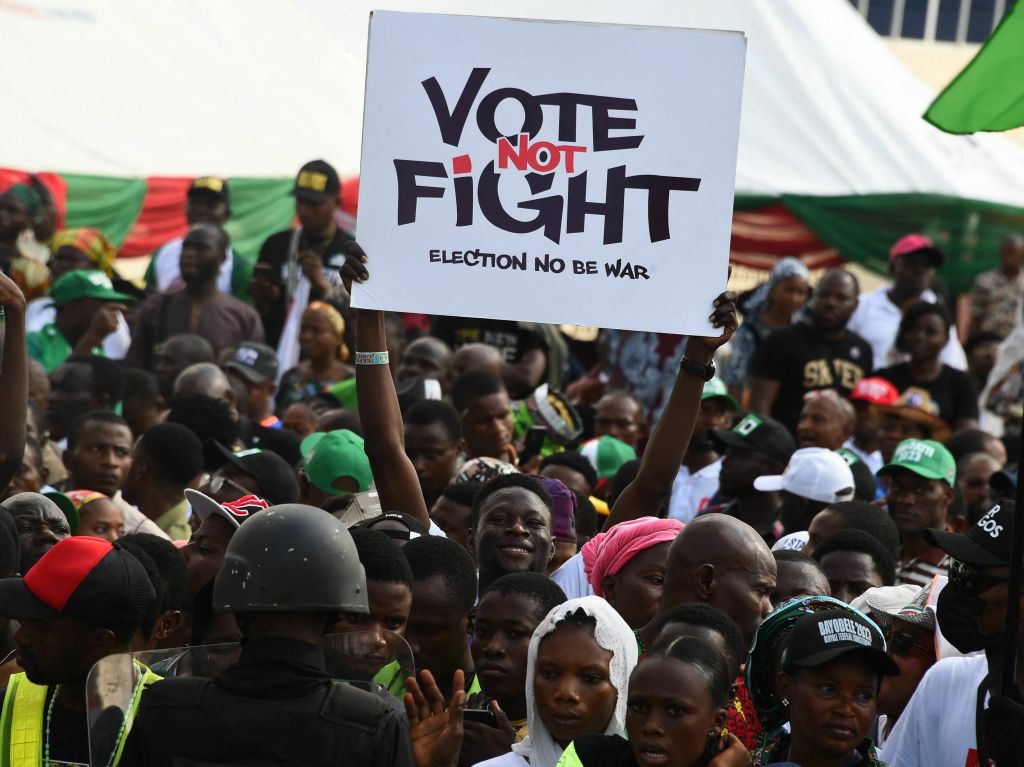
Vote-buying has further distorted the moral economy of elections, “turning civic duty into transactional exchange”. Voter turnout has steadily declined across electoral cycles, reflecting a growing perception that participation does not necessarily translate into agency. This disillusionment creates a vicious cycle: as citizens withdraw from formal political participation, the prebendal networks face less accountability and can consolidate their control with even greater impunity.
The Psychological and Cultural Dimensions
Prebendalism is not merely a structural phenomenon; it is sustained by a psychological environment of insecurity. Joseph’s original analysis identified insecurity as the basic, taken-for-granted motivation that sustains the prebendal system. Individuals seek attachment to ‘big men’ for protection and advancement in conditions where “legal guarantees of physical security, status and wealth are weak or non-existent”. This insecurity is felt as much by those who temporarily win control of critical resources as by those who feel excluded from them, creating a vicious circle in which insecurity produces the very behaviour that generates exclusion and further insecurity.
The result is a political culture in which public office is viewed as a means of self-preservation and communal advancement rather than a platform for service. Citizens themselves become complicit in this system, expecting their representatives to deliver patronage rather than public goods. Prebendal political arrangements create expectations that public resources should be distributed through ethnic and clientelist networks, perpetuating the cycle across generations.
The Imperative for Civic Confrontation
Confronting prebendalism requires a fundamental shift in the relationship between Nigerian citizens and the state. Richard Joseph himself has emphasized that the next phase of this vital project must go beyond critical interpretations to concerted action. The task is not merely intellectual but deeply political and moral.
First, Nigerians must reject the fatalism that treats prebendalism as an immutable feature of Nigerian politics. Joseph has cautioned that relying on faith to address national challenges may diminish citizens’ sense of agency, limiting their active participation in building the nation. The examples of Botswana and Singapore—countries that, despite facing historical challenges, made strategic decisions that led to progress—demonstrate that prebendalism is not destiny. What is required is a collective reimagining of what Nigeria can become.
Second, civil society organizations, professional associations, faith-based groups, and labour unions must be mobilized to demand accountability. Joseph has suggested that “what is needed are ways of mobilizing many organizations in Nigeria, professional, civic, faith-based, and others”. However, Nigerian prebendalism is tenacious, and systemic corruption, human and labour rights abuses, and ethnic-based loyalties constrain civic and labour agency. Overcoming these constraints requires building broad-based coalitions that transcend ethnic and religious divisions.
Third, electoral reform must be prioritized. The failure to regulate political finance is not an accident; it is a deliberate strategy to keep election costs high and processes opaque, ensuring that only candidates backed by wealthy godfathers can compete. Citizens must demand transparency in campaign financing, real-time electronic transmission of results, and genuine independence for INEC. Where prebendal incentives are powerful, ambiguity becomes valuable; verifiable and auditable transmission of results narrows the discretionary space within which electoral outcomes may be negotiated.
Fourth, the youth must be at the forefront of this struggle. Joseph has emphasized that overcoming prebendal politics “requires empowering Nigerians, particularly the youth, as catalysts for change”. The Nigerian youth population, which bears the brunt of unemployment and underdevelopment, has the most to gain from dismantling the prebendal system and the most energy to invest in building alternatives. As Joseph has urged, invoking Arthur Ashe: “Start where you are. Use what you have. Do what you can”.
Fifth, a vision of an alternative political economy must be articulated. Joseph has proposed an “enterprise society” where individuals leverage their skills to promote economic growth, underpinned by an education system responsive to the demands of a technologically driven world. This vision requires shifting focus from the elite to the general populace, investing in human capital and physical infrastructure rather than the patronage networks that sustain prebendalism.
Conclusion
Prebendalism remains the central obstacle to Nigeria’s development. It is not merely a problem of individual corruption but a systemic logic that has captured the state and subordinated public purpose to private and communal appropriation. The developmental costs are incalculable: billions of dollars siphoned away, poverty and inequality entrenched, insecurity perpetuated, and democratic institutions hollowed out from within.
Yet prebendalism is not invincible. It is sustained by a combination of elite self-interest and citizen resignation, a resignation that can be overcome. The task for Nigerians is not to wait for a saviour from within the prebendal system but to build the collective power to demand something better. This requires moving beyond ethnic and religious divisions, rejecting the transactional logic of vote-buying, and insisting that public office be a platform for service rather than a prebend to be exploited.
The searchlight must remain fixed on prebendalism, but the light must also illuminate the path forward. As Joseph has reminded us, the point is not merely to interpret the world but to change it.


Leave a comment