By Matthews Otalike for The Searchlight / September 17, 2026
As Nigeria moves closer to the January 2027 presidential election, one question keeps returning to the centre of political discourse: why is the ruling All Progressives Congress (APC) so visibly unsettled by Peter Obi? The answer is not to be found in any single event, but in a pattern of behaviour that has become too consistent to ignore. From the internal crises that consumed the Labour Party to the legal and leadership disputes that engulfed the African Democratic Congress (ADC), and from the recent turbulence in the National Democratic Congress (NDC) to the sudden revival of decade-old fiscal allegations in Anambra State, the APC’s conduct toward one opposition figure has been extraordinary in both scale and intensity. A government that felt secure in its record would not need to expend such energy on a single challenger. The fact that it does tells us something important, both about Peter Obi and about the anxieties of those who currently hold power.
A Pattern of Disruption

The trajectory of Obi’s party affiliations since 2023 reads less like political restlessness and more like a man being pushed from one platform to another. After leaving the Labour Party in December 2025 amid what the Obidient Movement described as orchestrated internal crises, Obi joined the African Democratic Congress. Within months, the ADC was entangled in leadership disputes, and the Independent National Electoral Commission withdrew recognition from the party’s leadership on the basis of a Court of Appeal ruling. The Obidient Movement’s National Coordinator, Yunusa Tanko, was blunt in his assessment: the government had “manipulated INEC to reinterpret an Appeal Court ruling, leading to the delisting of the ADC’s leadership.”
By May 2026, Obi had moved again, this time to the National Democratic Congress. The NDC, evidently having learned from what happened to the Labour Party, conducted screenings specifically designed to identify “moles planted in the party” by the APC. The party’s National Publicity Secretary, Osa Director, stated the matter plainly: “We know that from the various states, and because we also have our intelligence, we confronted them. Those ones already know that they are not getting the ticket because we know that they are moles planted in the party.”
Three parties. Three crises. One beneficiary. As Tanko observed, “The government of the day has infiltrated most of the political party. You could see what happened to Labour Party, you could see what’s happening to SDP at the moment.” When the same pattern repeats across multiple institutions, it ceases to look like coincidence and begins to look like strategy.
The Soludo Dimension
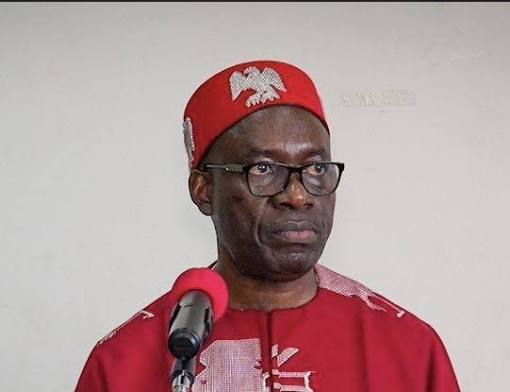
The most recent escalation came from an unexpected direction: Anambra State Governor Charles Soludo, who governs the state Obi once led. In September 2026, the Soludo administration released detailed claims that Obi had left behind N127.37 billion in outstanding external loans and unpaid salary, pension, and gratuity arrears. The timing is difficult to overlook. Obi left office in March 2014, more than twelve years before the Soludo government suddenly rediscovered these alleged liabilities. Obi’s response was characteristically direct: he released his handover note showing a net positive balance of over N86 billion and issued an extraordinary challenge. “If you find even one person I owed,” he declared, “I will end my 2027 campaign today.”
The Soludo administration’s willingness to pursue this dispute, while Obi is simultaneously fending off attacks from the federal government, raises uncomfortable questions. Whether the governor is motivated by genuine fiscal concerns, by political positioning for a future role in the APC, or by something more personal, the effect is the same: another front opened against a candidate the ruling party would prefer to exhaust before the primaries even begin.
The Media Apparatus

Perhaps the clearest evidence of the APC’s focus on Obi is the composition of President Tinubu’s communication team. Bayo Onanuga, Daniel Bwala, Reno Omokri, and Festus Keyamo have all, at various points, directed their rhetorical fire primarily at Obi rather than at the APC’s other opponents. The irony is difficult to miss. Daniel Bwala, now a presidential adviser, once said that people “separate themselves from their brains immediately they joined the ruling All Progressives Congress.” Reno Omokri, now reportedly nominated as an ambassador, once described Tinubu in terms no ally would recognize today.
Their transformation into presidential attack dogs says less about their convictions than about the transactional nature of Nigerian political communication. But the target of their attacks is consistent, and that consistency is itself revealing. Why would a president with the full machinery of incumbency devote such disproportionate communication resources to a single opposition figure? The answer lies in what Obi represents.
What Obi Threatens

The APC’s containment strategy is not merely about preventing Obi from winning. It is about preventing him from consolidating. The 2023 election demonstrated something the ruling party’s internal polling likely confirmed: Obi’s appeal transcends the traditional ethno-regional and patronage networks that sustain Nigerian politics. His support among urban youth, the diaspora, and voters disillusioned with the two-party establishment represents a structural threat to the APC’s electoral arithmetic.
If Obi succeeds in uniting the opposition under a single platform, as the NDC’s alliance with Rabiu Kwankwaso suggests he might, the 2027 election becomes a referendum on Tinubu’s governance rather than a fragmented contest the APC can win through plurality. As Vanguard observed, “Intelligence available to the ruling elite confirms who truly won the 2023 election… In Nigerian political discourse, ‘the fear of Peter Obi’ has become shorthand for the APC’s growing anxiety.”
The APC understands that in a free and fair election, incumbency offers less protection against a candidate who has become the moral conscience of the nation than it does against traditional opponents. The strategy, therefore, is not to defeat Obi at the ballot box but to ensure he either cannot reach it or arrives so diminished that his coalition fractures.
Conclusion
The APC’s campaign against Peter Obi reveals more about the ruling party’s insecurities than about Obi’s vulnerabilities. A government confident in its record and its electoral prospects would not need to infiltrate opposition parties, coordinate state-level character attacks, and deploy a dedicated media battalion against a single candidate. The intensity of the containment effort is itself an admission: the APC believes Obi is dangerous.
Whether that belief is justified will be determined by whether Obi can navigate the obstacles between now and January 2027. But the attempt to prevent his candidacy, through party destabilization, legal maneuvering, and personal delegitimization, represents a troubling precedent for Nigerian democracy. The question is not merely whether Obi can survive the APC’s assault, but whether the institutions designed to guarantee a level playing field can withstand the pressure of a ruling party determined to tilt it.


Leave a comment