By The Searchlight Editorial Team / September 2, 2026
Three years after President Bola Ahmed Tinubu declared on his inauguration day that “subsidy is gone,” Nigerians are asking a brutally simple question: Are we better off today? The answer is a resounding NO.
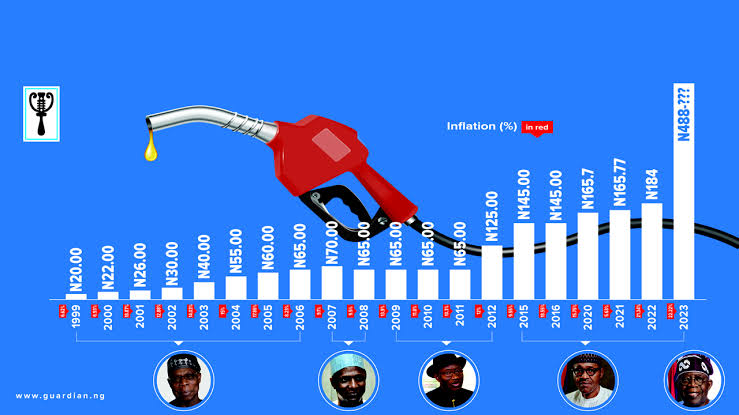
The government brandishes statistics, inflation dropping from 34.8 per cent to 21.82 per cent, FAAC disbursements skyrocketing from ₦16.28 trillion to ₦28.78 trillion, non-oil exports rising 65 per cent. But there is another Nigeria; the Nigeria outside conference rooms and government spreadsheets. It is the Nigeria of the market woman whose transport fare has swallowed her profit, the civil servant whose salary disappears within days, the parents reducing the quantity and quality of food on their children’s plates. Petrol prices are roughly six times their pre-removal level, and the cost of a basic jollof rice meal has more than doubled.
The fundamental question is not whether subsidy needed to go; it did. The question is how a government could execute such a seismic economic shock with neither preparation, nor safety nets, nor a coherent transition plan for 200 million people.
The International Mirage: Countries That Subsidize and Succeed
Before we condemn all subsidy as economic heresy, let us examine the uncomfortable truth: several nations subsidize energy and make tangible progress.
Malaysia, a country with a GDP per capita nearly ten times Nigeria’s, recently introduced a blanket subsidized fuel rate of RM1.99 per litre for all citizens during uncertain economic times. Prime Minister Anwar Ibrahim declared Malaysia the “only country in the world” to cut fuel prices amid economic turmoil, achieved through “proper governance.” Some 16 million Malaysians are eligible, with a ceiling of 300 litres per month.
Iran maintains heavily subsidized fuel costing less than one-third of Saudi Arabia’s price, despite significant economic challenges and international sanctions. Libya, Africa’s cheapest fuel at $0.03 per litre, uses government support to “alleviate the burden of living for citizens.” Honduras has invested over $1.4 billion in electricity and fuel subsidies, ensuring the poorest receive free energy.
What distinguishes these countries from Nigeria? Governance, targeting, and industrial capacity. Malaysia subsidizes citizens through digital identification systems. Iran’s subsidy, however imperfect, is anchored in domestic refining capacity. Libya’s subsidy benefits from being a major crude producer, just like Nigeria, yet Nigeria managed to turn its oil wealth into a fiscal haemorrhage rather than social protection.
The lesson is not that subsidy is evil. The lesson is that Nigeria’s subsidy was a criminal enterprise disguised as social welfare.
The Rot: What Was Wrong with Nigeria’s Fuel Subsidy
Let us speak plainly. Nigeria’s old subsidy system was not merely inefficient; it was a grotesque economic phenomenon, a “massive fiscal haemorrhaging disguised as social welfare.”
The Fiscal Madness: Subsidy payments ballooned from ₦578.07 billion in 2019 (6.5 per cent of the budget) to ₦4.39 trillion, approximately 25 per cent of the entire national budget, in 2022. Nigeria, an oil-producing country, spent more subsidizing imported fuel than it allocated to capital expenditure. The IMF estimated that implicit fuel subsidies increased the overall fiscal deficit by around 1 percentage point of GDP in 2021 alone.
The Corruption Pandemic: The subsidy regime was “a goldmine for thieves in government,” creating opportunities for politically connected middlemen. Millions of litres of subsidized fuel were routinely smuggled across borders, enriching syndicates and effectively subsidizing neighbouring economies at Nigerian taxpayers’ expense. One-quarter of the subsidy’s value enhanced consumer surplus through lower prices; the rest was captured by smugglers and rent-seekers.
The Regressive Welfare: The IMF’s analysis shows that while removing fuel subsidies would reduce income inequality, the subsidy regime itself disproportionately benefited the affluent. The poor, who consume far less fuel, received crumbs while the rich and politically connected feasted.
The subsidy was not helping the poor; it was stealing from the poor to enrich the connected.
The Unforgivable Sin: What the Government Should Have Done And Didn’t
The decision to remove subsidy was necessary. The execution was criminally negligent.
No Preparation: On the day of inauguration, the government announced the removal “with no preparation, no safety nets, no cushioning mechanisms, and no transition plan for ordinary Nigerians.” Former Vice President Atiku Abubakar lamented that “a responsible government would have spent the preceding months preparing Nigerians for this transition, establishing social safety nets, empowering the most vulnerable.” Former Minister of Education Obiageli Ezekwesili stated flatly: “The fuel subsidy removal was a good reform, but it was not properly prepared for.”
No Social Safety Net: Nigeria lacked, and still largely lacks, an effective social safety net to cushion shocks on the most vulnerable. The government’s failure to “adequately prepare social safety nets before implementing reforms has exacerbated citizen hardship.” International experience shows that executing severe macroeconomic shocks without simultaneously deploying robust social safety nets “invites systemic collapse.”
No Transition Plan: Dr. David Okoro, Director-General of the International Institute for Security and Governance, captured it perfectly: “The issue whether Nigeria should remove subsidy was not debatable. The question was: the process before the removal, during the removal and after the removal, what was supposed to have been done?” The government “obviously never had a plan.”
No Accountability Mechanism: The savings from subsidy removal, estimated at $7–8 billion annually, flow directly into general revenue pools rather than a ring-fenced fund. “Precise tracking has become an administrative nightmare.” Civil society organizations like SERAP and BudgIT have demanded that states account for their newfound wealth rather than sinking it into “urban aesthetics or overheads.” The World Bank noted that NNPCL was remitting only half of the revenue gains from subsidy removal to the Federation Account. Where is the other half? Who is asking the question and who is ready to provide the information? NNPCL, the cash cow for every political leadership in Nigeria.
No Gradual Phase-Out: Critics argue that “the complete removal of fuel subsidy was not the best approach,” and that “a phased implementation with social safety nets would have reduced the burden on Nigerians.” The government presented Nigerians with a false choice: Keep the old corrupt subsidy or remove it and let citizens absorb the shock. There was a third option—a smarter, Nigerian option.
The Human Toll: What the Statistics Hide
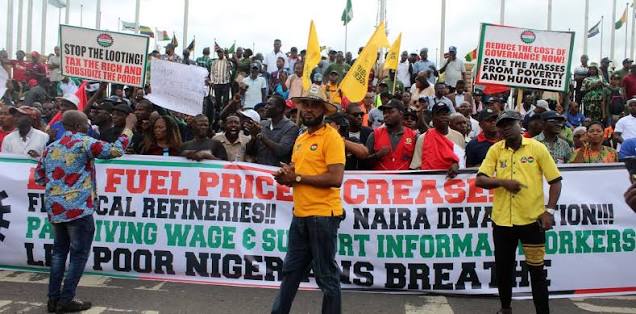
The macroeconomic indicators tell one story. The human reality tells another.
The IMF reported in 2026 that Nigeria’s poverty had reached approximately 63 per cent at the national poverty line, with an estimated 27 million Nigerians facing food insecurity in late 2025. The World Bank projected poverty would rise to 61 per cent in 2025, with about 139 million people living on less than $3 a day, up from 129 million. Food inflation surged to 37.2 per cent.
Workers’ wages were erased by inflation. Families reduced meal portions, cut healthcare spending, withdrew children from private schools. Small manufacturers faced diesel, petrol, electricity and financing costs that made production almost impossible. Businesses that barely survived before the reform began closing their doors. Yet, the government told Nigerians: “Endure today. Prosper tomorrow.” But what happens when tomorrow keeps moving further away?
The Way Out: Beyond the Subsidy Trap
The solution is not a return to the old subsidy regime, that would be economic suicide. Former Senator Shehu Sani warned, “The return of subsidy will not bring down the prices of commodities. It will simply distort the economic stability of our country.”
The path forward requires honest answers to hard questions.
First, production-based subsidy: Atiku Abubakar’s proposal, however politically motivated, points to a genuine alternative: a subsidy anchored in domestic refining capacity rather than imported fuel. Nigeria must refine its crude oil locally. The Dangote Refinery, which recently announced a slash in petrol prices by over 15 per cent to ₦699 per litre, demonstrates what is possible when market forces are unleashed and competition encouraged. As one analyst put it, “The next Nigerian subsidy must be an investment, not a bill.”
Second, targeted social protection: Rather than subsidizing fuel for everyone, including the rich and smugglers, Nigeria must build a functional social safety net. Cash transfers must be scaled up, expanded, and made efficient. The government claimed to have disbursed ₦330 billion in cash transfers to poor households, (households that are never known) but this reaches only a fraction of those in need. The system must be transparent, technology-driven, and accountable. During the late President Buhari’s administration, the Humanitarian Affairs Minister, Sadiya Omar Farouk, claimed to be feeding school children (while schools were not in session due to the Covid-19 pandemic). Only God knows the “school children” she fed with the billions of naira allocation.
Third, CNG and alternative transportation: The National Affordable CNG Transit Programme offers a pathway to reduce dependence on petrol and bring down transportation costs. Over ₦100 billion has been injected into the Presidential CNG Initiative to build conversion centres and roll out mass transit buses.
Fourth, fiscal discipline and transparency: The government must account for every naira saved from subsidy removal. The World Bank has stressed the importance of ensuring that “the full revenue gains from the removal of the PMS subsidy, estimated at about 2.6 per cent of GDP in 2024, are transferred to the Federation.” Nigerians deserve to see where the money went, not vague promises, but audited accounts.
Fifth, reducing the cost of governance. As Shehu Sani argued, Nigerians should not bear the burden of reforms while political leaders enjoy extravagant lifestyles. “Reducing the size and cost of government and making sacrifices at the executive and legislative levels” are necessary to demonstrate that the burden is being shared.
Conclusion
The removal of fuel subsidy was necessary. The way it was done was catastrophic. The Tinubu administration inherited a broken system and broke it further through sheer incompetence, not in the decision, but in the execution. No preparation. No safety nets. No transition plan. No accountability. And now, millions more Nigerians are in poverty, businesses are collapsing, and a generation is losing faith in the possibility of economic progress.
The government’s defence, that reform takes time, that pain is temporary, rings hollow when the pain is borne exclusively by the poor while the powerful continue to feast. When government statistics claim the economy is “doing well” while 63 per cent of the population lives in poverty, the statistics are not measuring reality; they are obscuring it.
Nigerians do not need lectures on macroeconomic discipline. They need results. They need to see the savings from subsidy removal translated into tangible improvements in their lives, schools, hospitals, roads, jobs, food on the table. They need a government that does not ask them to sacrifice everything while sacrificing nothing itself.
The way out is not back to the corrupt old subsidy. The way out is forward, to a Nigeria that refines its own oil, protects its most vulnerable citizens, accounts for every kobo of public money, and builds an economy that works for the many, not just the connected few.
Anything less is not reform. It is betrayal. The Searchlight remains committed to speaking truth to power, without fear or favour. The people deserve nothing less.


Leave a comment