By The Searchlight Investigative Desk / August 2026
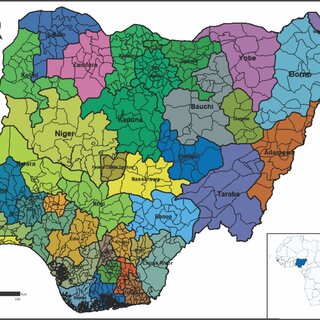
Two years after the Supreme Court of Nigeria delivered a clear, unambiguous judgment on 11 July 2024 ordering that Federation Account allocations to the 774 local government councils must be paid directly into their own accounts, ending the long-abused State Joint Local Government Account system, the reality on the ground remains largely unchanged. Trillions of naira continue to flow in the name of local governments. Yet in most states, elected councils exist mainly on paper. They pay salaries (when they can), maintain skeletal offices, and execute almost no meaningful projects. Many chairmen and councillors spend more time in the state capital than in the communities they were elected to serve. The reason is neither complicated nor hidden: state governors refuse to relinquish control.
The Court Spoke. The Governors Did Not Listen
The 2024 judgment, secured by the Attorney-General of the Federation against all 36 state governors, declared the joint-account practice unconstitutional. It barred governors from dissolving elected councils or replacing them with caretaker committees, and directed the Accountant-General of the Federation to pay LG allocations directly. President Bola Tinubu publicly welcomed the ruling and has repeatedly warned governors, including with threats of an Executive Order as recently as December 2025, that non-compliance would force federal intervention.
Yet implementation has been stalled by deliberate resistance, bureaucratic obstacles, and political calculation. Analyses show that in the first year after the ruling alone, governors retained effective control over roughly ₦4.5 trillion meant for councils. In 2025, local governments were allocated about ₦5.5 trillion, a sharp increase driven by higher overall FAAC inflows, yet underdevelopment at the grassroots remains entrenched. Funds still largely pass through state-controlled channels or are subject to heavy “deductions,” directives, and informal oversight that leave chairmen with little discretionary spending power.
Some states have been more compliant than others. Nassarawa amended its laws to abolish joint accounts. A few claim full direct payment. But across large parts of the federation, including major states in the North West, South East and elsewhere, joint or quasi-joint arrangements persist. Anambra state passed legislation that effectively recreated state control under a new name. Other governors simply ignored the judgment while waiting out political pressure.
Why Governors Refuse to Let Go
The resistance is not about constitutional principle or administrative convenience. It is about power, patronage, and political survival.
First, the patronage reservoir. For decades, local government allocations have functioned as a ready pool from which governors draw to settle the wider political ecosystem that keeps them in power — party loyalists, traditional rulers, religious leaders, youth groups, and local power brokers. Full financial autonomy removes that reservoir from gubernatorial reach. A chairman with independent access to hundreds of millions of naira monthly is no longer a dependent client.
Second, structural insulation against opposition. Autonomous local government chairmen, armed with their own budgets, staff, and political standing, can become alternative centres of organization. They can build independent networks capable of challenging a sitting governor in future elections or within the party. Governors who have spent years installing compliant, often handpicked leadership have every incentive to prevent that possibility. The closer 2027 approaches, the stronger this incentive becomes.
Third, fiscal leverage and diversion. Control of the joint account allows states to impose first-line charges (pensions, teacher salaries, traditional ruler stipends, “joint projects,” training levies, and various “contributions”) that often consume the bulk of the allocation. What remains is frequently directed toward state priorities or political spending rather than local needs. Chairmen in several states have reported receiving only enough to cover salaries and a small imprest after these deductions, sometimes as little as ₦4–70 million out of official allocations several times larger. Capital projects become almost impossible.
Fourth, the politics of 2027. Multiple reports indicate that the Federal Government has been reluctant to enforce the judgment aggressively because governors remain critical to the ruling party’s electoral machinery. Confronting them risks fracturing the coalition needed for re-election. The result is public threats matched by private accommodation.
Constitutional ambiguity is cynically exploited. While the Supreme Court ordered direct payment, Sections 162(5)–(8) of the 1999 Constitution still speak of allocation “to the State for the benefit of their Local Government Councils” and of the State Joint Local Government Account. Governors and their lawyers lean on these provisions and on state laws to maintain de facto control.
The Consequences: Councils in Name Only
The outcome is predictable and visible across Nigeria. Local governments, constitutionally responsible for primary education, basic healthcare, rural roads, markets, sanitation, and community development, are reduced to salary-paying entities. Many chairmen maintain residences or spend most of their time in state capitals, closer to the governor’s office than to their wards. Primary health centres remain under-stocked, rural roads deteriorate, markets decay, and refuse accumulates. Trillions allocated in the name of the grassroots produce little visible transformation at the grassroots.
Civil society organizations, the National Union of Local Government Employees (NULGE), and the Association of Local Governments of Nigeria (ALGON) have repeatedly documented the pattern: funds arrive in the name of councils, but effective control stays with the states. Capacity-building is stifled. Accountability is inverted, chairmen answer upward to governors rather than downward to citizens.
A System That Serves Governors, Not Citizens
Nigeria’s fiscal federalism already concentrates major revenue sources at the centre and redistributes them through FAAC. The additional layer of state capture of the local tier turns the third arm of government into an administrative fiction. The Supreme Court attempted to correct this. Governors, with the tacit or overt acquiescence of political actors at the centre who need their support, have largely refused.
Until direct allocation is fully enforced, accompanied by transparent accounting, independent audits, and genuine political autonomy (including free and fair local elections free of gubernatorial imposition), local governments will continue to exist as ghosts with bank accounts, paying salaries when possible, executing almost nothing of consequence, and leaving the ordinary Nigerian at the community level to wonder what, exactly, government is for.
The money is there. The law is clear. The political will at the state level remains the missing element. And the people at the grassroots continue to pay the price.


Leave a comment