By The Searchlight Correspondent / August 31, 2026
In a recent interview that has circulated widely, Professor Oserheimen Osunbor, former Edo State governor, two-term senator, Rhodes Scholar, and professor of law, delivered a blunt assessment of the character of those around President Bola Tinubu. To belong to that team, he said, “it seems you either have to have the EFCC on your neck or have been convicted of a crime.” He added that many in the circle carry “negative credentials from abroad,” including forfeited assets or cases that forced them to leave jurisdictions with stricter enforcement of the rule of law. If Nigerians allow Tinubu another term, he warned, “Nigeria may finally be doomed.”
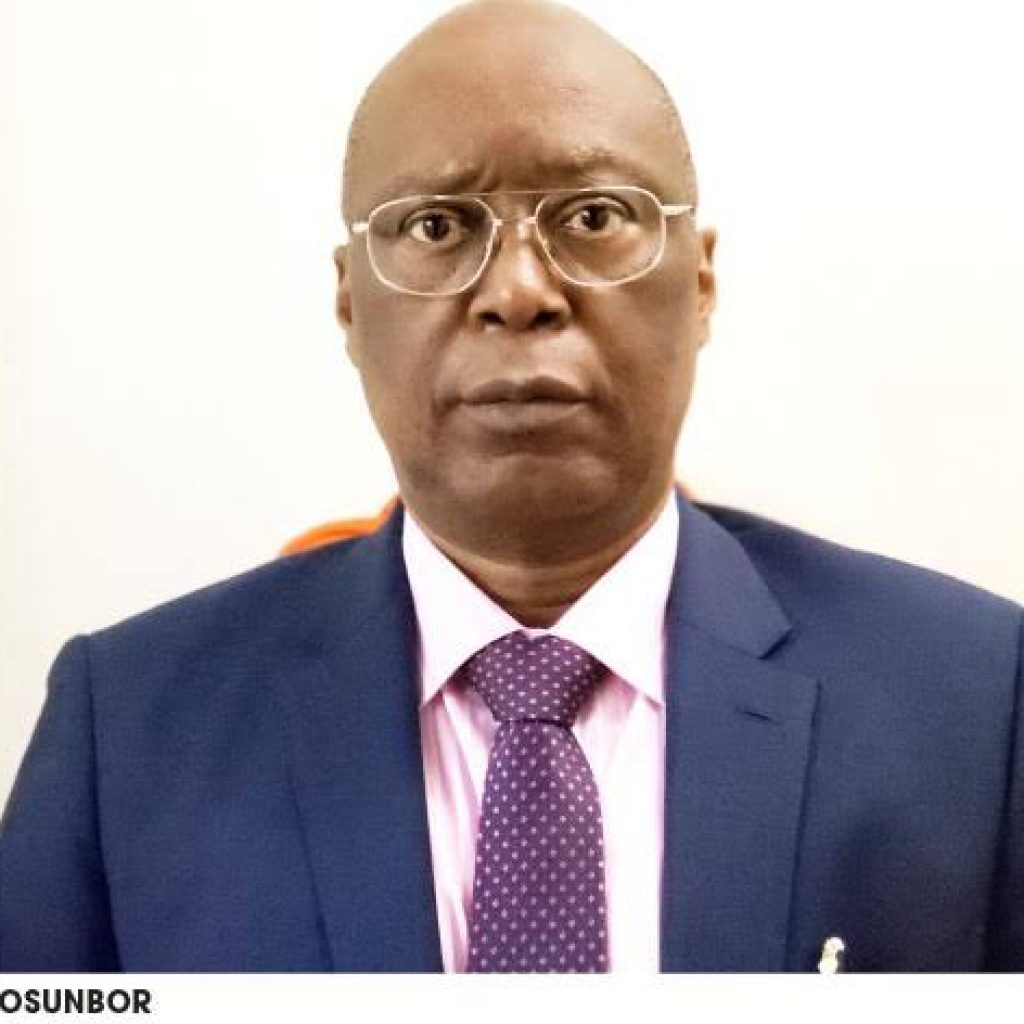
Osunbor is no outsider throwing stones. A first-class graduate of the University of Nigeria, Nsukka, called to the Nigerian Bar with distinction, and later a lecturer and dean at the University of Lagos and Lagos State University, he spent seventeen years of his working life in Lagos. He knew the city’s political networks from the inside. He even counted among his Faculty of Law colleagues figures such as Yemi Osinbajo. Yet he insists he lacks the “traits” required for acceptance in the current inner circle: the willingness to carry EFCC cases or the kind of dubious baggage that appears to serve as a qualification rather than a disqualification.
The Gbajabiamila Record
Osunbor singled out Femi Gbajabiamila (now Chief of Staff to the President) as emblematic. The public record supports the substance of the concern, even if the legal characterization is more precise than popular rhetoric allows.
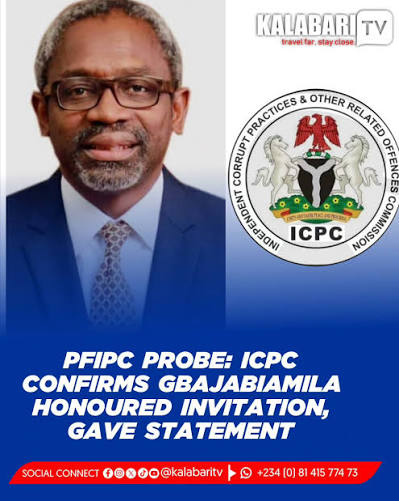
In the early 2000s, Gbajabiamila practiced law in Georgia under the name Femi Gbaja. In January 2003 he received a $25,000 personal-injury settlement for a client, deposited it in his attorney trust account, failed to disburse the funds, withdrew them for personal use, closed his practice, and returned to Nigeria. In February 2007 the Supreme Court of Georgia, acting on a petition for voluntary discipline in which he admitted the violation of Rule 1.15(I) of the Georgia Rules of Professional Conduct, suspended him from the practice of law for 36 months. The offence was ordinarily punishable by disbarment; the court accepted the lesser sanction after he refunded the money. His Georgia Bar membership was later permanently terminated around 2020.
Nigerian courts have repeatedly held that this was a professional disciplinary matter, not a criminal conviction by a court of law, and therefore does not trigger constitutional disqualification under Section 66 of the 1999 Constitution. Gbajabiamila and his defenders have emphasized this distinction for years, and an FCT High Court quashed related criminal complaints on jurisdictional and substantive grounds. The State Bar of Georgia itself confirmed there was no criminal conviction. That legal distinction is real. It does not erase the admitted misconduct: a lawyer who took a client’s settlement money for personal use, left the jurisdiction, and later returned to occupy successive high offices in Nigeria, Majority Leader, Speaker of the House of Representatives, and now Chief of Staff. Even Omoyele Sowore had alluded to Gbajabiamila case in the United States.
Osunbor’s point is not that every such person has a criminal conviction stamped on a passport. It is that the circle appears comfortable with, even preferential toward, individuals whose ethical or legal records would have ended careers in systems that treat client funds and professional integrity as non-negotiable.
Broader Patterns
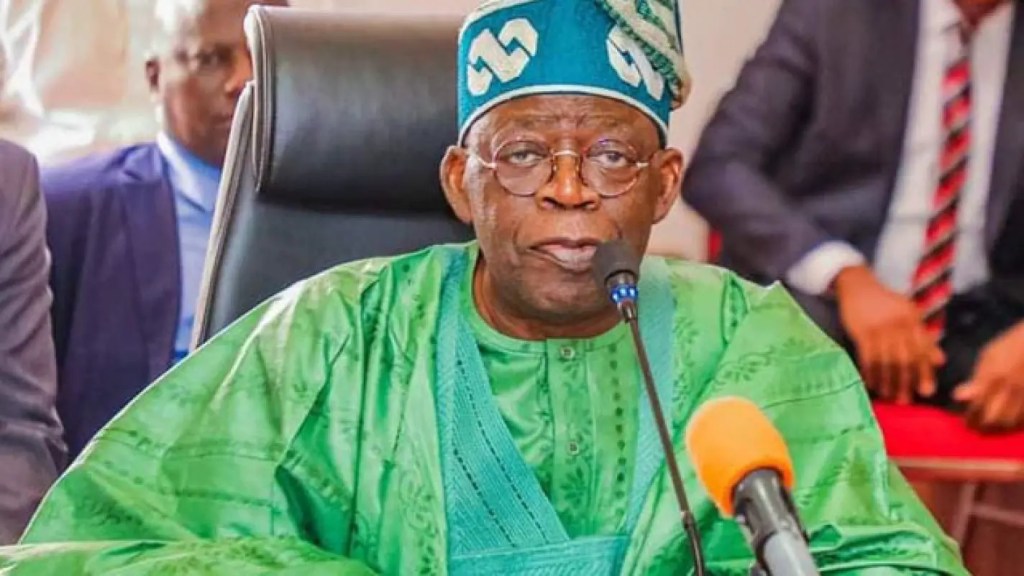
The same pattern appears elsewhere. Tinubu himself resolved a 1993 civil forfeiture action in the United States District Court for the Northern District of Illinois by agreeing to the forfeiture of $460,000 linked by U.S. authorities to a heroin-trafficking investigation. The proceeding was civil (in rem), not criminal; Tinubu was never charged or convicted. Nigerian courts, including the Presidential Election Petition Court in 2023, accepted that distinction. Yet the existence of the forfeiture, the surrounding investigative affidavits, and the continued efforts by opponents and lobbyists to keep the records in circulation remain part of the public record.
Wale Edun, a long-time Tinubu associate who served as Finance Minister and Coordinating Minister of the Economy, was recently removed from cabinet. Official explanations cited health and resignation; reporting pointed to tensions over budget implementation and performance. Osunbor’s reference to someone “shown the way out” because he “didn’t quite fit into that description” tracks the perception that pure technocrats without the preferred baggage eventually find the door.
Other high-profile appointments and political alignments have featured individuals facing EFCC scrutiny or unresolved fraud allegations; former Humanitarian Affairs Minister Betta Edu (removed amid fund-diversion claims) and figures such as Ngozi Olejeme (facing trial over alleged N1 billion fraud and earlier property forfeiture orders). The pattern is not that every Tinubu appointee carries such baggage; it is that the presence of such records does not appear to function as a barrier to proximity or preferment.
Leadership and Followership
Osunbor’s deeper argument is institutional and cultural. Leadership, he notes, has a way of reflecting on followership. When those at the apex are widely perceived as carrying EFCC files or foreign disciplinary records, the younger generation internalizes the lesson that success requires similar compromises. Nigerians excel abroad, in American universities, British professional bodies, and global corporations, yet at home the environment appears to reward a different skill set. The question he poses is whether the problem is the people or the system that selects them.
He does not claim Nigeria is irredeemable. He believes God can still raise leaders who inspire rather than merely manage decline. But he insists that continuation under the present configuration risks deeper entrenchment of the very vices that have already eroded public trust, international reputation, and institutional capacity. Smaller, less-endowed African countries manage functional systems; Nigeria, with its human capital, does not. The difference, in his view, is the character of those allowed near the levers of power.
The Choice Ahead
Critics will dismiss Osunbor as a partisan voice, a former PDP figure now aligned with opposition platforms. That does not answer the factual core of his critique. The Georgia disciplinary record is public. The civil forfeiture is public. The revolving door of EFCC-linked or ethically compromised figures into and out of high office is observable. Defenders correctly note the absence of criminal convictions in several of the most-cited cases; they less often address why such records appear so frequently among those granted influence.
Nigeria’s next national decision will test whether citizens accept the proposition that competence and integrity are optional, or whether they insist that the people who run the country must themselves be able to withstand the scrutiny of a functioning rule-of-law system, at home and abroad. Osunbor has placed the question squarely on the table. The record, carefully examined, does not make it easy to dismiss.
Prof. Oserheimen Osunbor is a well-documented public figure with a long record in academia, the Senate, and state governorship. He was former Edo State Governor and Senator, Professor Oserheimen Osunbor.


Leave a comment