By The Searchlight Editorial Team / August 22, 2026
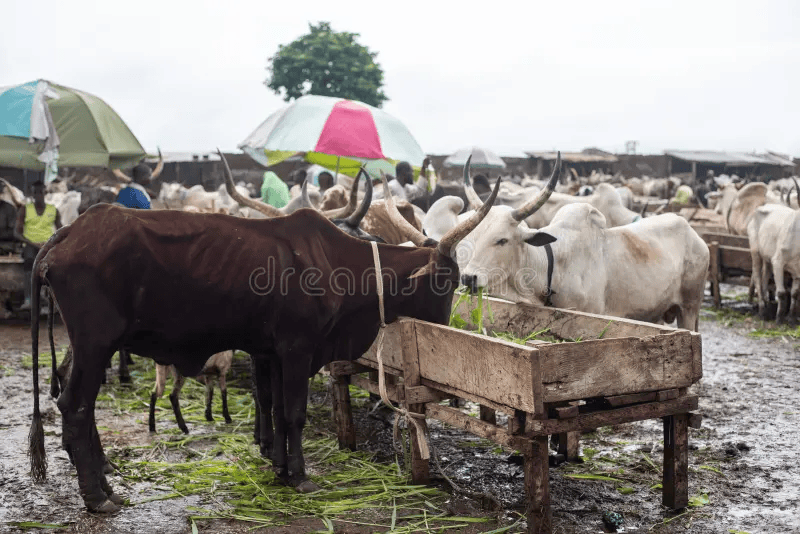
The Federal Government’s proposal to establish pilot cattle ranches in Benue State under the National Ranching Policy is not merely ill-timed—it is an affront to every Benue citizen who has lost land, livelihood and loved ones to years of Fulani militia violence. Coming at a moment when over 500,000 Benue people remain trapped in Internally Displaced Persons (IDP) camps, this plan is a reckless policy that rewards the very violence it purports to solve.
The Land Belongs to the Displaced, Not to Cattle
The three major socio-cultural organizations of Benue, Mzough U Tiv (MUT), Ochetoha k’Idoma (OKI), and Omi Ny’Igede (ONI), have spoken with one voice: no ranching can proceed until every displaced Benue citizen is safely returned to their ancestral land. Air Commodore Titus Agbecha (rtd), Chairman of the Benue Socio-Cultural Organizations, rightly declared it “unjust to talk about new land use for ranches when the owners of the land are still refugees in their own state”.
How can the APC administration seriously discuss allocating land for cattle when thousands of families have no home to return to, no shelter, no farms and no livelihood? The International Organization for Migration’s February 2026 Displacement Atlas recorded 464,543 IDPs in Benue state, with Guma, Ukum, Makurdi, Gwer-West, Logo, Kwande, Gwer East and Agatu bearing the heaviest burden. Over 181 churches across seven deaneries in the Makurdi Catholic Diocese have closed down, and more than 100 churches have been completely burnt. These are not statistics; they are communities erased. The truth is that those are the communities with elephant grass, the driving force for acquisition and domination.
A Policy Born at the Worst Possible Time
The Benue socio-cultural leaders have made it clear they are not opposed to modern ranching in principle. Their objection is to the timing and the process. For over five years, several Benue communities have been under siege; villages attacked, occupied, residents killed or chased away, with no comprehensive mediation, no justice and no resettlement. Establishing ranches in this atmosphere, as Agbecha warned, “will be seen as rewarding violence and dispossession”.
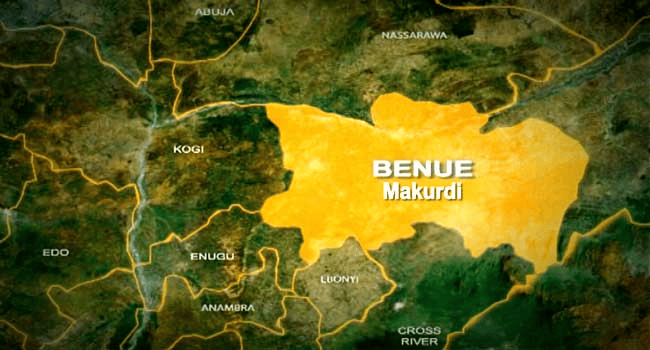
This is precisely the fear that haunts every Benue citizen. The Fulani violence against land owners in Benue, Southern Kaduna and Plateau has never been random; it is a sustained campaign of land conquest.

President Bola Tinubu himself acknowledged during his Benue visit that the violence was “about land-grabbing”. Over 300 communities in six local councils have been forcibly occupied by Fulani herdsmen. Now the same administration that acknowledged this land-grabbing wants to formalize it by turning occupied and contested lands into government-backed ranches.
The RUGA Resurrection Benue Rejected
Benue people have not forgotten the Ruga settlement saga. They remember how the APC government attempted to impose Fulani settlements across the state under the guise of livestock development. The proposed National Ranching Policy carries the same foul smell, a land-grabbing scheme disguised as livestock development. The Middle Belt Forum has rightly rejected this policy, warning that “hundreds of thousands of hectares of land across the Middle Belt had already been abandoned or occupied following years of attacks, killings and displacement blamed on armed herders”.
Why is the Federal Government considering Benue, Plateau and Southern Kaduna, the very epicentres of farmer-herder violence and displacement, for pilot ranches when
Silence and Secrecy Are Not Governance
The Federal Government’s own selection criterion gives the game away. Benue, Plateau, Nassarawa, Kaduna and Adamawa were chosen precisely because they have recorded the highest incidences of conflict. In other words, the places that have bled the most are the first to be designated for ranching. Abuja calls this conflict resolution. The people living in the camps call it legitimizing the spoils. Meanwhile, there are states like Jigawa, Kano, Sokoto, Bauchi, Zamfara and Kebbi which have vast expanses of available land? The answer is painfully obvious: this is not about livestock development. It is about legitimizing territorial conquest.

Governor Hyacinth Alia has reportedly urged calm and consultation. That is prudent politics. It is not justice. Benue already has an anti-open grazing and ranches establishment law from 2017. Enforcement has been weak because the federal security architecture has consistently failed to protect farming communities or dislodge occupiers. Now the same federal government that could not secure the land wants to redesign its use. The Catholic priests of Makurdi Diocese, the Christian Association of Nigeria in the state, Tiv diaspora groups and the Middle Belt Forum have all rejected the timing and the premise. Their demand is simple and non-negotiable: return the displaced to their ancestral lands under genuine security first. Only then can any discussion of voluntary, community-driven ranching begin.
The Benue PDP has rightly demanded clarity: Has the Alia administration accepted the FG’s proposal? Has any land been committed? Where is it located? Under what legal arrangement is it to be acquired? These are not opposition questions; they are legitimate demands from a people whose ancestral land is at stake. The PDP’s words deserve repeating: “No decision concerning the land and future of our people should be negotiated behind closed doors and subsequently presented to them as a fait accompli. Benue belongs to the Benue people. No government has the moral right to bargain away their land without their knowledge and consent”.
Even the Nigeria Catholic Diocesan Priests Association (NCDPA), Makurdi Diocese, has rejected the plan, warning that imposing ranching now could lead to land grabbing and permanent displacement of indigenous people. The priests insist that ranching cannot be discussed until displaced Benue residents are safely returned to reclaim their ancestral lands.
Benue Is the Food Basket: Not a Cattle Colony

Benue remains the food basket of the nation. Any programme involving large-scale land acquisition must not undermine food production. But how can Benue feed Nigeria when its farmers cannot access their own land? As Agbecha put it: “For Nigeria to be food secure, Benue farmers must first be secure on their land”.
The Path Forward
The APC administration must listen to the people of Benue. The Federal Government must:
· Prioritize the safe return and resettlement of all IDPs to their ancestral homes before any pilot scheme begins
· Provide genuine mediation, improved security and restoration of occupied communities
· Engage in meaningful consultation with host communities and secure their consent
· Ensure that any ranching programme is voluntary, community-driven and does not displace food production
Peace must precede policy. Benue has bled enough. Any government that truly cares about its citizens would not reward the violence that has driven them from their homes. The APC’s pilot ranch plan in Benue is not a solution; it is an insult. And the people of Benue will not accept it.
Benue is the food basket of the nation. For Nigeria to be food secure, Benue farmers must first be secure on their land.


Leave a comment