By Matthews Otalike, The Searchlight Correspondent / August 17, 2026
In the court of public opinion and the conscience of a democracy, questioning the trust deficit surrounding President Bola Ahmed Tinubu is neither personal animus nor ethnic or religious spite. It is a civic duty. Supporters and media handlers frequently dismiss scrutiny of longstanding certificate controversies, the 1990s U.S. civil forfeiture linked to alleged narcotics proceeds, opaque personal background questions, and non-competitive mega-contracts as “hatred.” That framing is a convenient deflection. Transparency and accountability have no alternative. Nigeria’s more than 200 million citizens deserve both. Their absence exacts a heavy price on growth, social cohesion, investor confidence, and the country’s standing with international partners.
A free press in the tradition of The Searchlight, truth to power, must refuse the false choice between silence and malice. Holding leaders to account is the oxygen of democracy. When records remain contested, when major public resources are awarded without open competition, and when legitimate national concerns are met with counter-narratives rather than forthright engagement, trust erodes. That erosion is not abstract. It affects whether young Nigerians believe effort and integrity matter, whether investors commit capital, and whether partners treat the Nigerian state as a reliable interlocutor.

Recent events illustrate the pattern. On 28 July 2026, leaders of the Catholic Bishops’ Conference of Nigeria (CBCN), led by its President, Archbishop Matthew Man-Oso Ndagoso, paid a courtesy visit to President Tinubu at the Presidential Villa. Their address, “Partners in Building a Just, Peaceful and Prosperous Nigeria,” raised concrete challenges facing ordinary citizens: pervasive insecurity that leaves communities, schools, farms and places of worship vulnerable; economic hardship that continues to push millions deeper into poverty; the integrity of the 2027 electoral process; political inclusion; and legitimate concerns among Christians about their place in the polity following the Muslim-Muslim ticket. John Cardinal Onaiyekan later recounted that the bishops spoke of a nation “bleeding” and that the President disagreed with their assessment, insisting the economy was performing and rejecting the diagnosis of widespread distress. The clerics framed their intervention as pastoral and patriotic responsibility, not partisan opposition.
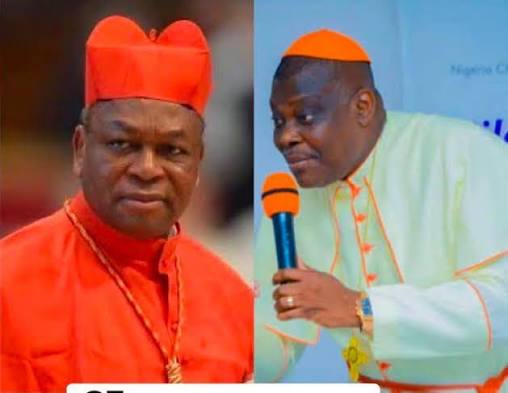
What followed was revealing. Methodist Bishop Stephen Adegbite, Executive Secretary of the Nigerian Christian Pilgrims Commission, publicly pushed back against Cardinal Onaiyekan. He questioned the propriety of disclosing the substance of the closed-door discussion, revisited the Cardinal’s 2023 position on recognizing the election outcome pending Supreme Court determination, and counseled against “running down” other candidates. Critics reasonably saw this as an attempt to neutralize or bury the force of the bishops’ message by elevating a counter-voice aligned with official sensitivities. The effect was to shift focus from the substance of national hardship and democratic safeguards toward inter-clerical disagreement.
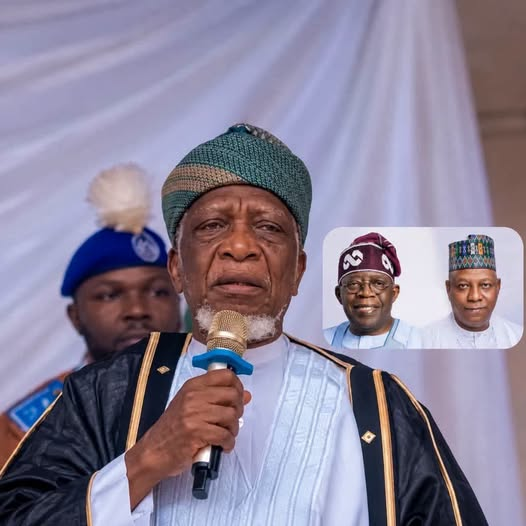
Shortly thereafter, Islamic cleric Sheikh Sani Yahaya Jingir escalated the distraction. At a public event he praised the Muslim-Muslim ticket, framed the 2023 outcome in triumphalist religious terms, referred to non-Muslims in language widely reported as “infidels,” urged Muslims to demonstrate numerical and political dominance at the polls, and suggested those unwilling to accept the arrangement should leave the country. The remarks were widely condemned as divisive and inflammatory. The relative muted official response, set against the sharper reaction to the Catholic bishops’ candour, reinforced perceptions of selective sensitivity: uncomfortable truths about governance and the lived experience of citizens are treated as threats, while statements that inflame identity fault-lines receive softer handling.
This sequence is not coincidence. It is a familiar tactic, deflect, divide, and dilute. When the core issues are transparency in personal credentials, accountability in the use of public power and resources, and honest acknowledgement of security and economic realities, the response of choice becomes the manufacture of alternative controversies. The Catholic bishops did not invent Nigeria’s challenges; they merely refused to pretend those challenges do not exist. Raising them is not hatred of any individual. It is fidelity to the people who bear the consequences.
Nigeria’s democracy was hard-won. It cannot thrive on managed narratives or the silencing of inconvenient questions. A leadership secure in its legitimacy welcomes scrutiny, releases records where public interest demands, subjects major contracts to competitive processes, and engages critics on the merits rather than through proxies or identity diversions. The alternative is a progressive hollowing-out of trust. When citizens conclude that truth is negotiable and power is unaccountable, compliance with reforms weakens, cynicism deepens, and the social contract frays. International partners notice. Capital notices. The next generation notices.
The Searchlight will continue to examine the trust deficit without apology or personal venom. The measure is simple: does the conduct of public office advance transparency, accountability, and the common good of more than 200 million Nigerians? Where it falls short, silence is not neutrality, it is complicity. Nigeria deserves better than deflection. It deserves the truth.


Leave a comment