By Matthews Otalike, The Searchlight / August 17, 2026
For more than two decades, allegations concerning academic credentials, a 1990s U.S. civil forfeiture linked to heroin trafficking proceeds, opaque personal background, and non-competitive award of major infrastructure contracts have dogged Bola Ahmed Tinubu.
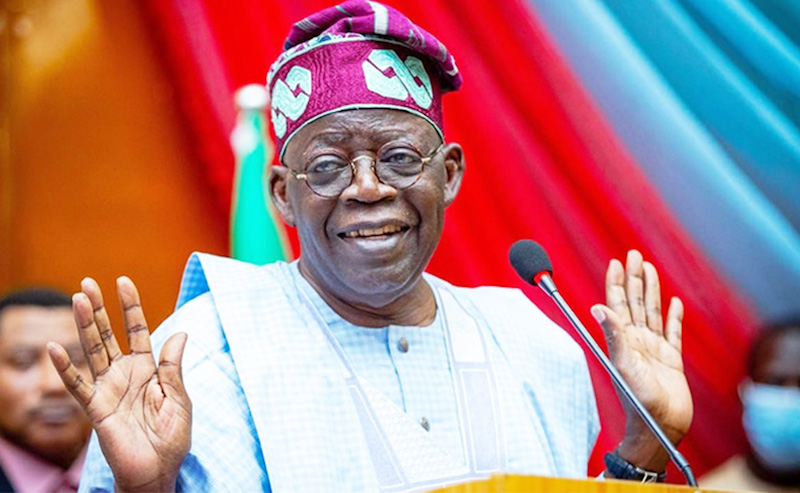
These issues, first raised when he sought the Lagos State governorship in 1999, resurfaced during the 2023 presidential election and continue into preparations for 2027. While Nigerian courts ultimately upheld his elections and Chicago State University (CSU) has confirmed he attended and graduated, unresolved discrepancies and perceptions of opacity have deepened a broader crisis of public and international trust in Nigerian leadership. This has tangible implications for domestic governance, investor confidence, and Nigeria’s standing with foreign partners.
Certificate Controversies: From 1999 to 2027
Questions about Tinubu’s educational records date to his 1999 Lagos governorship bid. He submitted claims of primary and secondary schooling (including institutions whose existence or records have been disputed) that faced challenges. In subsequent filings he sometimes marked lower-level qualifications as “not applicable” or attributed missing documents to theft during exile in the 1990s.
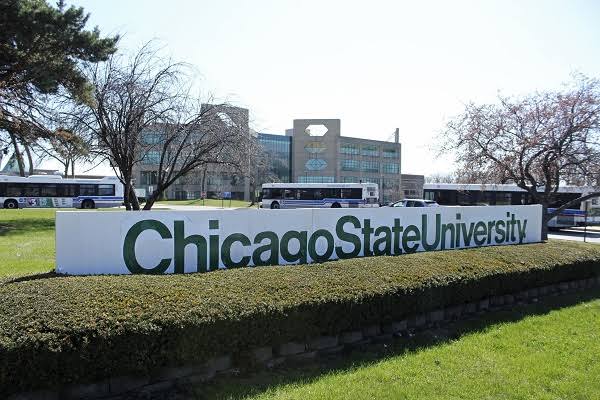
Ahead of the 2023 election, Tinubu submitted a CSU Bachelor of Science in Business Administration diploma (with honors) dated June 1979, along with supporting materials. After the election, rival Atiku Abubakar pursued U.S. court discovery. CSU released records and its registrar, Caleb Westberg, testified under oath that a Bola A. Tinubu attended from 1977 to 1979 and graduated. The university affirmed the degree.
However, the specific diploma Tinubu presented to INEC differed in appearance, seals, fonts, dates (one version June 22, another referenced June 27), and signatories from contemporaneous 1979 samples. It bore signatures associated with officials (including Elnora Daniel) who joined CSU years later (Daniel in 1998). CSU indicated it does not retain original diplomas in the same way and that replacements are often handled by vendors using then-current templates; the registrar could not authenticate the precise INEC-submitted document as one issued by the university in 1979.
BBC analysis found no conclusive evidence of forgery of the academic record itself, attributing differences largely to re-issuance practices, though independent Nigerian fact-checkers and critics highlighted inconsistencies (including DOB variations of 1952/1954/1955 across documents, a Southwest College transcript element flagged with gender issues in some reporting, and secondary-school claims referencing a Government College Lagos that opened after the alleged graduation year). Nigerian courts dismissed the forgery challenges on the evidence presented and procedural grounds; the Supreme Court upheld the 2023 result.
For 2027 filings, Tinubu’s published INEC particulars list only the CSU degree; primary and secondary sections were left blank, consistent with earlier patterns of omission or non-submission of those documents. INEC has stated it publishes what candidates submit and does not independently verify authenticity.
These cumulative issues, clerical errors claimed by supporters versus allegations of fabrication by critics, have not produced a criminal conviction for forgery but have sustained public skepticism about transparency.
The 1990s U.S. Forfeiture and Ongoing Records Requests
In the early 1990s, U.S. authorities investigated a Chicago-area white-heroin trafficking and money-laundering network. Court documents from a 1993 civil forfeiture case (United States v. Funds in Account No. 263226700 et al.) named accounts controlled by Bola Ahmed Tinubu among those holding funds for which there was probable cause of connection to narcotics proceeds. Tinubu was not criminally charged or convicted. He entered a settlement under which approximately $460,000 was forfeited to the U.S. government; remaining funds were released.
Journalist and FOIA litigant Aaron Greenspan has sought fuller DEA, FBI, and related agency files. U.S. courts have ordered processing of certain records and rejected some blanket Glomar (neither confirm nor deny) responses, yet production has been delayed amid agency claims involving privacy, national security, and ongoing sensitivities. The Nigerian presidency has described the publicly known material as decades-old and non-indicting.
The combination of a substantial civil forfeiture without criminal adjudication, plus continued resistance to full disclosure, fuels ongoing controversy.
Background and Heritage Questions
Tinubu’s early life, parentage, and precise origins have also been subjects of persistent inquiry and rumor. Public records and family associations emphasize Lagos ties through the late Alhaja Abibatu Mogaji, yet critics (including some investigative commentary and opposition figures) have pointed to gaps in contemporaneous documentation, alleged alternative hometowns or names in secondary sources, and inconsistencies in early biographical claims. No definitive judicial finding has overturned his Nigerian citizenship or eligibility on these grounds, but the opacity itself contributes to the trust deficit.
Contract Awards and Cronyism Perceptions
A parallel concern involves major public contracts. The multi-billion-dollar Lagos-Calabar Coastal Highway (estimated in the $11–13 billion range overall) as well as the Eko Atlantic project, were awarded to Hitech Construction, linked to Gilbert Chagoury and the Chagoury Group, without open competitive bidding. Works Minister Dave Umahi defended the decision on the basis of the firm’s specialized track record (including coastal and flood-control work in Lagos). Similar non-competitive or limited processes have been reported for other large Chagoury-linked awards. Longstanding personal and business associations between Tinubu and the Chagoury family, including reported prior joint interests involving family members, have intensified perceptions of favouritism.
Critics argue that this violates the spirit (and in some views the letter) of public-procurement rules designed to ensure value for money and transparency, especially amid Nigeria’s fiscal constraints.
Implications for Nigeria’s Growth and International Standing
A leadership trust deficit of this nature carries concrete costs:
- Domestic governance and investment climate: Persistent questions about the president’s personal integrity and the fairness of contract awards erode confidence in the rule of law and institutions. Domestic and foreign investors factor political and reputational risk into decisions; opaque processes raise the cost of capital and deter long-term commitments needed for infrastructure, manufacturing, and energy diversification.
- International partners and diplomacy: Western governments, multilateral lenders, and compliance-focused institutions (anti-money-laundering regimes, sanctions frameworks, ESG standards) monitor high-level integrity issues closely. Unresolved U.S. investigative files, certificate controversies, and high-profile sole-source awards complicate narrative-building around reforms, debt management, and security cooperation. Partners may hedge engagement, demand stricter conditionality, or privately question the reliability of interlocutors.
- Democratic legitimacy and social cohesion: When foundational eligibility and character questions linger across election cycles without full, transparent resolution, public cynicism grows. This weakens compliance with difficult economic reforms, fuels polarization, and can undermine the soft power Nigeria seeks as Africa’s largest democracy and economy.
Nigeria’s challenges, security, fiscal sustainability, human capital, infrastructure, are immense. Addressing them requires not only competent policy but also a baseline of institutional credibility. Allegations that remain unadjudicated as criminal matters still exact a reputational tax. Greater proactive transparency (full release or independent audit of contested records where possible, competitive procurement as the default, and clearer personal disclosures) would help close the gap between formal legal clearance and public trust. Without it, the trust deficit risks constraining both domestic progress and the international partnerships Nigeria needs.


Leave a comment