By The Searchlight Editorial Team / August 11, 2026
Nigeria’s 1999 Constitution (as amended) is unambiguous. Section 10 declares that “The Government of the Federation or of a State shall not adopt any religion as State Religion.” Section 38 guarantees freedom of thought, conscience, and religion. Section 42 prohibits discrimination on grounds of religion. The country is constitutionally secular and multi-religious. Yet recent statements by Sheikh Sani Yahaya Jingir, National Chairman of the Council of Ulama of Jama’atu Izalatil Bid’ah Wa Iqamatus Sunnah (otherwise referred to as Izala), have tested these foundations, and the selective enforcement of laws against hate speech, incitement, and statements that undermine national cohesion.
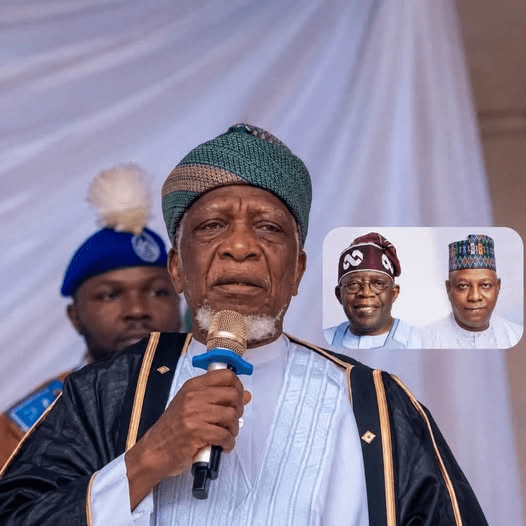
Last week, at an event in Kano (variously described as a mass wedding organized by the Kano State government or a political gathering linked to Governor Abba Yusuf’s “Abba Go Again” efforts), Jingir publicly advocated continued support for a Muslim-Muslim presidential ticket ahead of 2027. He praised President Bola Tinubu for the 2023 arrangement, declared “Muslim-Muslim! No going back on this,” referred to opponents and Christians as “infidels,” urged Muslims to “show the infidels their limit” who claim numerical superiority, and asserted that Muslims outnumber Christians, framing electoral outcomes as proof of demographic and political dominance. Governors Abba Yusuf of Kano and Umar Namadi of Jigawa were present. Viral videos captured the remarks.
Reactions followed swiftly from some quarters. Femi Fani-Kayode described the rhetoric as “highly provocative,” “extremist,” and a “slippery and dangerous slope,” insisting Nigeria is “NOT a Muslim country and neither is she a Christian country. She is a SECULAR and MULTI-RELIGIOUS state.” Former Sports Minister Solomon Dalung rejected the idea of Nigeria as a “Muslim trophy,” arguing a ticket does not feed families, secure communities, or fix infrastructure. Rabiu Kwankwaso condemned the comments as divisive and dangerous to national unity. Rev. Joseph Hayab of the Northern Christian Association said they exposed long-standing discrimination against northern Christians. Reuben Abati called the language incitement and hate speech warranting arrest, noting police were present and governors failed to distance themselves. Amnesty International’s Isa Sanusi labelled the weaponization of religion “un-Islamic.” Some Muslim voices, including Dr Ahmad Gumi, urged keeping religion out of “dirty politics,” while others, including a Plateau JNI media aide, defended Jingir.

What has not followed is any reported official quizzing, investigation, or arrest by federal or state authorities. Presidential spokespersons and allied voices who routinely engage critics have been notably muted on this specific episode. This pattern is not isolated. Jingir has a history of controversial interventions; earlier remarks on ethnic grievances and other matters have drawn condemnation without consistent legal consequence. Similar disparities appear across religious lines: statements perceived as threatening or supremacist from certain northern Islamic platforms often attract delayed or minimal institutional response, while comparable language from Christian or southern voices frequently triggers swift public outrage, security attention, or legal processes. Blasphemy provisions in northern Penal Codes and Sharia frameworks (applied in 12 states) are enforced unevenly, often more vigorously against perceived insults to Islam than against inflammatory majoritarian claims. Federal tools, Criminal Code provisions on sedition and insult to religion, Penal Code sections on exciting hatred or public peace breaches, Electoral Act restrictions on religious campaigning, and Cybercrimes Act measures, exist on paper but are applied with striking selectivity.
Structural and Political Reasons for the Double Standard
Several interlocking factors explain the disparity.
Demographic and political realities in the North. Northern states are believed to hold significant electoral weight. Clerics with large followings in organizations like Izala command influence over voters. Politicians court them; governors attend their events. Challenging such figures risks alienating blocs that matter in primaries and general elections. The Muslim-Muslim ticket itself succeeded in 2023 partly by consolidating northern support while relying on other coalitions elsewhere. Rhetoric that frames the polity in majoritarian religious terms is therefore politically useful to some actors even when constitutionally corrosive.
Asymmetric enforcement culture. Security agencies and prosecutors operate under intense pressure to avoid “religious crises.” Inflammatory language from majority-community platforms in the North is frequently treated as internal discourse rather than national threat, while minority or southern voices face higher scrutiny. Blasphemy-related violence and arrests have disproportionately targeted critics of Islam or perceived apostates while parallel accountability for anti-Christian or supremacist framing is rarer. The absence of a robust, evenly applied national hate-speech framework (previous bills collapsed amid free-speech concerns) leaves gaps that politics fills unevenly.
Institutional caution and elite calculation. Federal authorities, including the presidency, prioritize short-term stability and electoral arithmetic. Spokespeople who vigorously rebut opposition figures fall silent when the speaker is a northern cleric aligned, even loosely, with the ruling configuration. Civil society and media amplify Christian-side complaints more readily in southern and international circuits, but institutional follow-through remains weak. This creates a feedback loop in which impunity encourages repetition.
Historical residue. Nigeria’s religious geography, with Muslims predominant in the North and Christians in the South and Middle Belt, has long fuelled zero-sum fears. Claims that “Nigeria is a Muslim country” or calls to “show infidels their limit” echo older Islamist political projects and feed reciprocal Christian anxieties about “Islamization.” These are not abstract. Northern Christians document patterns of discrimination, restricted land access for churches in some areas, and violence in reported farmer-herder or jihadist contexts that authorities have struggled to curb impartially. Jingir’s remarks, delivered in the presence of sitting governors without immediate repudiation, lend concrete texture to those fears.
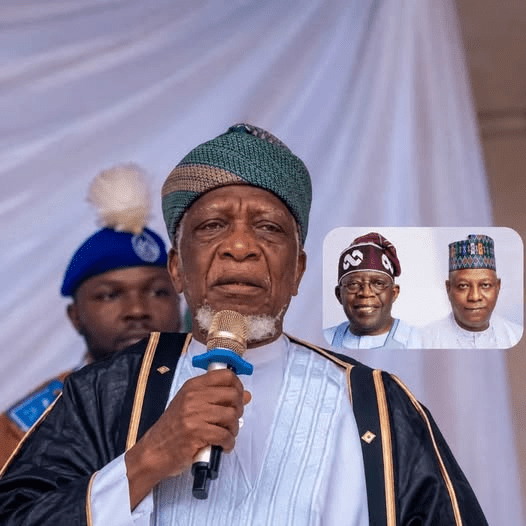
Jingir’s outlandish and insensitive comments may fuel the “justification” of allegations of a planned Islamization of Nigeria, even without a coordinated, top-down conspiracy to impose Islamic law nationwide or erase other faiths. Nigeria’s federal structure, Christian demographic weight in the South and Middle Belt, military composition, and economic interdependence make full theocratic capture improbable for now. Many Muslim leaders and ordinary citizens reject supremacist framing; the Constitution and courts remain secular on paper. However, the pattern of selective silence, political courtship of majoritarian religious rhetoric, uneven application of speech laws, and failure to confront demographic triumphalism does substantiate a softer, more insidious dynamic: the incremental normalization of religious majoritarianism in the North, the instrumentation of faith for electoral ends, and the erosion of equal citizenship. When one set of citizens can publicly redefine the national character and assign “limits” to others without consequence, while reciprocal speech invites hounding, the social contract frays. Trust collapses. Reciprocal radicalization becomes likelier.
Truth requires consistency. Incitement, hate speech, and statements that portray Nigeria as the property of one faith violate both the letter of the Constitution and the practical requirements of a multi-religious federation. Laws against inciting hatred between classes, religious campaigning that inflames sectional feelings, and public insults likely to breach the peace should be enforced without regard to the speaker’s robe, region, or electoral utility. Governors present at such events should issue clear disclaimers or face political cost. Security agencies should investigate credible reports of incitement equally. Presidential voices that defend secularism in other contexts should apply the same standard here.
The Searchlight insists that Nigerians of every faith have a stake in this. A country where some clerics can declare demographic ownership and urge the majority to “show the limit” of others, while authorities look away, is not moving toward justice or stability. It is moving toward deeper division. The remedy is not reciprocal hate. It is equal application of the law, unambiguous defence of the secular Constitution, and the political courage to tell every powerful preacher, Muslim or Christian, that Nigeria belongs to all its citizens, not to any single creed. Awareness is the first step. Accountability must follow.


Leave a comment