By The Searchlight Investigative Desk / June 15, 2026
It is a sight that defies logic and enrages the soul: bandits, men who have turned entire communities into graveyards, standing in open fields before government officials, brandishing AK-47s, rocket-propelled grenades, and heavy machine guns. They are not under arrest. They are not disarmed. They are negotiating.
For the average Nigerian watching these scenes unfold on social media, the question is visceral: Why is the military standing by? Why is no one disarming these criminals?
The answer is as disturbing as it is complex. Our investigation reveals that the Nigerian military’s apparent passivity is not cowardice. It is the logical outcome of a failed policy framework, a fractured command structure, and a long, bitter history of disarmament efforts that have repeatedly backfired. The military is not watching because it wants to. It is watching because past attempts to force disarmament have turned bandits into deadlier enemies, and because the politicians, not the generals, are setting the rules of this deadly game.
To understand why the military does not storm every bandit camp and seize every weapon, one must look south, to the Niger Delta.
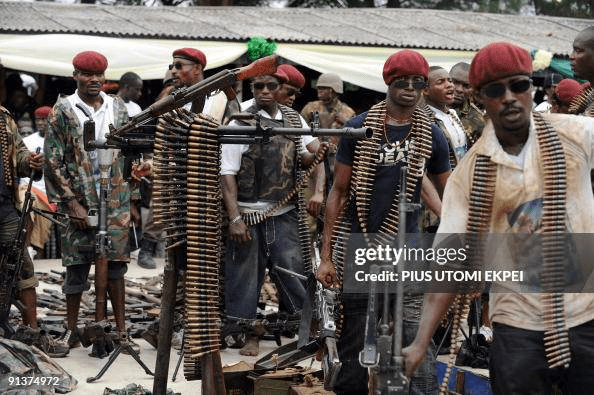
Between 2004 and 2009, Nigeria attempted disarmament in the creeks of the South-South. The results were catastrophic. In Rivers State, a government disarmament programme offered cash payments, amnesty, and promises of employment to militants who turned in their weapons. Over 3,000 weapons were collected. But observers noted that only a small fraction of arms in circulation were surrendered, and many of those handed in were old, unserviceable AK-47s from the late 1960s. Worse, the high prices paid for weapons created a perverse incentive: militants went out and purchased more guns just to submit them for profit.
The programme did not secure peace. Instead, disputes over payments split militant factions. Smaller groups threatened violence unless they were paid more. By late 2004, the ceasefire had collapsed entirely.
When the Federal Government switched to a militarized approach, launching “Operation Restore Hope”, the result was not peace but the emergence of the Movement for the Emancipation of the Niger Delta (MEND), the most vicious militant group the region had ever seen. Military force radicalized the militants rather than eliminating them.
The 2009 Amnesty Programme under President Yar’Adua collected an impressive arsenal: 2,760 assorted guns, 287,445 rounds of ammunition, 18 gunboats, and even dynamite. But here is the secret the government does not want you to know: Militants surrendered only a fraction of their weapons. Most kept their best arms hidden in the creeks, distrustful of the government’s genuine commitment. There were even allegations that some state officials bought weapons to submit simply to create the appearance of success.
The lesson from the Delta, now deeply embedded in Nigerian security thinking, is brutal: **Disarmament without comprehensive reintegration fails. And forced disarmament creates monsters.**
The military has not forgotten. And when politicians in the North now negotiate with bandits, the generals remember the Delta—and hesitate.
The Northern Experiment: When Peace Deals Failed to Disarm
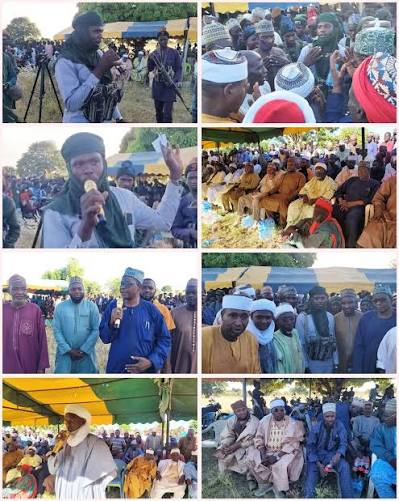
In Zamfara and Katsina States, the same pattern has played out with devastating predictability.
Between 2016 and 2020, state governments offered amnesty and cash inducements to bandits who surrendered their weapons. Initially, there were successes. In Katsina, authorities recovered 110 AK-47 rifles, 361 Dane guns, and about 28,000 rustled cattle. In Zamfara, notorious bandit kingpin Auwalu Daudawa surrendered one AK-49, 19 AK-47 rifles, and 72 rounds of anti-aircraft ammunition.
But here is the crucial detail the government does not advertise: Fewer than 1,200 arms were surrendered across both states by January 2020. Given that intelligence estimates suggest hundreds of bandits possess multiple assault rifles each, this represents a tiny percentage of the total arsenal in the forests.
Why did the government accept such paltry surrenders? Because the alternative was nothing. As one security source told The Searchlight, “You take what they give you, or you get nothing and the attacks continue immediately.”
The peace deals broke down within months. Bandits accused the government of failing to fulfill rehabilitation promises. Government officials accused bandit leaders of reneging on the agreements. But the deeper truth is that the bandits never truly disarmed. They surrendered old or surplus weapons, kept their best arms hidden, and returned to violence when it suited them.
One notorious bandit leader, Buharin Daji, surrendered part of his arsenal as part of a deal with Zamfara state governor. But after the government arrested one of his associates, he walked out of the agreement and resumed attacks that spread to Katsina, Niger, and Sokoto States. He was eventually killed, not by soldiers, but by rival bandits.
Why the Military Cannot Simply “Disarm Them”
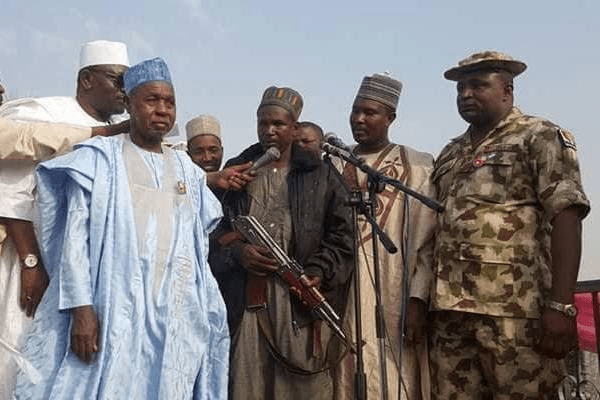
The public outrage is understandable: If bandits are parading weapons openly, why does the military not roll in and seize them? The answer lies in four hard realities that military commanders know but rarely discuss publicly.
1. Negotiation is Political, Not Military
The peace deals are not military initiatives. They are political agreements brokered by state governors, traditional rulers, and sometimes religious leaders like Sheikh Ahmad Gumi. The military does not set the terms; it is ordered to observe them. When a governor negotiates a ceasefire, the military is instructed to hold its fire. When bandits parade weapons as part of a “surrender” ceremony, the military watches because political superiors have commanded it to.
This creates a grotesque theater: soldiers who have lost comrades to these same bandits are forced to stand by as the criminals display the very weapons used to kill their brothers.
2. The Military is Overstretched and Outgunned
The Nigerian military is fighting on multiple fronts: Boko Haram and ISWAP in the North-East, bandits in the North-West, separatists in the South-East, and oil thieves in the South-South. Troop numbers are inadequate. Intelligence gathering is weak. And critically, the bandits are often better armed than the vigilante forces sent against them.
A retired military personnel, Tony Nyam, summarized the reality: “There are huge logistics gaps which bother on insufficient equipment to respond swiftly to armed groups’ attacks, inferior firearms, inadequate number of troops, inadequate intelligence gathering, [and] political dimension to criminality”.
In July 2020 alone, bandits ambushed and killed over 20 soldiers in Katsina state. When soldiers cannot even protect themselves, a full-scale disarmament operation across hundreds of kilometers of forest becomes a suicide mission.
3. The Federal-State Policy Gap
Perhaps the most damning failure is the **complete lack of coordination between the Federal Government and state governments** . At the same time that Zamfara State was offering amnesty to bandits, the Federal Government was conducting military offensives against the same groups in the forests. Bandits pointed to this contradiction as justification for reneging on deals.
One bandit leader could be wanted in Katsina but operate freely in Zamfara because the neighboring state had granted him amnesty. The bandits exploit these jurisdictional gaps ruthlessly. No single state can disarm them because the bandits simply cross into a more tolerant state.
4. The Fear of Creating Worse Enemies
The military has learned from the Niger Delta that aggressive disarmament operations can radicalize criminals into ideological insurgents. When the Joint Task Force cracked down in the Delta, it did not eliminate militancy; it transformed scattered criminal gangs into MEND, a coordinated, politically conscious movement that nearly crippled Nigeria’s oil industry.
Generals fear that a full-scale assault on bandit camps, without simultaneous reintegration and economic alternatives, will turn banditry into a full-blown insurgency with political demands. Currently, bandits are primarily criminals motivated by profit. A military crackdown could create terrorists motivated by revenge.
The Unspoken Truth: Disarmament Cannot Work Without Reintegration
The most critical finding of our investigation is this: Every failed disarmament effort in Nigeria failed for the same reason, lack of a credible reintegration plan.
In the Niger Delta, the government promised 4,000 jobs. The jobs that materialized were temporary, low-paying, and located in areas far from the conflict. Militants felt cheated and they returned to the creeks.
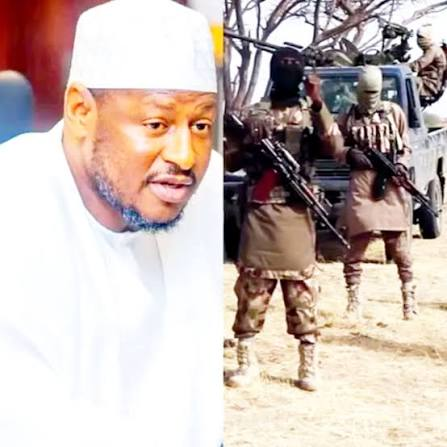
In Zamfara and Katsina states, the peace deals promised rehabilitation, skills acquisition, and settlements with social amenities for repentant bandits. Most of these promises were never fulfilled. Bandit leaders complained that “government kept the larger part of the agreement on paper”.
Without jobs, without education, without psycho-social support, and without drug rehabilitation programs, “repentant” bandits have only one option: return to the forest and pick up their guns again.
One report captured the tragedy succinctly: “The bandits and the negotiators are both entrepreneurs”. The peace process has become a business. Bandits surrender just enough weapons to qualify for payments. Politicians announce “successful disarmament” to claim electoral victories. And the communities continue to bleed.
The Military’s Secret Position: They Want to Fight, Not Negotiate
Contrary to public perception, there is evidence that the military leadership opposes the peace deal approach. Former Chief of Army Staff Lt. Gen. Yusuf Buratai and former Kaduna State Governor Nasir El-Rufai have consistently argued that bandits are criminals who should be crushed, not negotiated with. El-Rufai famously vowed that Kaduna would never negotiate with bandits, insisting that “they can never repent of their criminal activities”.
After the collapse of amnesty programmes in Katsina and Zamfara states, even Governor Aminu Masari of Katsina who had previously supported negotiations, conceded that amnesty was “a ploy to deceive government”.
The military, sources tell The Searchlight, is frustrated. Soldiers want permission to clear the forests. But they are constrained by politicians who see negotiation as a cheaper, faster path to short-term peace. The military watches bandits brandish weapons not because it agrees with the policy, but because it is following orders from civilians who have never fought a war.
Conclusion: A Nation Held Hostage by Its Own Failures
So why did the Nigerian military witness peace deals without disarming the terrorists? Because the military is not in charge. Politicians are. And politicians have chosen negotiation over confrontation, not because it works, but because they have no viable alternative.
The military cannot disarm bandits without a political mandate for total war. But total war would devastate the agrarian economy of the North-West, displace millions more, and potentially radicalize criminals into insurgents. So the politicians choose the illusion of peace: photo opportunities with surrendered weapons, press releases about “repentant bandits,” and temporary ceasefires that everyone knows will collapse.
And the bandits? They keep their best weapons hidden in the forests. They collect payments from the government. They wait for the next kidnapping opportunity. And they laugh at a nation that cannot protect itself.
The tragedy of Northern Nigeria is not that the military is weak. It is that the political class has normalized a permanent state of banditry, a conflict economy from which too many powerful people profit. Until that changes, the weapons will never be surrendered. And the military will continue to watch, powerless and betrayed.
The situation in Northern Nigeria is one of the most complex and under-reported security crises in the world, not because of a lack of violence, but because the violence has become normalized and entangled in a web of political economy that few are willing to unravel publicly.


Leave a comment