By The Searchlight Investigative Desk / June 14, 2026
Across the vast Savannah of Northern Nigeria, a quiet, unsettling question haunts communities from Katsina to Zamfara: When the government sits down with bandits, who is really surrendering?
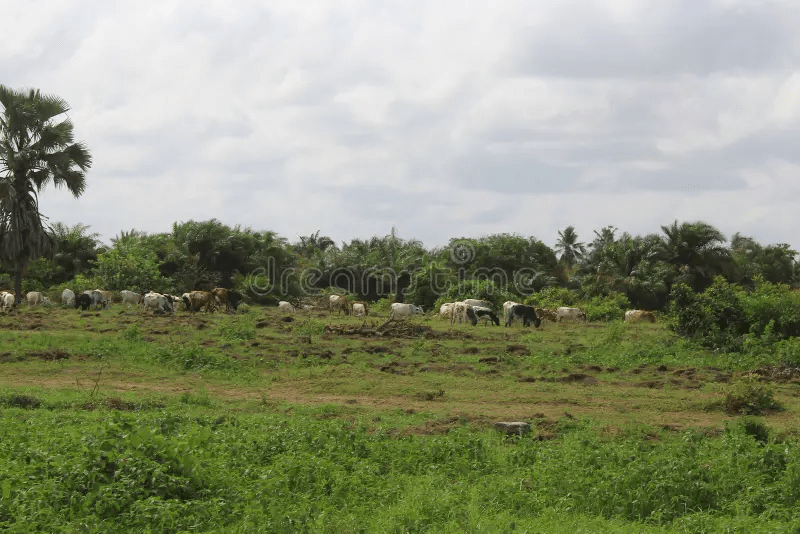
While Nigerians in the South and East watch with a mixture of horror and confusion, many Northern states have embarked on a controversial experiment. In recent months, states including Katsina, Zamfara, Kaduna, and Sokoto have actively pursued peace deals with armed bandit groups that have turned rural life into a living nightmare. Governors, struggling under the weight of humanitarian collapse and military failure, claim these truces are a pragmatic path to rescue abducted victims and allow farmers back to their lands.
Yet, the facts on the ground tell a terrifyingly different story. Despite the handshakes and conditional agreements, the terrorists continue to strike. Blood continues to soak the soil. And a critical question lingers in the air like the Harmattan haze: Is there an unwritten pact between the political elite and the very criminals ravaging the North?
Our investigation reveals a complex web of desperation, political survival, economic incentivization, and alarming intelligence failures that suggest the comfort with negotiation is not a sign of strength, but a symptom of a state that has lost the monopoly on violence.
The Silence of the North: A Political Calculation?

The perception that the North is “not as disturbed” as the rest of the country is deceptive. The North-West and North-Central zones are bleeding. Data from the Nigeria Violent Conflicts Database (NVCD) indicates that banditry alone claimed 2,724 lives in 2025, with the North-West recording the highest number of these attacks. Thousands have been displaced, and the economic backbone of the region, which is agriculture, is collapsing. So why the relative political silence? Experts suggest it is a matter of political optics and localized desperation.
For Northern governors facing re-election, waiting for the Federal Government’s often slow, kinetic military response is a political liability. Negotiation is viewed as proactive leadership. If a governor can broker a deal that frees kidnapped students or opens a blocked road, even temporarily, it serves as proof of governance.
However, this “comfort” is a fallacy. The Senate has since stepped in, strongly urging state governments to halt these peace accords, warning that such deals are merely a “revenue stream that inadvertently finances further criminal operations”. If the North were truly “comfortable,” the National Assembly, itself dominated by Northern voices, would not be moving to criminalize these state-level negotiations.
The Unwritten Agreement: Protection, Patronage, and Politics
The heart of our investigation probes the darkest allegation: Are politicians funding the bandits? Security analysts and sources within the intelligence community suggest that the relationship between banditry and politics is no longer just about ransom; it is about asymmetric warfare for power.
1. The “Political Thug” Pipeline
There is growing evidence that the lines between political thugs (often called ‘Yan-bindiga’) and bandits have blurred. During election cycles, well-known bandit commanders have reportedly been contracted to provide “security” or, conversely, to intimidate opposition strongholds. In return, political godfathers provide the bandits with ammunition and safe passage. This creates a cyclical monster: politicians fund the bandits to win elections, and the government then negotiates with the same bandits to keep the peace, effectively paying them twice.
2. The Illegal Mining Nexus
The mining sector is a key to this puzzle. Many bandit-ravaged states, particularly Zamfara and Niger, are rich in gold and other minerals. Security reports have long suspected that powerful political interests are involved in the illegal mining trade that finances these gangs. The Searchlight gathered that bandits do not just take cows; they control mines. When a government negotiates a “peace deal,” it is often tacitly accepting the bandits’ control over these revenue streams in exchange for a reduction in the kidnapping of “high-profile” figures.
3. The Failure of the Federal-System
The friction between the Federal Government and State Houses is a major driver of these deals. State governors complain of “abandonment.” They are the Chief Security Officers on paper, but they lack control over the police or military, which answer to Abuja. In this vacuum, negotiation becomes political survival. “Governors are not negotiating because it works,” a security source told The Searchlight. “They are negotiating because the Nigerian state has failed to secure its territory.”
“Negotiate Today, Kill Tomorrow”: Why the Strategy is Failing

Despite the flurry of peace meetings involving traditional rulers and vigilantes, the attacks have not only continued but relocated and intensified.
Residents of the North-Central region, including Kogi, Benue, and Kwara states, are now suffering the spillover effects. Experts call this the “balloon effect”, squeeze the bandits in Zamfara or Sokoto with airstrikes or a partial truce, and they drift southward into the forests of Niger and Kwara states. Recently, Kwara State witnessed massacres of farmers who refused to surrender to extremist doctrines.
Furthermore, the deals are strategically blind. While the government pays for the release of students or halts raids in one district, the bandits use the “peace” window to regroup, rearm, and reposition. The case of Zamfara is instructive. Despite years of amnesty programmes and dialogue, the state remains one of Nigeria’s most violent theatres. “Communities that disarmed in good faith were later attacked by rival factions,” reports The Independent. The bandits often lack a unified command structure; you sign peace with Commander A, but Commander B, who wasn’t at the table, comes to collect the “levy” the next day.
The Economic Trap: Feeding the Monster
There is a brutal economic logic to the hesitation. Northern political elites are acutely aware that total war would devastate the fragile agrarian economy further. Bandits now operate a sophisticated taxation system on farming communities, demanding payment for “access to farms”.
In Zamfara, 39 elders who visited a bandit camp to negotiate farming rights were themselves kidnapped and ransomed for $92,000. This highlights the tragic irony: The government’s “peace deals” have legitimized bandits as quasi-state authorities. The politicians appear comfortable because many of them, or their donors, are entangled in the informal economy that benefits from the status quo, particularly the smuggling routes and illegal mining that thrive in the absence of state control.
What is Really Happening?
What is happening is a privatization of security governance. Faced with a federal military stretched thin across 36 states, Northern governors are reverting to a pre-colonial model of negotiation with non-state powers to protect their immediate constituencies. However, by offering cash and legitimacy to terrorists, they are not solving the crisis, they are franchising it.
The unwritten plan does not appear to be a vast, singular conspiracy in view of the fact that citizens are also victims. Rather, it is a collection of local survival pacts. Politicians make deals to protect their bases. Businessmen make deals to protect their trade routes. Security chiefs make deals to free specific hostages.
In the absence of a unified, brutal, and intelligence-driven crackdown, the bandits are evolving into permanent, armed political actors.
The Searchlight Verdict:
Until the Federal Government decisively takes over the security architecture and state governments stop paying “protection money” disguised as “development levies” to bandits, the terror will continue. The comfort of the politician is the nightmare of the villager. And for Nigeria, the price of the North’s “peace deals” is the slow, steady erosion of the nation’s territorial sovereignty.


Leave a comment