By The Searchlight Editorial Team / June 8, 2026
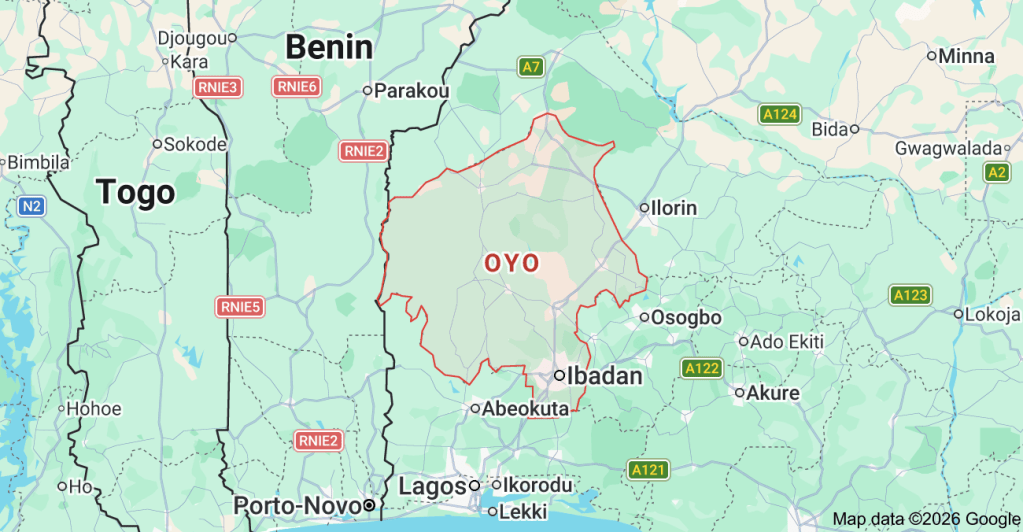
On May 15, 2025, armed gunmen launched coordinated attacks on three schools in Oriire Local Government Area, Oyo State: Baptist Nursery and Primary School in Yawota, Community Grammar School in Esiele, and L.A. Primary School in Ahoro-Esinele. A total of 49 individuals, including pupils as young as two years old, teachers, and a toddler, were abducted. Mathematics teacher Michael Oyedokun was beheaded while in captivity. More than three weeks later, the victims remain in captivity, with families receiving only videos of their loved ones allegedly forced by captors,
Why Has the Tinubu Administration Failed to Storm the Forests?

The administration’s reluctance to mount a forceful rescue operation stems from two allegedly critical factors:
First, tactical complexity involving very young children. Senator Abdulfatai Buhari (Oyo North) explained that abductors transported victims by tying six to eight children together on single motorcycles, making them extremely vulnerable. Security agencies have reportedly narrowed down the kidnappers’ location, with police helicopters and military jets conducting daily surveillance sorties over the forests. However, Senator Buhari cautioned against forcible intervention: “Some people are suggesting the use of sleeping powder. But among those children are two-year-olds, three-year-olds and four-year-olds. If such substances affect them, they may never wake up again. What are you rescuing then?”
Second, the displaced jihadist threat. The Nigerian army formally attributed the Oyo abductions to Boko Haram, stating that large-scale military operations in the northeast have driven the group from its strongholds, forcing it southward. This represents a strategic failure: military successes in one region merely displaced the threat rather than eliminating it, catching southwestern states unprepared for jihadist infiltration.
The House of Representatives has called for a permanent military forward operating base in Oriire Local Government Area, acknowledging that the current security architecture remains inadequate.
What Are the Terrorists’ Demands?

The kidnappers have established specific negotiation parameters. The abductors issued demands including a N1 billion ransom (to a Benin Republic account), release of detained “bandits” from prisons like Agodi and Abolongo, two Toyota Hilux vehicles, and concessions on laws favoring land and Sharia implementation. Most significantly, the abductors have refused to negotiate with family members, insisting on dealing exclusively with government authorities. Professor Wole Alamu, whose wife Principal Rachael Alamu is among the captives, stated: “The captors said they don’t want to talk to us. They only want to talk to the government, and that is why we are helpless”.
This government-only demand places the Tinubu administration in a difficult position: negotiating with terrorists carries political risks and may incentivize future abductions, while refusing negotiations prolongs the ordeal of very young children.
Why Was It Allowed to Happen?
Multiple systemic failures enabled this attack:

Intelligence failure: The Old Oyo National Park and adjoining forests, which stretch toward Kwara State, have become known hideouts for bandits, yet no preventative action was taken.
Security force limitations: Academic research on Oyo State’s Oke-Ogun region (which includes Oriire LGA) identifies significant constraints facing security agencies: insufficient funding, lack of modern equipment, community distrust, and the sheer expanse of unmonitored territory.
The displacement phenomenon: The military’s focus on northeastern operations created a vacuum effect, pushing terrorist elements into previously stable regions. A think tank analysis noted that this “perverse effect” of military successes is shifting threats to areas that had been relatively spared .
Surveillance Equipment Failures
Intelligence and surveillance failures are glaring. Nigeria claims advanced equipment, yet large groups on motorcycles operate in forests with apparent impunity. Analysts point to vast terrain challenges, possible local informants/collaborators, IED use by captors, and risks of civilian casualties in sweeps. The spread of school abductions from Northeast to Southwest signals expanding banditry and jihadist influence, exploiting governance gaps. No-ransom policies (publicly stated in some cases) clash with practical realities, prolonging ordeals as seen in past incidents.
Critics, including opposition figures like Atiku Abubakar, highlight a pattern of rhetorical condemnation without decisive on-ground breakthroughs, contrasting with quicker action in high-profile cases (e.g., rescue of a power minister’s relative). The Federal Government recently approved 1,000 forest guards for the area, but this reactive measure, approved after the abduction, underscores the absence of proactive surveillance. Security experts have long advocated for community-based security integration with technology, including Geographic Information Systems to identify crime hotspots and improve response times.
Tinubu’s 2027 Election Game Plan
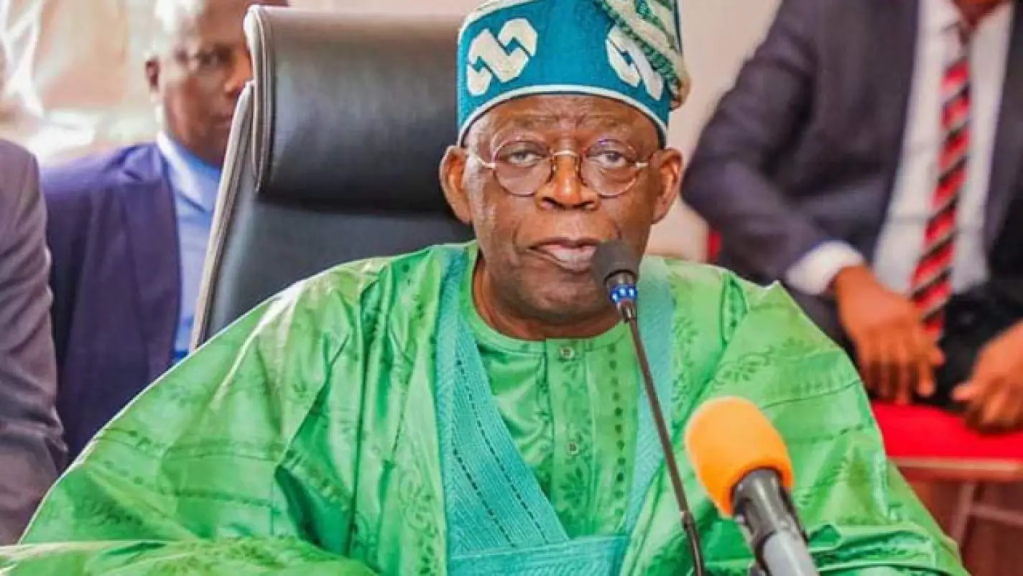
President Tinubu was officially nominated as the APC’s candidate on May 24, 2025. His re-election strategy appears to rest on three pillars:
First, opposition fragmentation. Former Ekiti Governor Ayo Fayose claims “nobody is contesting against Tinubu,” noting that opposition parties (NDC, ADC, APM, NRM) have splintered rather than coalescing behind a single challenger. The APC now controls 31 of Nigeria’s 36 states, up from 21 in 2023, following opposition defections.
Second, economic narratives over security realities. While inflation exceeds 30% and petrol prices have quadrupled, the administration appears to calculate that voters prioritize economic survival over security concerns, or that both issues affect Nigerians equally regardless of who holds power.
Third, leveraging incumbency advantages. The administration controls security apparatus, state resources, and has attracted opposition governors through defections, expanding political control without necessarily improving governance outcomes.
The Allegation of Collusion
The suggestion that the administration might use terrorists to intimidate voters requires careful scrutiny. Although there is no evidence in available sources that supports this claim, former ruling party chieftain, Kawu Baraje had openly declared in the past that the party brought in fighters from some African countries to assist in winning the 2015 election. In addition, the timing of Oyo kidnapping raises legitimate questions: The Oyo abductions occurred as Tinubu secured his party’s nomination, and security remains a central electoral issue. Security consultancy SBM Intelligence notes that “as the 2027 elections approach, Nigerians will judge politicians primarily on whether they can keep classrooms and communities safe”.
The more plausible explanation may not be collusion but incapacity and displacement: The military genuinely cannot be everywhere simultaneously, and pushing Boko Haram southward without securing the southwest was a strategic miscalculation, not a conspiracy.


Leave a comment